Nutrition Garden
R. Veenarani
Asst. Director (Agriculture), Krishibhavan, Mulanthuruthy
e-mail: karsha@mm.co.in, veena4raghavan@gmail.com
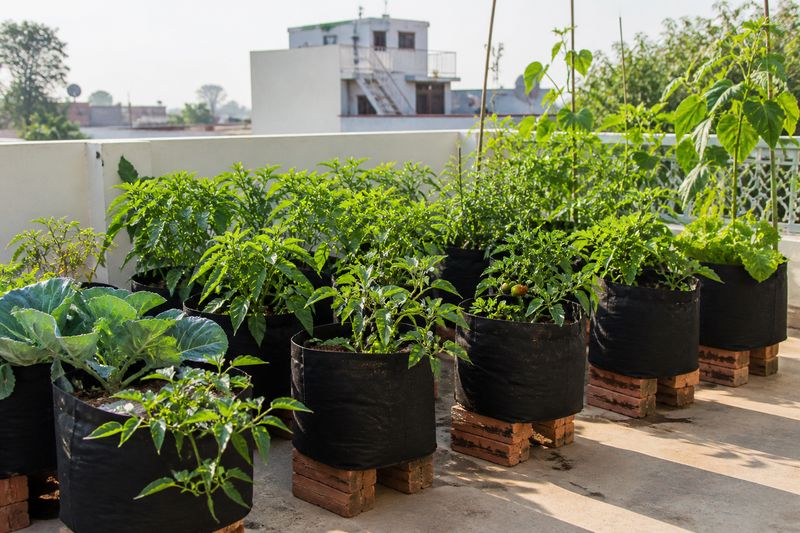
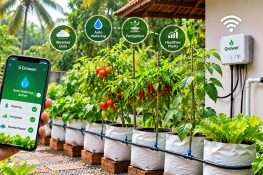
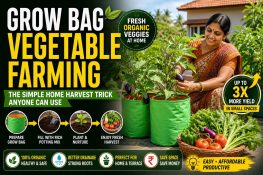
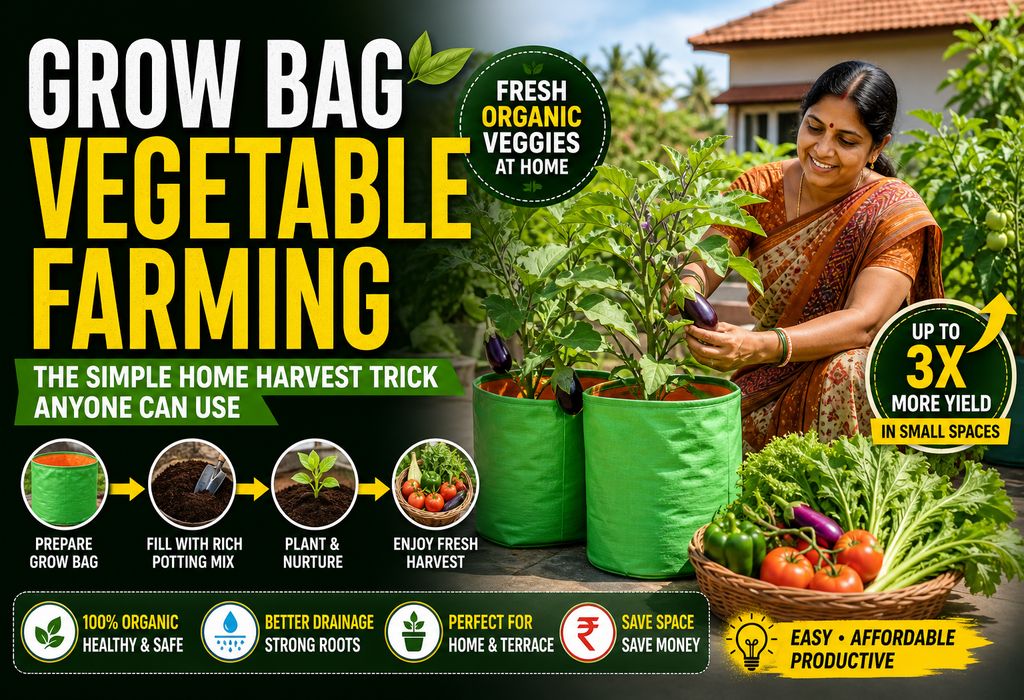
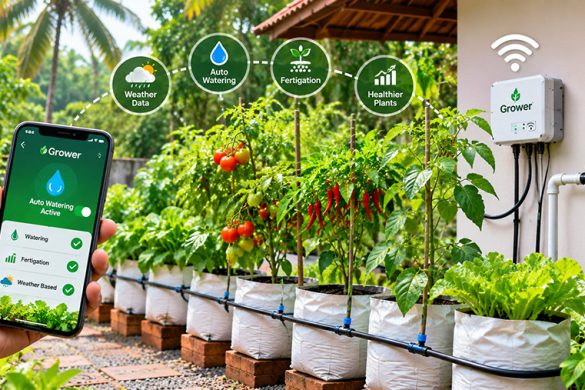
Grow bag cultivation is something that gives us the confidence to grow poison-free vegetables required for our homes. With a little care on the terrace or in the yard, anyone can reach its peak. Grow bag cultivation can be done in any place with good sunlight.
Be careful when selecting a location. When cultivating on a terrace or balcony, care must be taken to place the grow bags so that water does not stagnate. It is good to place bricks or tiles to elevate the grow bags.
On terraces that receive direct sunlight, it is better to lay bricks and plaster with a 1:10 ratio of concrete and sand.
This helps to protect the terrace from the heat of the concrete.
After ensuring water doesn’t stagnate on the terrace by providing a good slope and applying soil putty, you can start cultivation.
Bricks or tiles are useful to elevate the grow bags and support better drainage around them.
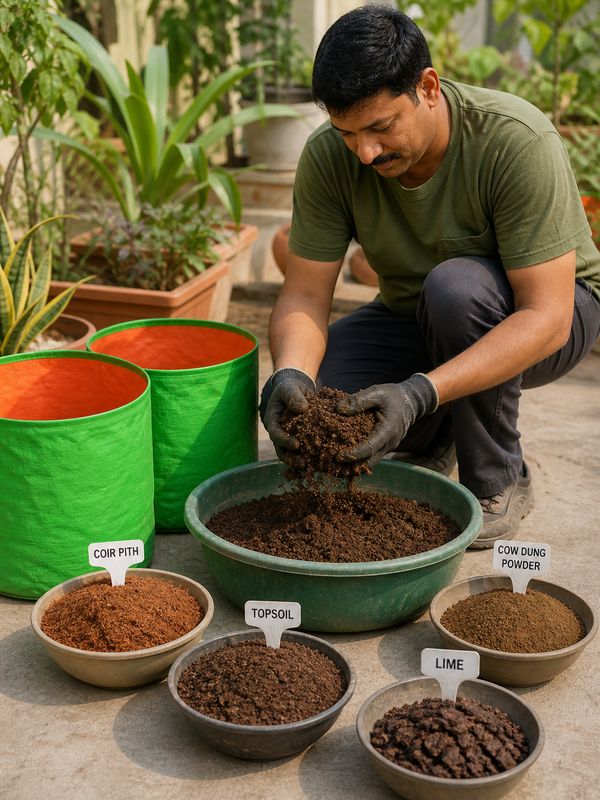
Plants can absorb nutrients through their leaves and roots. Therefore, extreme care should be taken when preparing the potting mix (the medium used for cultivation).
The mixture can be prepared by adding 50 grams of neem cake and lime, required for filling each grow bag. But do not wet it. It should be kept dry. After mixing, it should be kept in the shade for two weeks. This will help remove the acidity in the mixture.
To prepare the mixture to fill each grow bag, take a container of the same size for measurement.
| Crop Group | Recommended Potting Mix |
|---|---|
| Beans, bitter gourd, radish, brinjal, lady’s finger, green chili, and tomato | The method for preparing the potting mix for one grow bag is: two parts topsoil, one part cow dung powder, and one part coir pith. Mix all these well. |
| Cauliflower, cabbage, beetroot, and carrot | These need more organic manure. One part soil, one and a half parts cow dung powder, a quarter part coir pith, and a handful each of neem cake, bone meal, groundnut cake, and lime will be a sufficient mixture. |
Each plant requires a different potting mix, so choose the medium according to the vegetable being planted.
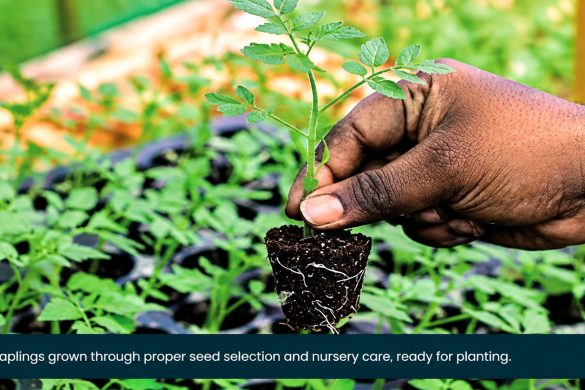
It is always better to sow seeds and grow seedlings. They can be transplanted when they have five or six leaves. For example, transplant tomatoes when they have two leaves with a 10-day interval and provide them with a large basin. Add fertilizer and loosen the soil.
Cow dung, chicken manure, goat manure, vermicompost, fermented oil cake, and micronutrient fertilizers are all beneficial for grow bag cultivation.
Don’t forget to apply different types of fertilizers alternately instead of using the same one.
For example, if you have applied cow dung powder, next time use chicken manure.
Alternately applying microbial fertilizers like vermicompost, fish manure, fermented groundnut cake, and neem cake will be more beneficial for the crops.
Can grow bag vegetables be cultivated on a terrace?
Yes. Grow bag cultivation can be done on a terrace, balcony, or yard if the place receives good sunlight. When using a terrace or balcony, care must be taken to prevent water stagnation. Elevating grow bags with bricks or tiles is a practical way to improve drainage and protect the surface.
How should I protect a terrace before placing grow bags?
On terraces that receive direct sunlight, it is better to lay bricks and plaster with a 1:10 ratio of concrete and sand. This helps protect the terrace from the heat of the concrete. A good slope and soil putty should also be used so water does not stagnate.
What is the basic potting mix for one grow bag?
For one grow bag, use a container of the same size for measurement and mix two parts topsoil, one part cow dung powder, and one part coir pith. This mixture is sufficient for beans, bitter gourd, radish, brinjal, lady’s finger, green chili, and tomato.
Why should neem cake and lime be added to the grow bag mix?
The mixture can be prepared by adding 50 grams of neem cake and lime for each grow bag. It should not be wetted, and it should be kept dry in the shade for two weeks. This helps remove acidity in the potting mix before vegetable cultivation begins.
Which vegetables need more organic manure in grow bags?
Cauliflower, cabbage, beetroot, and carrot need more organic manure. For these crops, a sufficient mixture is one part soil, one and a half parts cow dung powder, a quarter part coir pith, and a handful each of neem cake, bone meal, groundnut cake, and lime.
When should seedlings be transplanted into grow bags?
It is always better to sow seeds and grow seedlings first. Seedlings can be transplanted when they have five or six leaves. In the case of tomatoes, transplant them when they have two leaves with a 10-day interval, provide a large basin, add fertilizer, and loosen the soil.
Should I use the same fertilizer every time?
No. Different types of fertilizers should be applied alternately instead of using the same one repeatedly. For example, if cow dung powder has been applied once, chicken manure can be used next time. Alternating vermicompost, fish manure, fermented groundnut cake, and neem cake is beneficial.