Research source: Abdul Rahiman A, Chandrakant Lingadhal, Vijayakumar S, Padmanabha A and Lakshmipathi MT. Published in International Journal of Advanced Biochemistry Research, IJABR 2026; 10(1): 01-12. DOI: https://www.doi.org/10.33545/26174693.2026.v10.i1a.6857. The study assessed water, soil quality and health status in earthen ponds of Litopenaeus vannamei at FRIC Marine, Bela, Ankola, Uttara Kannada district, Karnataka.
Vannamei shrimp farming can be highly productive, but pond water and bottom soil decide much of the crop result. This study followed two earthen shrimp ponds, P1 and P2, at the Fisheries Research and Information Center Marine, Ankola, along with Keni Creek water used as the source water.
The crop was monitored from March to June over a full 115-day culture period. Shrimp seed was stocked at 60,000 numbers per hectare. Researchers measured pond water, soil and disease status using standard laboratory methods and PCR-based pathogen testing.
The big takeaway is encouraging for coastal Karnataka farmers: most water and soil values remained within suitable limits for white-leg shrimp culture, and all tested shrimp samples were negative for WSSV, MBV, IHHNV, HPV and EHP.
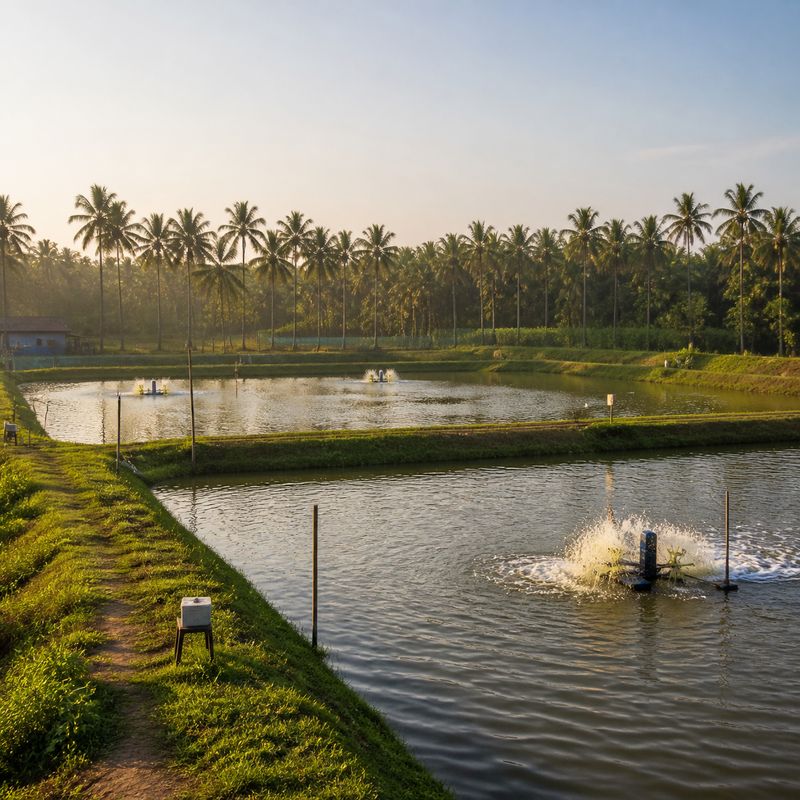
India has an estimated 11.9 lakh hectares of brackish water area, but only about 1.02 lakh hectares are currently under use. In 2019, India produced 7.5 lakh tonnes of shrimp, and Litopenaeus vannamei contributed 7.11 lakh tonnes, according to CIBA 2019.
White-leg shrimp is now the dominant farmed shrimp species. It is native to the Eastern Pacific coast and grows well in tropical marine waters where temperatures remain above 20 °C. Shrimp is also valued as a protein-rich seafood; 100 g of cooked shrimp provides about 21 g of protein.
⚠️ Farmer reality: Intensive shrimp culture needs strict pond management. Poor pond preparation, weak water quality control, poor biosecurity and untested seed can increase risks from WSSV, MBV, IHHNV, EHP, HPV, White Feces Syndrome, Loose Shell Syndrome and Black Gill Disease.
That is why the researchers focused on practical pond indicators: temperature, pH, salinity, alkalinity, dissolved oxygen, BOD, suspended solids, dissolved solids, ammonia, nitrite, nitrate, phosphate, silicate, sediment pH, organic carbon and soil texture.
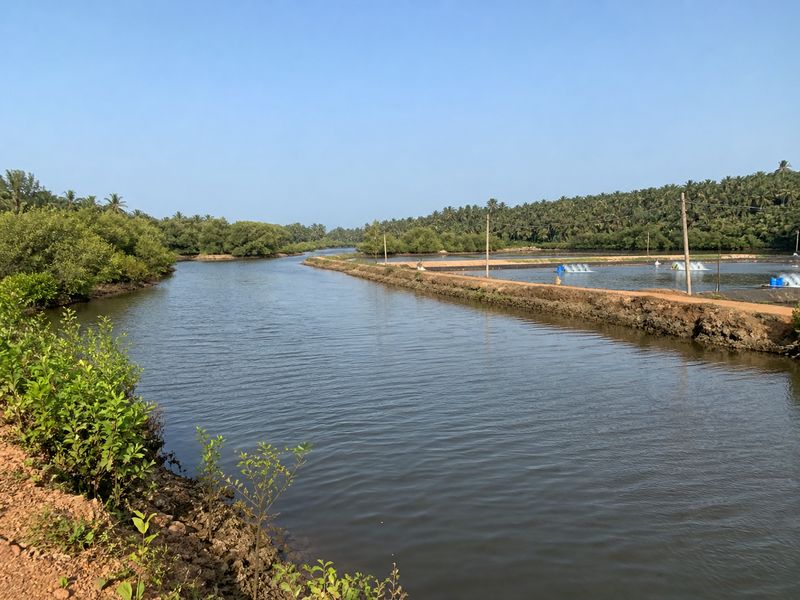
The study was conducted in two L. vannamei culture ponds belonging to FRIC Marine, Ankola. Water for the ponds was drawn from Keni Creek during high tide. The pond cycle was monitored from stocking to harvest.
- ✅ P1 pond: FRIC Marine, Ankola, 14°39’41.4”N, 74°16’56.9”E
- ✅ P2 pond: FRIC Marine, Ankola, 14°39’43.4”N, 74°16’59.3”E
- ✅ Creek 1 source water: Keni Creek, 14°39’46.5”N, 74°16’58.8”E
- ✅ Stocking density: 60,000 shrimp seed per hectare
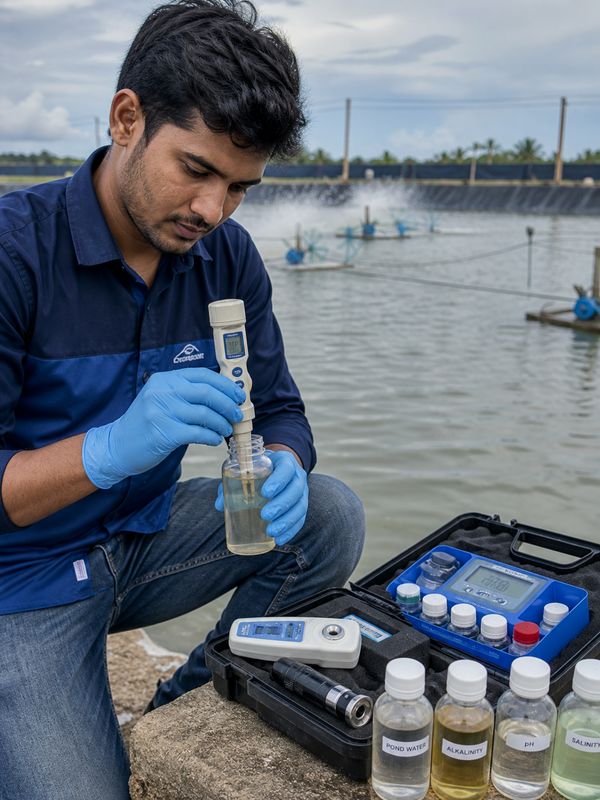
Samples were collected every fortnight during morning hours. Air temperature, water temperature, water pH, salinity and sediment temperature were measured at the pond site. Water and sediment samples were then carried to the laboratory for detailed analysis.
Thermometer, Hanna pocket pH meter and hand-held refractometer.
DO, alkalinity and ammonia were tested using APHA 2017 and standard methods.
Nitrite, nitrate, phosphate and silicate were analysed after filtration.
WSSV, IHHNV, EHP, MBV and HPV were checked using PCR techniques.
Sediment organic carbon was determined by the El-Wakeel and Riley method. Soil texture was studied by wet sieving and pipette analysis to estimate sand, silt and clay fractions. The study also used simple correlation analysis to understand links among water and soil parameters.
The pond water showed small variations during the crop, especially during May and June. Some parameters slightly moved away from ideal values, but the overall pond condition remained suitable for Vannamei culture.
28.5-34.0 °C. Maximum 34 °C was recorded in May on the 60th day of culture.
Generally 7.8-8.2 in ponds, suitable and slightly alkaline for shrimp culture.
14-35 PSU in ponds. Creek source water ranged from 0-31 PSU.
4.07-8.95 mg/l, above critical low oxygen levels for shrimp.
73-115 ppm, supporting pond buffering, molting and plankton growth.
2.03-6.10 mg/l, reflecting biodegradable organic matter in the ponds.
| Parameter | P1 Range | P2 Range | Keni Creek 1 Range |
|---|---|---|---|
| Air Temperature | 27.00-33.50 °C | 27.00-33.50 °C | 27.00-33.50 °C |
| Water Temperature | 29.50-34.00 °C | 28.50-34.00 °C | 29.00-34.50 °C |
| Water pH | 7.80-8.20 | 7.80-8.20 | 7.10-8.50 |
| Salinity | 14.00-34.00 PSU | 14.00-35.00 PSU | 0.00-31.00 PSU |
| Alkalinity | 75-113 ppm | 73-115 ppm | 25-118 ppm |
| Dissolved Oxygen | 4.07-8.95 mg/l | 5.29-8.54 mg/l | 4.88-8.14 mg/l |
| BOD | 2.03-5.29 mg/l | 2.85-6.10 mg/l | 1.43-5.28 mg/l |
| TSS | 0.043-0.21 g/l | 0.032-0.208 g/l | 0.018-0.18 g/l |
| TDS | 18.48-67.04 g/l | 18.23-66.69 g/l | 1.63-62.78 g/l |
Note: The published table lists P2 water pH as 7.80-8.20, while the printed average appears as 8.91. The range and discussion both indicate slightly alkaline pond water suitable for shrimp culture.
Nutrient levels are important because they affect plankton growth, water colour, oxygen demand and toxicity risk. In this study, nutrients changed through the crop period but mostly stayed within manageable limits.
- ✅ Ammonia-N: 0.25-10.48 μg-at/l in ponds. Higher values appeared toward mid or late culture due to feed input and shrimp waste.
- ✅ Nitrite-N: 0.20-1.52 μg-at/l. Values varied but remained within safe study interpretation.
- ✅ Nitrate-N: 0.06-6.57 μg-at/l in ponds and 0.10-8.76 μg-at/l in Creek 1.
- ✅ Phosphate-P: 0.17-2.31 μg-at/l in ponds; source water reached 13.14 μg-at/l.
- ✅ Silicate-Si: 7.63-90.80 μg-at/l in ponds, enough to support diatom growth and primary productivity.
The researchers observed that silicate was significantly higher during the summer season. Phosphate was higher in Creek 1 during monsoon influence, likely due to runoff. Overall, controlled nutrient levels helped maintain the pond food web without severe pollution stress.
Soil is not just pond flooring. It stores nutrients, affects pH, supports microbial activity and influences water quality. In shrimp ponds, bottom soil processes are closely linked with growth and survival.
29.0-34.5 °C. Minimum was in P2 during June on the 105th day; maximum was in P1 during May on the 60th day.
7.4-8.4 in ponds. Slight alkalinity was linked to liming with calcium carbonate and dolomite.
0.26-1.38%. P1 ranged 0.26-1.38%, while P2 ranged 0.45-0.83%.
Pond soils were coarse textured, including loamy sand, sandy loam and sand.
Sand content ranged from 59.51-86.45%, silt from 11.55-38.04%, and clay from 1.30-2.45%. Coarse soils can have higher seepage and lower natural fertility than clay-rich soils, so farmers may need careful water and nutrient management.
✅ Good news from the trial: Shrimp samples from both P1 and P2 were negative throughout the culture period for White Spot Syndrome Virus WSSV, Monodon Baculovirus MBV, Infectious Hypodermal and Hematopoietic Necrosis Virus IHHNV, Hepatopancreatic Parvovirus HPV and Enterocytozoon hepatopenaei EHP.
PCR analysis was carried out on DOC 30, DOC 60, DOC 90, DOC 105 and DOC 115. All results in both ponds were negative for all tested pathogens. The researchers linked this to good pre-stocking pond management, effective biosecurity and no dissolved oxygen problem during culture.
⚠️ Important caution: Disease risk can return when farmers skip pond drying, disinfection, water filtration, bird fencing, crab fencing or buy seed from unregistered hatcheries selling non-SPF seed.
The study also looked at how pond variables moved together. Air temperature strongly correlated with water temperature in both ponds. Salinity, alkalinity and total dissolved solids also showed strong positive relationships in several cases, which makes sense because evaporation and seawater influence can raise dissolved salts together.
Dissolved oxygen showed negative relationships with some temperature and alkalinity-related changes, reminding farmers that hot weather and rising organic load can reduce oxygen safety margins. Sediment temperature was strongly linked with air and water temperature, confirming that pond bottom conditions also shift with seasonal heat.
In simple terms, pond water should not be judged by one number alone. A rise in temperature, salinity, TDS, BOD or nutrient load can affect oxygen, microbial activity and shrimp comfort at the same time.
Track temperature, pH, salinity, alkalinity, DO and ammonia, especially during hot months.
Keep aeration ready because DO can drop when temperature, feed waste and microbial activity rise.
Bottom pH, organic carbon and texture affect nutrient cycling and pond productivity.
Disease-free stocking material and pre-stocking management helped keep all tested viruses negative.
The study concludes that FRIC Marine ponds at Ankola provided a suitable environment for sustainable shrimp aquaculture. With ideal water and soil ranges, Uttara Kannada has strong potential for brackish water shrimp farming, provided farmers follow better management practices and biosecurity protocols.
The authors thanked the Director of Research, KVAFSU, Bidar, Karnataka and the Dean, College of Fisheries, KVAFSU, Mangaluru, Karnataka for providing facilities. They also thanked the HOD, Department of Aquatic Animal Health Management, College of Fisheries, KVAFSU, Mangaluru, for timely shrimp health analysis.
What is the ideal pH range for Vannamei shrimp ponds?
In this study, pond water pH mostly stayed around 7.8-8.2, which is slightly alkaline and suitable for Vannamei shrimp culture. Many references consider about 6.5-8.5 acceptable for aquatic organisms. Sudden pH swings are more dangerous than stable slightly alkaline water, so farmers should monitor morning and afternoon pH changes.
What salinity was found suitable in the Ankola Vannamei ponds?
The experimental ponds recorded salinity between 14 and 35 PSU, while Keni Creek source water ranged from 0 to 31 PSU. The study noted that L. vannamei can tolerate a wide salinity range, and successful culture can occur above 2 PSU when other pond conditions such as oxygen, pH and alkalinity are properly managed.
Why is dissolved oxygen so important in shrimp farming?
Dissolved oxygen is needed for shrimp respiration, feed conversion, microbial decomposition and overall pond stability. In the Ankola ponds, DO ranged from 4.07 to 8.95 mg/l, which was acceptable. Low DO can stress shrimp, reduce feeding, slow growth and increase disease risk, especially during hot weather or high organic load.
Did the study find dangerous shrimp viruses?
No. PCR testing showed negative results in both ponds for WSSV, MBV, IHHNV, HPV and EHP throughout the culture period. Samples were checked on DOC 30, 60, 90, 105 and 115. The study linked this good result to pre-stocking pond preparation, biosecurity and proper pond management.
Why should shrimp farmers test pond soil?
Pond soil affects water retention, nutrient release, organic matter breakdown and microbial activity. This study found sediment pH of 7.4-8.4, organic carbon of 0.26-1.38% and mostly coarse soil texture. Coarse soils may have more seepage and lower natural fertility, so farmers need better water and nutrient management.
What stocking density was used in the study?
The study stocked Litopenaeus vannamei seed at 60,000 numbers per hectare in each pond. The full culture period lasted 115 days from stocking to harvest. Stocking density should always be matched with aeration, water exchange, feed management, pond soil condition and the farmer’s ability to monitor water quality.
What are the key water tests for Vannamei shrimp ponds?
Farmers should regularly test temperature, pH, salinity, alkalinity, dissolved oxygen, ammonia, nitrite, nitrate, BOD, TSS and TDS. The Ankola study also measured phosphate and silicate because they influence plankton productivity. Testing helps catch early warning signs before shrimp growth, survival or disease resistance is affected.