George K. Mathai
Deputy Director (Retd.), Department of Agriculture
E-mail: mathaigk@gmail.com
Thread blight for nutmeg, pellion for areca nut.
Yellow trap for whiteflies, broadcast sowing after Vishu.
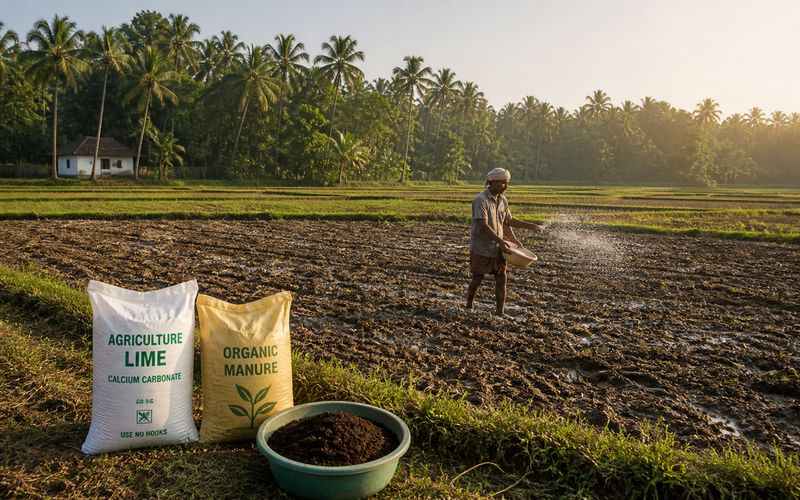
April farm work calls for timely attention to broadcast sowing, summer watering, pest monitoring, yellow traps, crop nutrition and disease control. In fields where broadcast sowing is practiced, the first round of plowing can be done immediately after Vishu.
The general recommendation is to use 300 kg of lime and 5 tons of organic manure per hectare. The final plowing for broadcasting can be done immediately after Vishu.
Instead of sowing by hand, it is also sufficient to sow using a seed drill. When using a seed drill, the required amount of seeds can be determined by testing, and the number of saplings can be regulated. The cost of regularizing them can also be reduced.
As they are spaced apart, pests and diseases will also be less. In areas with potential water scarcity, it is better to use short-duration seeds.
Do not leave the water to stagnate in Kari-Kayal fields. Keeping a small amount of water without draining reduces the depth.
Not all paddy varieties are suitable for broadcast sowing. Use only suitable varieties.
If the broadcast-sown seeds remain in the soil for 4 weeks and then get irrigated, a strong sapling, in agricultural terms, will be obtained. The cost will also be less.
Farmers’ experience is that if it rains before 4 weeks, the sapling’s strength will be less and weeds will be more.
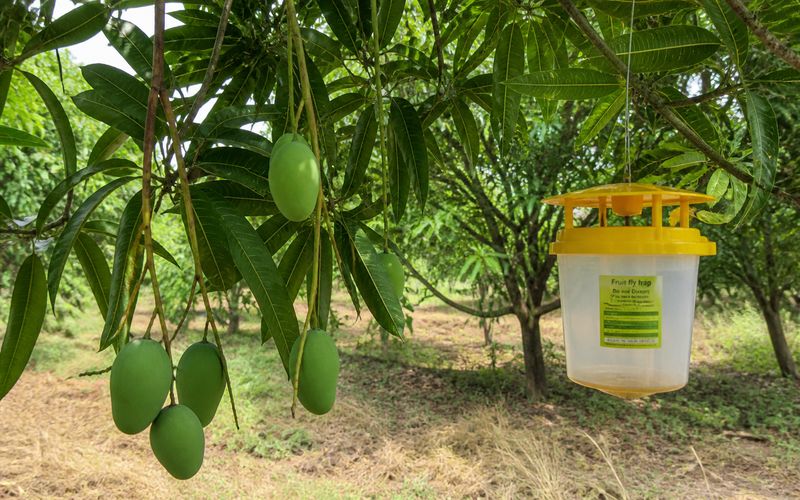
Mango: Mangoes cracking and falling at the tender mango stage, and small mangoes developing a yellow color at the base followed by small cracks and falling, are due to a boron deficiency.
To solve this, mix boric acid at a rate of one gram per liter of water and spray. Boric acid is available in medical shops as 20 gram packets.
Considering this year’s weather, watering 3 times a day is helpful in reducing mango drop. Pheromone traps for fruit fly control should be installed, one each in the shade and away from the shade of the mango tree. Due to the high temperatures, there is a possibility of an increase in hopper-type insects. Control them using light traps.
Beans: Those who cultivate beans on a commercial basis should water them 3 times a week. In the usual method, after giving 30 liters of water a day, the beans will get 15-18 liters after evaporation.
Check if there are white, non-walking insects and ants on the small stems. If you see the presence of these pests, called snow scale, spray neem-based pesticides immediately.
The next day, after the sun’s heat has subsided, mix 30 grams of Verticillium in a liter of water, take the clear liquid, and spray it along with a new-generation wetting agent. The attack of the pod borer. Placing Trichogramma cards in places where they were seen earlier will help to eliminate them.
Mangosteen: Provide a spray of silica, potash, and calcium, one each at an interval of one week. Mulch from approximately the middle to the boundary of the tree’s base and water it well.
Summer heat makes regular observation important. Watering, mulching, biological sprays and timely nutrient sprays help maintain crop strength through April.
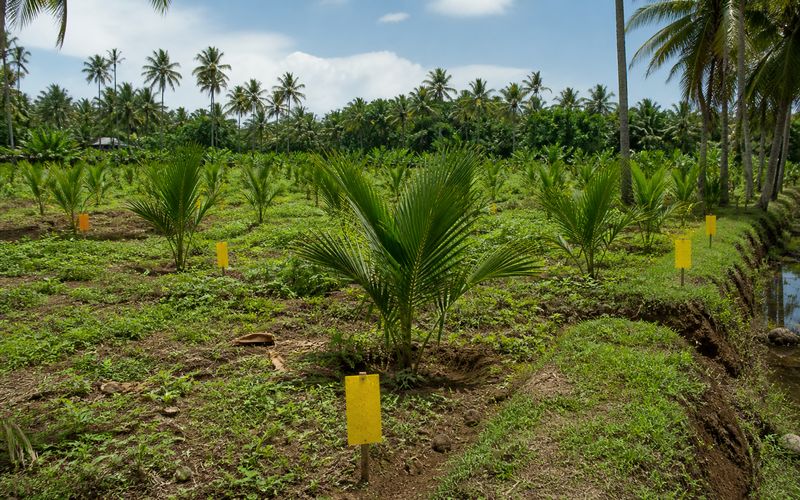
Coconut: Red palm weevil attacks are being seen. They can be caught by placing folded fishing nets in the axils of the coconut palm.
Apply mulch at the base of the coconut tree. This should be continued without interruption until the monsoon begins.
Whitefly infestation is severe in many places. If controlled with yellow traps, their natural enemies will multiply, making biological control possible. In young coconut palms, whiteflies can be controlled by applying a neem-based insecticide to the trunk at the sprouting point.
Rambutan, Pulasan: Continue watering. For trees that have borne fruit, mix 5 grams of sulphate of potash in one liter of water and spray.
After a week, mix 18-18-18 at a rate of four grams per liter of water and spray.
Not watering Rambutan and Pulasan in the name of giving summer stress for flowering is not good. The experiences of trees that flowered and then withered this year are many. As the trees are shedding their leaves, the number of times they need watering has to be increased.
Water the trees that are being regularized in sandy soil in the morning and evening. For others, watering once is sufficient. Repeat the calcium spray. The tendency for fruit drop is being seen in many places. If there is too much calcium, a deficiency of potash and magnesium will cause fruit drop. Be careful.
Banana: Mite infestation is increasing. To control them, medicine should be sprayed upwards from the soil at the base. This is useful for preventing mites that have fallen from the bunch from surviving.
Ensure the spray reaches the base of the leaves, the flower bud, and the axils.
For banana, it is late for biological control. After the sun has cooled, spray Verticillium mixed with a wetting agent. For chemical control, it is enough to use any of the Acaricides available in the market.
Mites attack all plants except those being irrigated. The attack is most widespread in irrigated plantains. Usually, they can be seen at the base of the plantain leaf before 8 am. If the attack is severe, they will spread to the base of the leaf. For bunchy top disease, apply mulch at the base. After sprouting, if not watered, it will wilt. Spray a silicate spray.
Ginger, Turmeric: If there is enough rain to cool the earth, preparations can be made for ginger cultivation. Prepare beds that are one meter wide and 25 cm high. The length can be adjusted according to the slope of the land. The beds should be 35-40 cm apart.
In a bed of one square meter, mix 500 to 600 grams of Trichoderma with organic manure and mix well.
Yam, Kachil Adathappu: In the pit dug for planting, add 1.5 kg of organic manure, mix it to a depth of 45 cm, and plant pieces weighing 250 grams. After planting, place mounds of soil on top. The pits should be 45 cm apart.
Lesser Yams/Tubers: In the pits dug for planting, add one kilogram of organic manure each, then till to a depth of at least 25 cm, and plant tubers weighing 100-150 grams and form mounds. The mounds should be 75 cm apart.
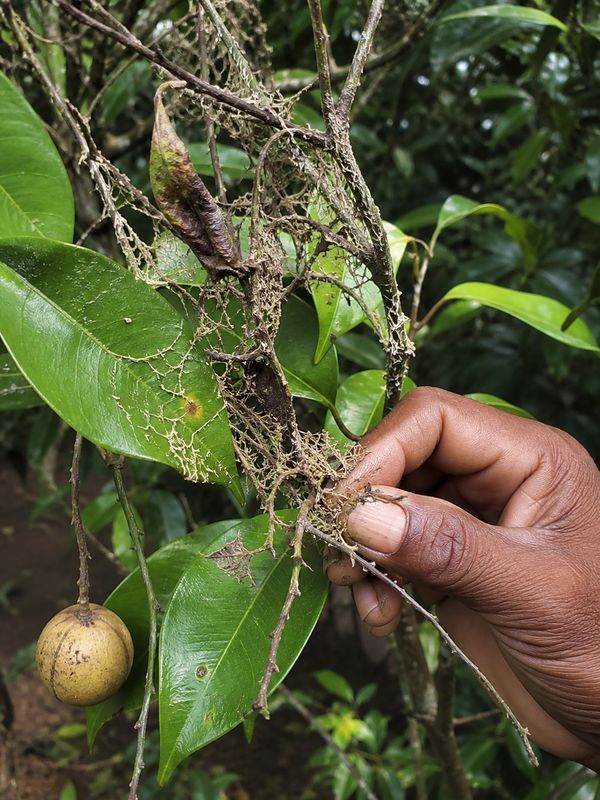
It might be due to this year’s specific weather conditions that thread blight is being widely seen in nutmeg. This disease is more common in male trees.
If not controlled, this disease can completely destroy a large nutmeg tree within 3-4 years.
For control, pluck off as much of the thread-like growth and the leaves it starts on from the nutmeg tree as possible. Destroy the fallen leaves and twigs from the infected tree. This will help prevent the spread of this new disease.
Although Bordeaux mixture is recommended for fungal diseases, farmers’ experience is that control can be achieved by using Hexaconazole, Propiconazole, etc., along with a wetting agent.
Summer Vegetables: With high temperatures, the attack of whiteflies is seen to be intensifying. The most effective method of control is to attract and trap whiteflies using yellow traps.
These should be installed on all sides of the field’s borders. This is helpful for controlling insects coming from outside and for trapping those inside.
At the base of the vegetable stems, mulch to a distance of at least 5 cm. Ensure that the water given reaches the area of root growth under the mulch.
After harvesting for Vishu, continuing to spray 18-18-18, SOP, etc., at 3 grams each at an interval of 15 days, will be helpful for the subsequent harvest.
Monsoon Vegetables: The work to prepare seedlings for monsoon vegetables can be started in the first week of May itself. For this, procure seeds, organic manure, Pseudomonas, Proteck, etc., this month itself. By the end of April, clear the weeds from the place where you intend to cultivate vegetables.
When should broadcast paddy sowing preparation begin after Vishu?
The first round of plowing can be done immediately after Vishu in fields where broadcast sowing is practiced. The final plowing for broadcasting can also be done immediately after Vishu. The recommendation mentioned is 300 kg of lime and 5 tons of organic manure per hectare before sowing.
Is a seed drill better than hand sowing for broadcast paddy?
Instead of sowing by hand, sowing with a seed drill is also sufficient. When using a seed drill, the required amount of seeds can be determined by testing, and the number of saplings can be regulated. Because seedlings are spaced apart, pests and diseases will also be less.
Why are tender mangoes cracking and falling?
Mangoes cracking and falling at the tender stage, and small mangoes turning yellow at the base before cracking and falling, are due to boron deficiency. The suggested remedy is to mix boric acid at one gram per liter of water and spray. Watering three times a day can also help reduce mango drop in this weather.
How can farmers control whiteflies in coconut and vegetables?
Yellow traps are the most effective method mentioned for attracting and trapping whiteflies. In coconut, yellow traps allow natural enemies to multiply, making biological control possible. In vegetable fields, traps should be installed on all sides of the field borders to catch insects coming from outside and those already inside.
What should be done when nutmeg shows thread blight?
Pluck off as much of the thread-like growth and the leaves it starts on from the nutmeg tree as possible. Destroy fallen leaves and twigs from the infected tree to prevent spread. Bordeaux mixture is recommended for fungal diseases, while farmers’ experience also mentions Hexaconazole or Propiconazole with a wetting agent.
How should Rambutan and Pulasan be watered in April?
Continue watering Rambutan and Pulasan. Not watering in the name of giving summer stress for flowering is not good, especially when trees are shedding leaves. Trees in sandy soil that are being regularized should be watered morning and evening, while once-daily watering is sufficient for others.
What preparation is needed for ginger and turmeric cultivation?
If enough rain has cooled the earth, preparations can begin. Prepare beds one meter wide and 25 cm high, with 35-40 cm spacing between beds. In a one-square-meter bed, mix 500 to 600 grams of Trichoderma with organic manure and mix well before cultivation.