By Dr. S. Sunitha
Know about harvesting for planting material, preservation, fertilization, and pest and disease control.
The climate in Kerala is highly favorable for tuber crops. Cassava, sweet potato, elephant foot yam, taro, yam, lesser yam, Chinese potato, and arrowroot are the main ones among these. Tubers, vines, and stems are used as planting materials.
Except for cassava, sweet potato, and Chinese potato, most other crops are planted in small quantities in March and harvested by December-January.
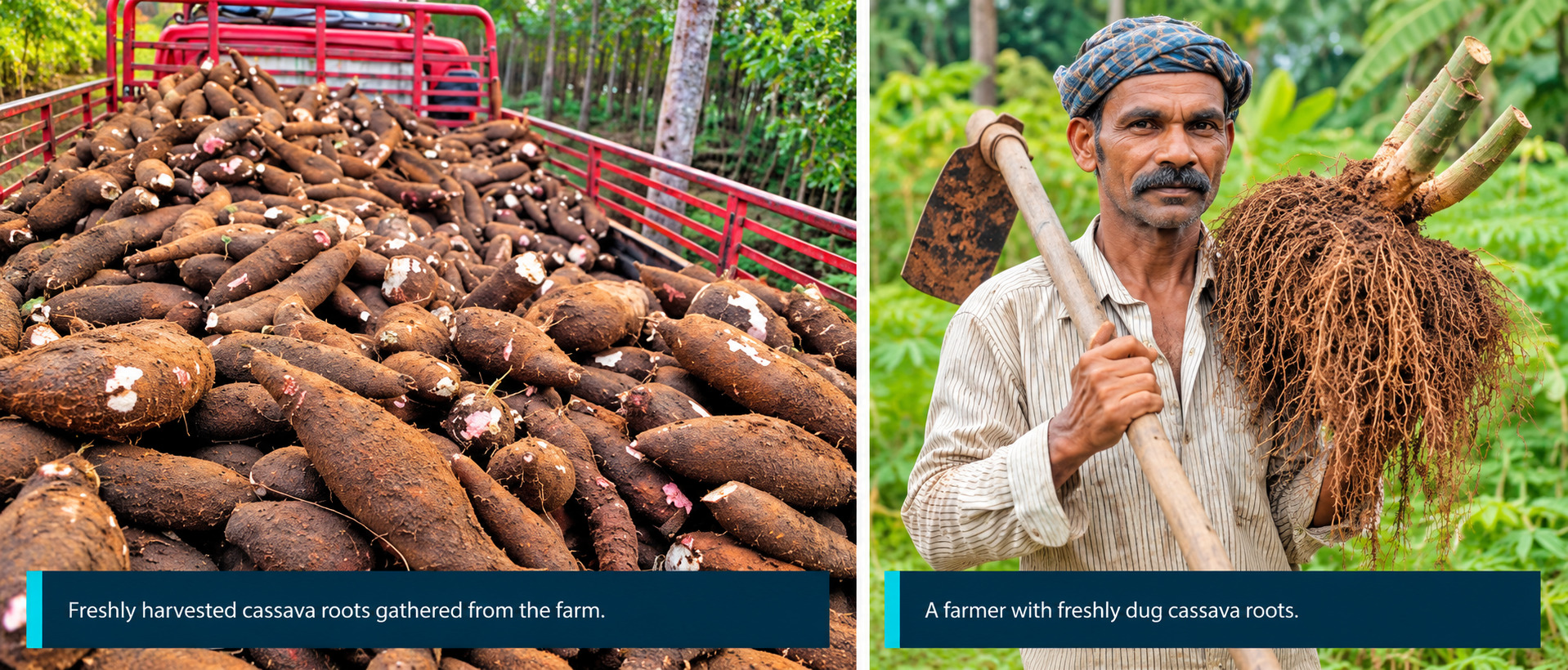
Planting materials: Tubers, vines, and stems are used as planting materials.
Most other crops are planted in small quantities in March and harvested by December-January.
For these tubers intended for planting, the base can be tilled, finger-pressed, and neatly covered with soil.
It is better to harvest them a few days later, during the Kumbham season.
Cassava: It can be harvested in 6-7 months for processing, and long-duration varieties in 9-11 months. Yellowing, drying leaves, and cracks in the soil at the base are signs that they are mature.
The stems to be used for the next cultivation should also be cut during the first month. Stems that are 7-10 months mature, 2-3 cm thick, and free from diseases and pests should be used.
For planting, use the middle part of the stem, up to 50 centimeters long, avoiding the top and bottom sections. If the stems cannot be planted immediately, it is better to store them in the shade or dip the ends in wax to preserve them.
Use a sharp knife when cutting the stem. Be careful not to damage the cut part. Planting in January and February is best.
If planting on mounds, dipping the stems in a solution of 30 EC pesticide at a ratio of 2 ml per liter of water, or alternatively, 17.8 SL at 0.5 ml per liter of water, can prevent termite infestation.
Sweet Potato: The harvesting method for sweet potato varies according to the duration of the variety. When the plants are ready for harvest, the growth of the vines accelerates, and they take root.
Therefore, harvesting can be done according to need, considering the moisture in the soil and the weather. After weeding at monthly intervals, it is good to heap the soil into mounds after 2-3 days.
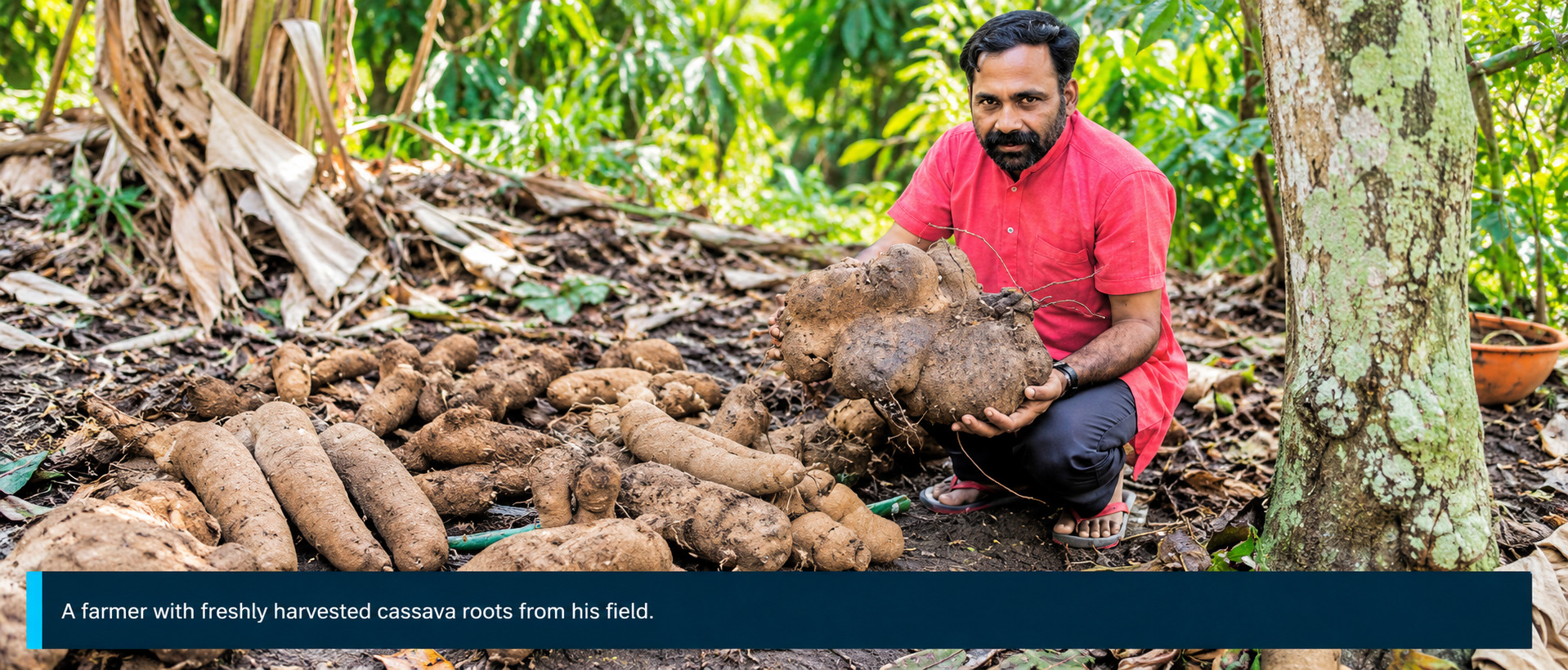
Elephant foot yam, taro, yam, lesser yam, and arrowroot are varieties that sprout at the same time. Depending on the soil conditions, the leaves may show yellowing. Especially for taro, harvesting should only be done after the leaves have yellowed and dried.
To store elephant foot yam tubers without sprouting, the sprouts should be broken off. The seed tubers should be heaped and placed in shady places with good air circulation.
It is good to collect disease-free tubers, cut off their shoots, and store the seed tubers for planting. They should be spread out in the shade and dried. The seed tubers should be stored without getting damaged.
Elephant Foot Yam: After harvesting, it should be spread in the shade and dried for 24 hours. The price for seed yam is ₹20 per kilo.
It is beneficial to store the tubers without damage after harvesting. The roots can be stored on the tubers without cutting them.
After harvesting, fresh cow dung or ash can be applied. If a tuber is cut, it is good to place only that part in the sun for one or two days and then store it in the shade.
Taro: Watering one month before harvest will help increase the weight of the tuber. It can be harvested in 5-6 months after planting.
Yam: Only tubers that have reached 9-10 months of growth should be used for seeds.
The head portion can be cut, dipped in ash, dried, and used for planting. Roots can be sprouted by planting after treatment with a solution of 17.8 SL at 0.5 ml in one liter of water.
Cutting the sprouted part of the seed tubers while avoiding the middle part will help in faster sprouting.
It is good to dip sweet potato vines, 5 grams mixed in 5 kg, for 10 minutes and dry them in the shade.
Additionally, it is common practice to prepare a solution of 2 grams [of a substance] per liter of water, dip the seeds in it for 10 minutes, and then plant them after drying.
If there are no pests but the plant shows signs of nutrient deficiency, pesticides can be used for nematodes. It is also good to spread fresh cow dung from the plants before harvesting in soil with a high population of these.
Applying ash to the plant bed is good for preventing diseases in the tubers.
Taro is susceptible to tuber rot disease. Yellowing, wilting, and decay of tubers are its symptoms. New stems may also fail to sprout.
Diseases that affect onion plants can also affect elephant foot yam. To prevent root rot, the roots can be treated with medication.
Also, during soil preparation in nurseries, neem cake can be added at a rate of 2-3 tons per hectare. They can be stored with ash. Before and after harvesting, neem kernels can be powdered and scattered, sprayed, or applied to the leaves.
9446396026