George K. Mathai
Deputy Director of Agriculture (Rtd), Krishippakappu
E-mail: mathaigk@gmail.com
Let’s provide a shield of protection for the main enemies in paddy fields and fruit-bearing trees. The first step in pest control is to use pheromone traps. The next step is to use yellow sticky traps. These are effective in controlling pests like whiteflies. They can also be used against aphids.
The next step is integrated pest management. The fruit fly is a major pest for jackfruit. Hanging traps, 2 per tree, can be used. Put a piece of ripe jackfruit inside the trap. Add 20 grams of jaggery mixed with a little water.
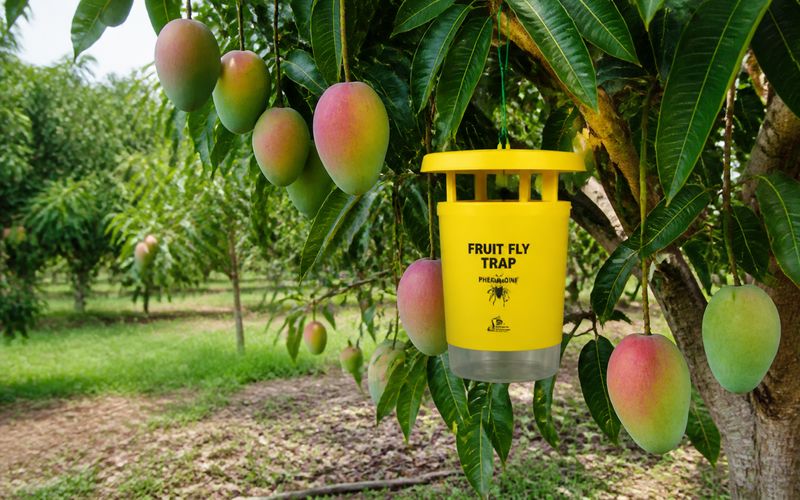
For other fruit flies, hang traps with 1cc of pesticide mixed in 1 liter of water on the branches.
Let’s look at some other organic control methods. To make these effective, they must be implemented with community participation.
Also, it is crucial to ensure that there are no stagnant water sources that can become breeding grounds for pests.
Yellow sticky traps are effective in controlling pests like whiteflies and can also be used against aphids.
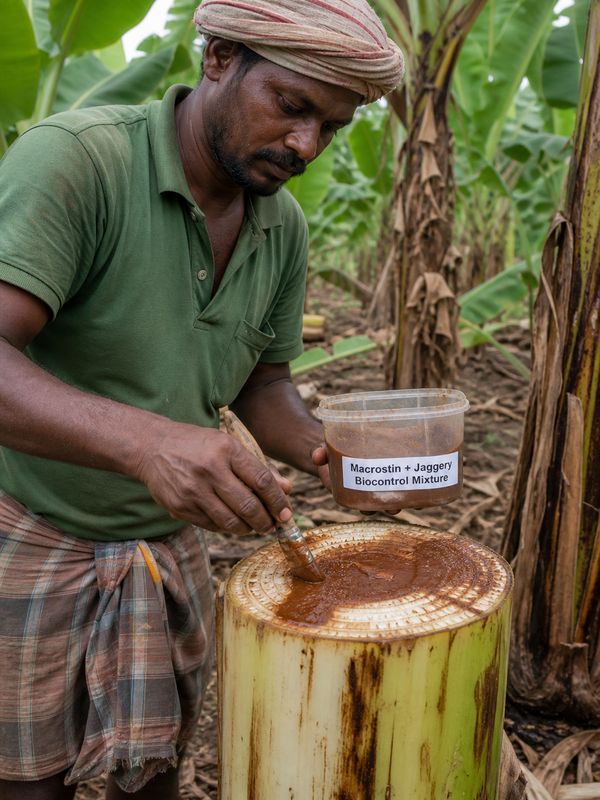
Macrostin is a type of fungus. It is available in powder form. To control the corm weevil in bananas, mix 5 grams of Macrostin and 3 grams of jaggery in one liter of water and apply it to the cut surface of the banana pseudo-stem after harvesting the bunch.
For mangoes, this can be applied to the cut surface of pruned branches. Also, make a paste by mixing it with a little water and apply it to the trunk of the tree up to a height of 2 feet.
To control the rhinoceros beetle, mix 20 ml of the mixture in one liter of water and pour it into the leaf axils.
A table of four cucumber varieties that can be grown on trellises. These include Mudikode, Local, Sadanand, and Nadan. The table provides information on planting distance, the number of plants per hectare, etc. This helps in achieving high yields.
| Item | Planting Distance (cm) | Plants per Hectare | Additional Figure |
|---|---|---|---|
| Mudikode Local | 100 | 130 | 165 |
| With 2 suckers | 200 | 250 | 330 |
| Sadanand | 300 | 400 | 500 |
| Nadan | 100 | 210 | 280 |
| With 2 suckers | 330 | 400 | 500 |
| Sadanand | 500 | 625 | 850 |
There are many methods to increase yield. We must choose the method that is most suitable for our local conditions.
Black Pepper
To control the pollu beetle, spray neem oil. For quick wilt disease, apply lime/dolomite. After 14 days, drench the base with a Trichoderma mixture. For slow wilt, apply Paecilomyces. To control burrowing nematodes, it is essential to grow cover crops. Use marigolds as a trap crop and destroy them after two months.
Vegetables
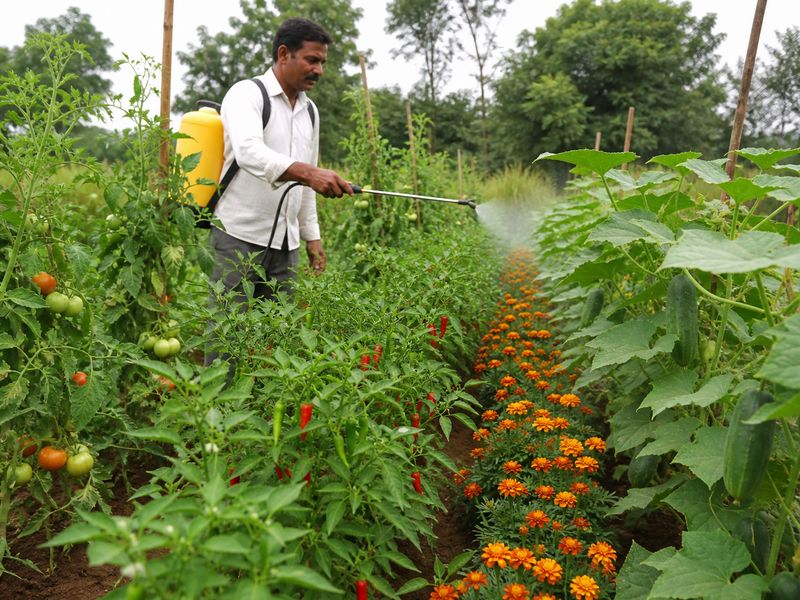
To control nematodes, which are a major problem, apply Paecilomyces at the base of the plants. Drenching the base with this is a good practice. To control bacterial wilt in solanaceous vegetables like tomatoes, eggplants, and chilies, drench the base with a Pseudomonas solution. Another method is to graft them onto wilt-resistant rootstocks.
Orchids
To control snails and slugs that damage the flowers and leaves, use a tobacco decoction. Boil 5 grams of tobacco in one liter of water and spray. This can be done once a week. Protect from root rot.
Chrysanthemum
To control leafminers, spray a Verticillium solution. To control nematodes, which are a major problem, apply Paecilomyces. It is recommended to apply 11 grams for 3 pots.
Elephant Foot Yam: To control mealybugs found at the base, apply Beauveria.
.
How many pheromone traps are needed for jackfruit fruit fly control?
For jackfruit, the article recommends hanging traps at the rate of 2 per tree. A piece of ripe jackfruit is placed inside the trap along with 20 grams of jaggery mixed with a little water. This attracts fruit flies and helps reduce infestation pressure.
How is Macrostin used to control banana corm weevil?
To control corm weevil in bananas, mix 5 grams of Macrostin and 3 grams of jaggery in one liter of water. Apply this mixture to the cut surface of the banana pseudo-stem after harvesting the bunch. This uses Macrostin as a fungal biocontrol support in banana pest management.
What is the organic method for mango fruit fly control?
For ripening mangoes, use pheromone traps to control fruit flies. Another method is to mix 20 grams of jaggery in one liter of water and keep it in a plastic container with holes. The fruit flies are attracted to the jaggery solution and die inside the trap.
How can mango hoppers be controlled naturally?
To control mango hoppers, which cause flowers and young mangoes to drop, the article recommends a neem oil spray. At least 50 ml is recommended for one tree, and the neem oil must be mixed with soap so that it emulsifies properly before spraying.
What is the role of EPN in banana, coconut and cucumber farming?
EPN, or Entomopathogenic Nematodes, is used as a biocontrol agent. In banana, 2 grams per liter of water can be drenched at the base for corm weevil. In coconut, 2 grams per liter is sprayed on manure pits for rhinoceros beetle grubs. In cucumber, pits are drenched with EPN before or after sowing.
Why are yellow sticky traps useful in integrated pest management?
Yellow sticky traps are effective in controlling pests like whiteflies and can also be used against aphids. By reducing insects that spread diseases such as mosaic disease in cucumber, sticky traps support integrated pest management and help reduce the spread of pest-borne plant problems.
How can bacterial wilt in tomato, eggplant and chili be managed?
For bacterial wilt in solanaceous vegetables such as tomatoes, eggplants and chilies, drench the base with a Pseudomonas solution. Another method is to graft these vegetables onto wilt-resistant rootstocks. Both approaches support healthier plants in areas where bacterial wilt is common.