Red Palm Weevils and Rhinoceros Beetles are among the most destructive pests threatening coconut trees, particularly young saplings. Left unchecked, these beetles bore into the central growing point of the palm, causing irreversible damage or death to the tree.
Fortunately, a simple and practical trapping method using a plastic net — combined with careful mulching practice — can help protect your coconut trees effectively.
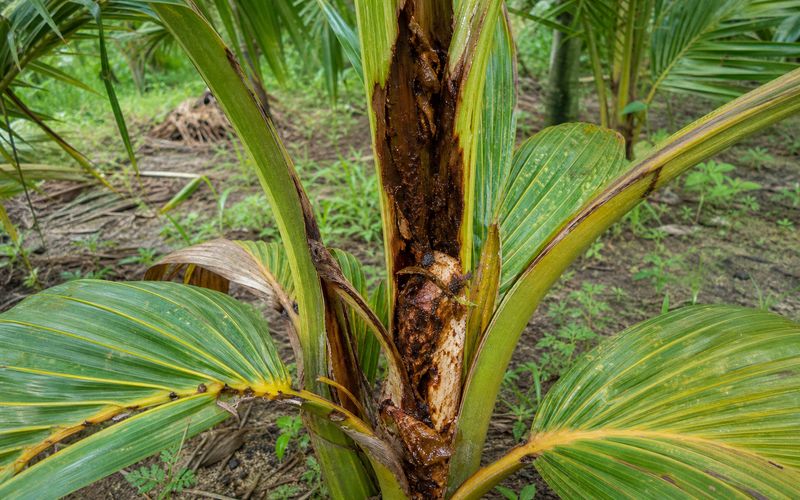
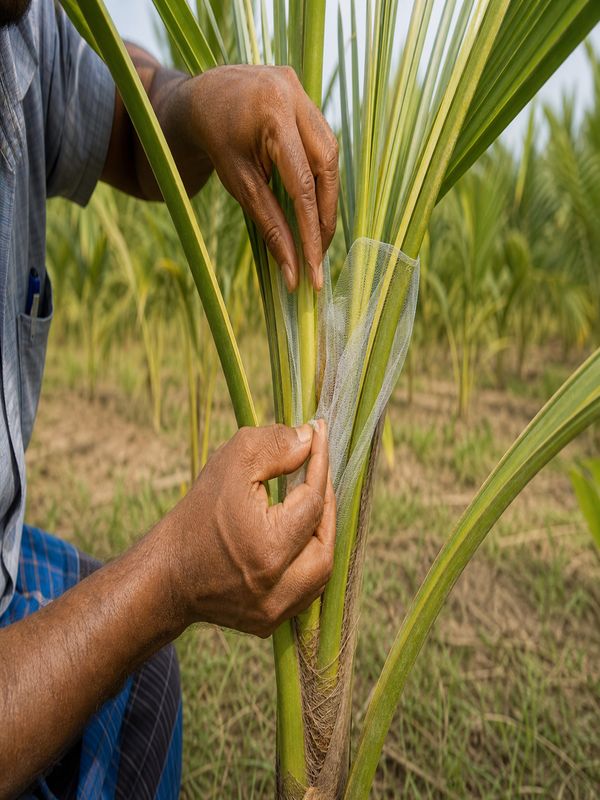
To trap Red Palm Weevils and Rhinoceros Beetles, use a plastic net as a physical barrier placed directly on the sapling. Here is how to do it correctly:
- Fold and tuck a plastic net into the central whorl of the coconut sapling. The central whorl is the growing tip of the palm where new leaves emerge — the primary target for both beetles.
- Extend the net placement to the 5 surrounding leaf axils around the central whorl. These axil junctions are common entry and hiding points for Rhinoceros Beetles and Red Palm Weevils.
- Ensure the net is properly tucked in so it remains in place and physically blocks or traps beetles attempting to enter these vulnerable zones.
Mulching is beneficial for moisture retention and soil health around coconut trees, but improper application can create conditions that attract or harbour beetles near the trunk.
⚠️ Important: Always mulch only after leaving a distance of at least 30 cm from the trunk of the coconut tree. Mulch placed too close to the trunk creates a moist, warm microhabitat that encourages beetle activity and egg-laying near the base of the palm.