March’s Agricultural Work
Dr. K. Manoj
Director of Agriculture (Retd.), Krishi Bhavan
E-mail: manojkgk@gmail.com
This is the right time for farmers who are preparing for summer irrigation-based vegetable cultivation. It is also the time to plant tuber crops.
Select good planting materials and give priority to healthy seed tubers, suckers, grafts and cuttings. Timely irrigation, weeding, earthing up, shade and biological crop protection practices are important for better growth and yield.
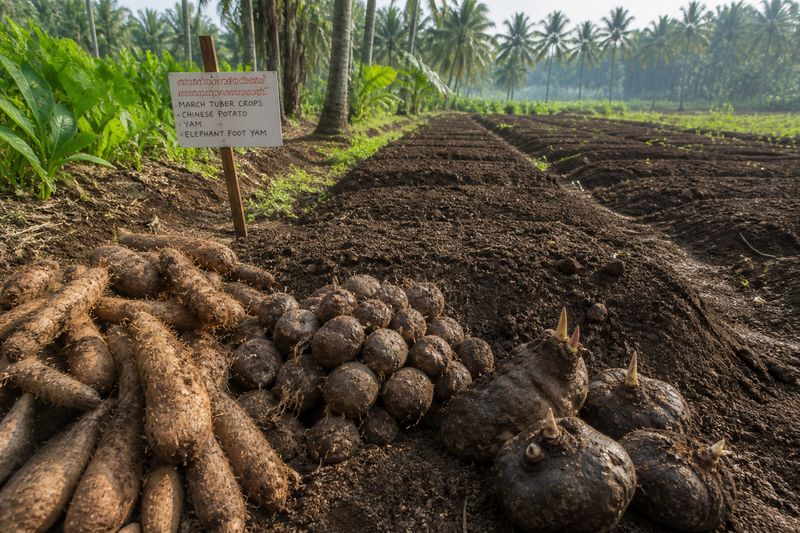
Chinese potato (koorka)
The planting of Chinese potato (koorka) should have been completed by now. For those who haven’t planted yet, it can still be done by the middle of this month.
- ✅ For planting koorka in beds of 90 cm width, pits should be made at a distance of 60 x 45 cm.
- ✅ Choose healthy, large-sized tubers for planting.
- ✅ For one cent of land, 500 grams of seed tubers will be required.
Seed tuber preparation
After taking the tubers, they should be disinfected in a Pseudomonas solution and dried in the shade. Then, plant them in prepared beds. Application of basic fertilizer, especially organic manure, is essential.
Germination support
For the germination of Chinese potato tubers, which are in their dormant stage, drip irrigation for 2-3 hours for two consecutive days is good. Alternatively, water can be stagnated in the beds for a short period.
Where water is scarce
In areas where water is scarce, place the seed tubers in a sack, moisten it with water, and keep it aside. When small sprouts appear, they can be planted in the soil. Timely weeding and earthing up are essential for better yield.
Yam (Kachil)
Take pits of 45x45x30 cm size and plant 100-gram pieces of seed tubers. They can be planted on mounds as well. At the time of planting, apply 100 grams of lime and 20 grams of bone meal per pit. Mix it well with the topsoil. A 200-300 gram piece of yam tuber should be placed in the center of the pit. Cover it with soil and dry leaves. Earthing up should be done once the vines start to grow, about 90 days after planting. Proper irrigation and weeding will lead to a good yield.
Elephant Foot Yam (Chena)
For planting elephant foot yam, prepare small mounds. To get a good yield, it is best to plant a piece of the corm weighing one kilogram, with a portion of the central bud. Disinfect the seed corm for 2 weeks by smearing it with a paste of cow dung and ash, and then drying it in the shade. After that, plant it in the prepared mounds.
Cassava
A chip (thattu – with one bud) piece that is between 5-7 cm. Surface planting for crops like cassava tuber, elephant foot yam.
Cassava (Maracheeni)
Cuttings should be taken from the middle part of the stem. The cuttings should be planted upright. Plant them at a distance of three feet in well-ploughed soil.
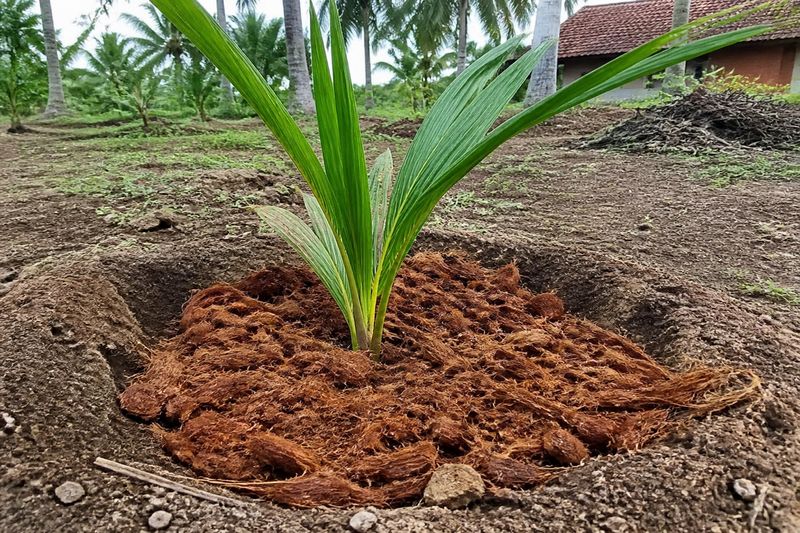
This is a suitable time to plant coconut saplings. Prepare the pits well in advance. New saplings can be planted in well-prepared pits. Burying coconut husks or coir pith in the pits will help retain moisture. Like that, placing a handful of neem cake or Trichoderma at the base of the sapling is a good practice for its growth.
This is the time to apply summer fertilizer to coconut trees. Dig a small trench around the base of the tree. Applying fertilizer in it and covering it with soil is the method. Immediately after, it should be irrigated. This will help increase the yield.
Black Pepper
This is the time to plant pepper cuttings in polybags. Provide shade. Cuttings should be planted in a potting mix that drains well. These can be transplanted to the main field during the monsoon season.
Paddy (Nellu)
This is the time when the puncha crop is harvested. The leaf folder (ilachuruttipuzhu) pest can be seen more during this time. To control this, spray 5 ml of neem oil mixed with a wetting agent (non-ionic wetting agent – a shampoo without conditioner can also be used) per liter of water. Adding 50% kanjiveḷḷam (rice water) to this and spraying it on the leaf sheaths has been found to be effective.
⚠️ Important pest-control note: Using synthetic pyrethroids should be avoided. Due to this, the resurgence of secondary pests is possible. Therefore, eco-friendly pest control methods should be adopted.
🌿 Apart from these, providing organic fertilizers such as Verticillium, Metarhizium, and bio-fertilizers like Pseudomonas is beneficial for crops like ginger, turmeric, cardamom, and coffee.
These pests are suitable for breeding in tropical climates. Aphids, mealybugs, and whiteflies are the main ones. To prevent them from spreading in the planting area, some friendly fungi like Entomophthora are now available. Besides these, yellow sticky traps can be used to attract and destroy the insects.
Ginger (Inji)
Plant ginger rhizomes that have started to sprout.
Turmeric (Manjal)
Plant turmeric rhizomes by dividing them. They should be planted with a spacing of three feet.
Orchid
For orchids, this is the growing season. From March to May 11, spraying fertilizer every 3 days is good for their growth.
Biological support
Bio-fertilizers like Pseudomonas and organic fertilizers such as Verticillium and Metarhizium are beneficial for crops like ginger, turmeric, cardamom, and coffee.
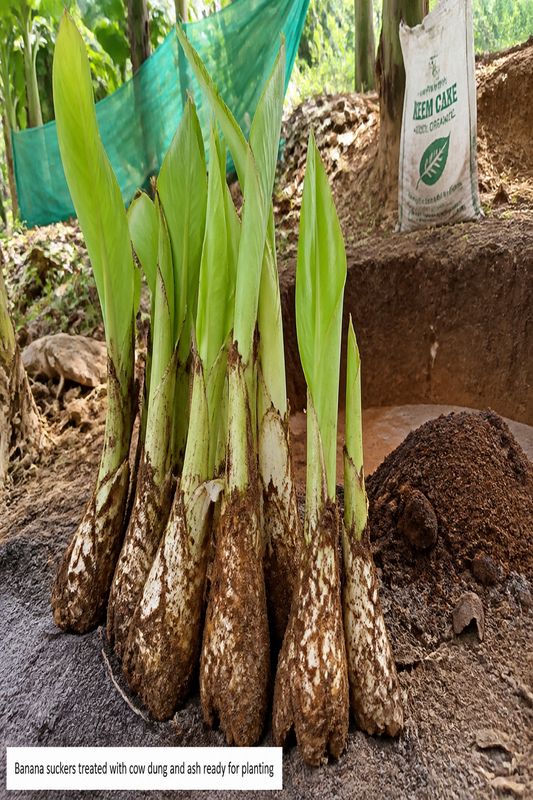
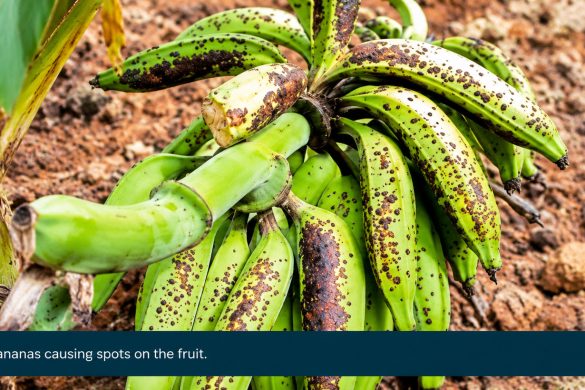
This is a good time to plant banana suckers. To prevent the rhizome weevil, select healthy suckers that are 3-4 months old. The suckers should be peeled. Soak them in a solution of cow dung and ash for 4 minutes and then dry them in the shade before planting.
For early sprouting, the head of the sucker should be leveled. The wound should be covered with cow dung. This can prevent water from entering and causing decay. Also, place a small piece of hot coal on it. This can prevent leaf roller pests.
Besides this, planting can be started by the middle of this month. In the pit where the banana is planted, adding a handful of neem cake or Trichoderma, which is the most effective biological agent, to the soil helps prevent root damage, increase disease resistance, and aids in plant growth.
Nutmeg (Jathi)
This is a good time to plant nutmeg grafts. Provide shade. The soil around the base should be kept moist. To do this, cover the base with coir pith (2 kg) or dry leaves. It is good to provide shade for the first two years. Nutmeg saplings have a 75% taproot. Therefore, it is better to plant them in the main field.
Rambutan, Litchi, Pulasan
Grafts of these, air-layered ones, can be planted. The planting time is from May to September. Dig pits of 60 cm in all dimensions. Fill the pits with topsoil and organic manure. Plant the grafts in the center of the pit. Support the sapling with a stick and tie it. Mulch the base with dry leaves to retain moisture.
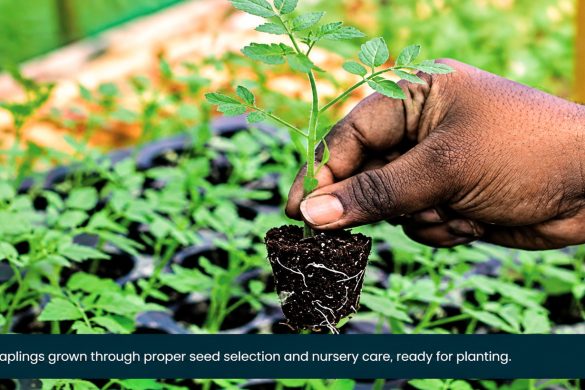
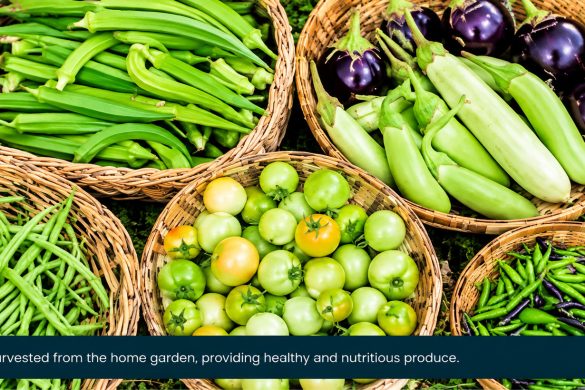
Seedlings of tomato, chili, and brinjal can be transplanted. Provide support. For crops like tomato, after transplanting the seedlings into the main field, drench the base with a Pseudomonas solution. This is good. In tomato, after 4 weeks of planting, for proper pollination, gently shake the flowering stalks. Applying lime will help prevent fruit rot at the tip.
🪱 Root-knot nematodes are a major problem in vegetable crops. To control this, it is very effective to apply neem cake, marigold cake, or Entomopathogenic Nematodes (EPN) to the soil. For this, one has to approach agricultural universities. In addition, using tolerant or resistant varieties is the best method. Growing marigolds as a trap crop is also a good control measure.
When should Chinese potato or koorka be planted in March?
Chinese potato planting should ideally have been completed earlier, but farmers who have not planted yet can still do it by the middle of this month. Use beds of 90 cm width, prepare pits at 60 x 45 cm spacing, and select healthy, large-sized tubers for planting.
How much koorka seed tuber is needed for one cent of land?
For one cent of land, 500 grams of Chinese potato seed tubers will be required. After selecting the tubers, disinfect them in a Pseudomonas solution and dry them in shade before planting. Basic fertilizer, especially organic manure, is essential in prepared beds.
What is the best way to plant elephant foot yam?
For elephant foot yam, prepare small mounds and plant a corm piece weighing about one kilogram with a portion of the central bud. Disinfect the seed corm for 2 weeks by smearing it with cow dung and ash paste, dry it in shade, and then plant it in the prepared mounds.
How can farmers reduce leaf folder pest in paddy?
For paddy leaf folder, spray 5 ml of neem oil mixed with a wetting agent per liter of water. A non-ionic wetting agent or shampoo without conditioner can be used. Adding 50% kanjiveḷḷam, or rice water, and spraying it on the leaf sheaths has been found effective.
Why should synthetic pyrethroids be avoided in this season?
Synthetic pyrethroids should be avoided because they may cause resurgence of secondary pests. Eco-friendly pest control methods are recommended instead. Friendly fungi such as Entomophthora, along with yellow sticky traps, can help manage aphids, mealybugs and whiteflies in tropical conditions.
How should banana suckers be prepared before planting?
Select healthy banana suckers that are 3-4 months old to reduce rhizome weevil risk. Peel the suckers, soak them in a cow dung and ash solution for 4 minutes, and dry them in shade. Adding neem cake or Trichoderma in the pit helps protect roots and improve growth.
What helps prevent root-knot nematodes in vegetables?
Root-knot nematodes can be managed by applying neem cake, marigold cake, or Entomopathogenic Nematodes to the soil. Farmers may need to approach agricultural universities for EPN. Using tolerant or resistant varieties and growing marigolds as a trap crop are also effective control measures.