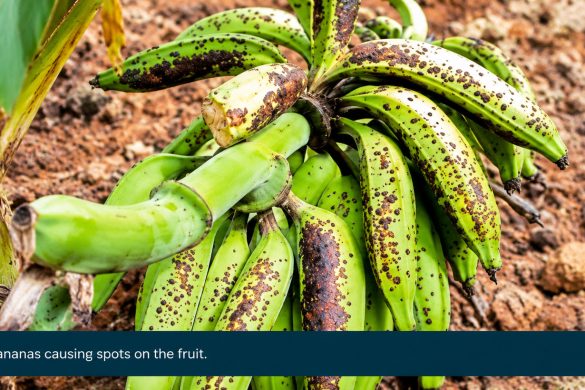
A specific type of pest infestation on custard apple — and other related fruits — causes them to drop prematurely before they fully ripen. If left uncontrolled, this leads to significant crop loss. The good news is that this problem can be effectively managed using a two-step spray program involving a neem-based botanical product and a Verticillium-based biological solution, applied on consecutive evenings and repeated after 10 days.
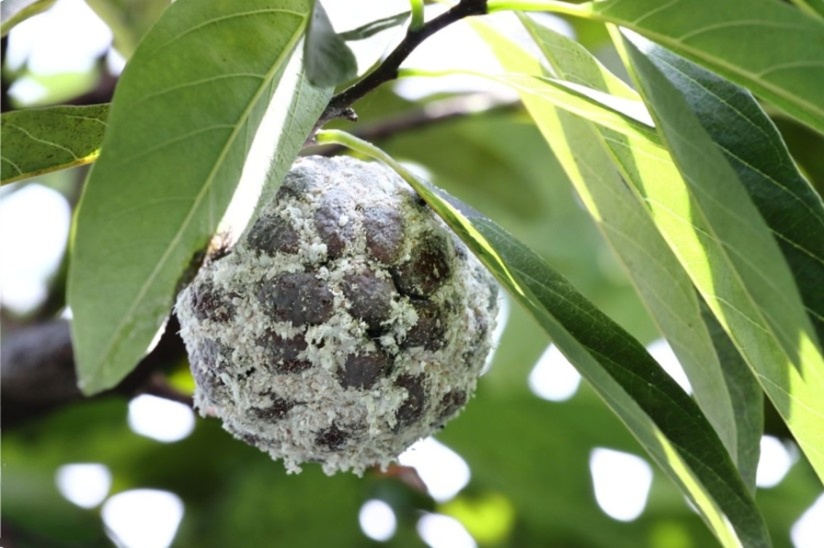
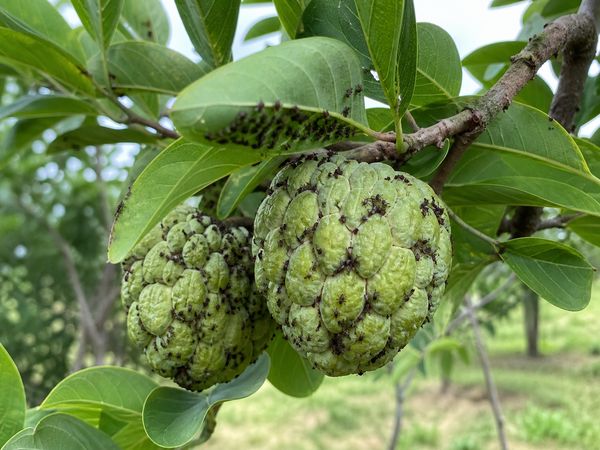
On the first evening, prepare and apply a neem-based botanical spray as follows:
- ✅ Dilute a neem-based botanical product with a non-ionic adjuvant in water at a ratio of 1 ml per 4 liters of water.
- ✅ Add 1 ml of non-ionic adjuvant to every 4 liters of spray solution.
- ✅ Spray to thoroughly drench the fruits, the undersides of leaves, and the clusters.
💡 Tip: Make sure the spray reaches the undersides of leaves and fruit clusters — these are the areas where pests tend to shelter and feed, making them the most critical zones to cover.
On the following evening, apply one of the two biological solutions below. The goal is to ensure the fruits, kusurthikal, and tender parts get thoroughly wet:
Option A — Verticillium Solution
Mix 30 grams of Verticillium in 1 liter of water. Allow it to settle, then use only the clear liquid from the top for spraying.
Option B — 15 ml Solution
Mix 15 ml of the product in 1 liter of water and spray directly so that the target parts are fully drenched.
⚠️ Important: For both options, add 1 ml of non-ionic adjuvant per 4 liters of spray solution to improve coverage and effectiveness.
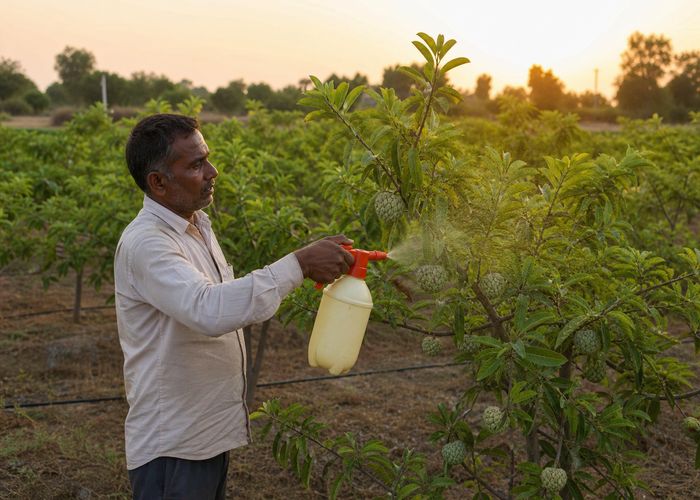
Follow this simple two-evening spray cycle and repeat the full program after 10 days for continued protection:
- 📅 Evening 1: Neem-based botanical spray with non-ionic adjuvant (1 ml per 4 liters)
- 📅 Evening 2: Verticillium clear liquid (30g/liter) or 15 ml solution (per liter) with non-ionic adjuvant
- 🔄 Repeat: Entire two-evening program after 10 days
🌙 Why spray in the evening? Evening application reduces evaporation, ensures better absorption, and avoids harming beneficial insects that are active during the day.