By A.V. Narayanan | Phone: 9745770221
In ancient times, Vayambu was a medicinal plant that grew in clumps like a good grass, in a way that revitalized the grass plant, near the kitchen area of houses and in places where water from washing utensils stagnated.
Its scientific name is Acorus calamus. Its native place is Europe. In Kerala, it is still found in the Western Ghats and in fields.
This article records the traditional account of Vayambu and its cultivation method. For medicinal use, especially for children or women after childbirth, guidance from a qualified practitioner is important.
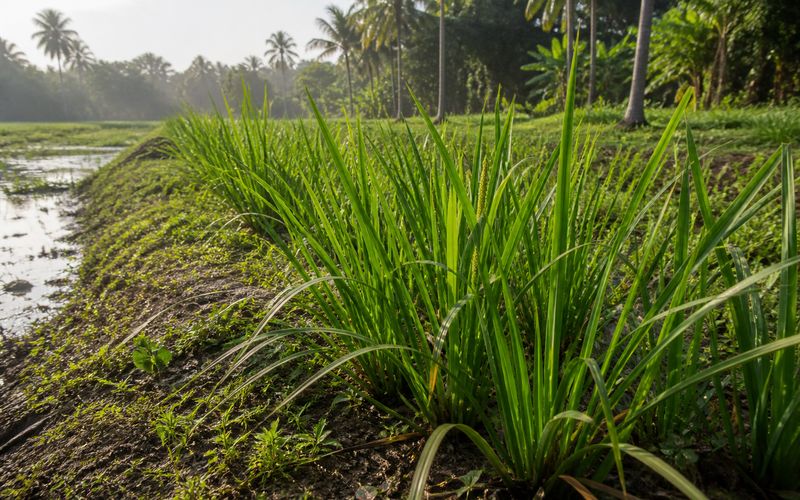
Vayambu was traditionally seen near the kitchen area of houses and in places where water from washing utensils stagnated. It also grew in clumps like a good grass.
In Kerala, it is still found in the Western Ghats and in fields, making it familiar to people connected with traditional farming and medicinal plants.
The elders used to cultivate 3 types of Vayambu in the old days. From the third month after a child was born, Vayambu was given for intellectual development.
From the third month after a child was born, Vayambu was given for intellectual development.
For children who did not speak, its rhizome was not rubbed and given.
It was also given for easy flow.
There was a superstition that its beautiful shape and shade would together hinder the function of the tongue.
For the Puranas and for Guruvayurappan, Vayambu was very important. In Ambadi, it was administered to Radhika by rubbing.
Vayambu is a main ingredient in the lehyam, a medicinal paste, for women who have given birth. Vayambu is also a main ingredient in Ayurvedic medicines for pain and weakness caused by diarrhea and fever.
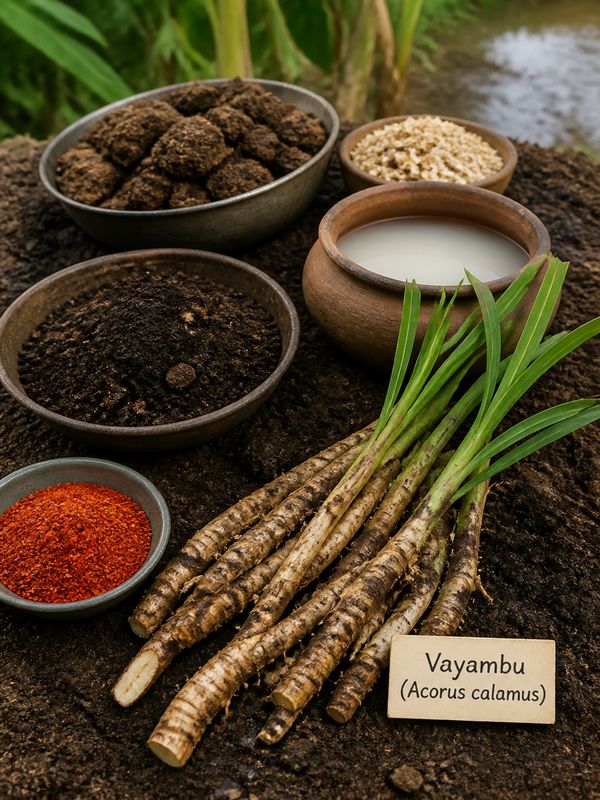
The soil is tilled well, and organic fertilizers such as chicken manure and cow dung are added and the soil is loosened.
Till the soil well so that it becomes loose and suitable for planting.
Add organic fertilizers such as chicken manure and cow dung.
From the time it starts to wilt in the sun, it should be watered well.
It is very good in places where water stagnates.
Although disease and pest infestation is low, the rhizome can be affected by worms.
Mixing bird’s eye chili powder in rice water and applying it will be beneficial.
This simple field practice supports rhizome protection while keeping the cultivation method close to traditional organic farming habits.
What is Vayambu and what is its scientific name?
Vayambu is a traditional medicinal plant known scientifically as Acorus calamus. The article describes it as a plant that once grew in clumps like good grass near kitchen areas, stagnant washing water, wet fields, and similar moist places. In Kerala, it is still found in the Western Ghats and in fields.
Why was Vayambu traditionally given to children?
According to the traditional account, elders gave Vayambu from the third month after a child was born for intellectual development. The article also mentions beliefs connected with speech and the tongue. Such traditional practices should be understood in their cultural context and followed only with qualified medical or Ayurvedic guidance.
Where does Vayambu grow best?
Vayambu grows well in moist conditions. The article notes that it was found near houses where water from washing utensils stagnated, and that it is very good in places where water stagnates. In Kerala, it is associated with the Western Ghats and fields, especially where adequate moisture is available.
How is Vayambu cultivated organically?
The cultivation method described is simple. The soil should be tilled well, organic fertilizers such as chicken manure and cow dung should be added, and the soil should be loosened. Once the plant starts to wilt in the sun, it should be watered well, because Vayambu performs well in wet places.
What pests affect Vayambu rhizomes?
The article states that disease and pest infestation is generally low in Vayambu cultivation. However, the rhizome can be affected by worms. As a traditional remedy, bird’s eye chili powder mixed in rice water is applied, and the article notes that this will be beneficial for managing the problem.
Is Vayambu used in Ayurveda?
Yes. The article says Vayambu is a main ingredient in lehyam, a medicinal paste used for women who have given birth. It is also described as a main ingredient in Ayurvedic medicines for pain and weakness caused by diarrhea and fever. Medicinal use should be guided by a qualified practitioner.