Home » Banana Farmers Beware: Disease, White Spot & Borer Fixes That Matter

Banana Farmers Beware: Disease, White Spot & Borer Fixes That Matter

by Sama Sadhik
5 minutes read

✍️ George K. Mathai — Deputy Director (Retd.), Department of Agriculture | mathaigk@gmail.com

The rainy season brings with it a surge of banana plant diseases and pest attacks that can silently destroy an entire plantation. From the widely spreading Sodokka disease and calcium-deficiency-induced white spot disease to the destructive pseudostem borer, banana growers need to act quickly and correctly to protect their crop.

Understanding the right remedies — from proper leaf disposal to targeted spraying techniques — can make the difference between a healthy harvest and a total crop loss. Here is everything you need to know to keep your banana plantation safe this season.
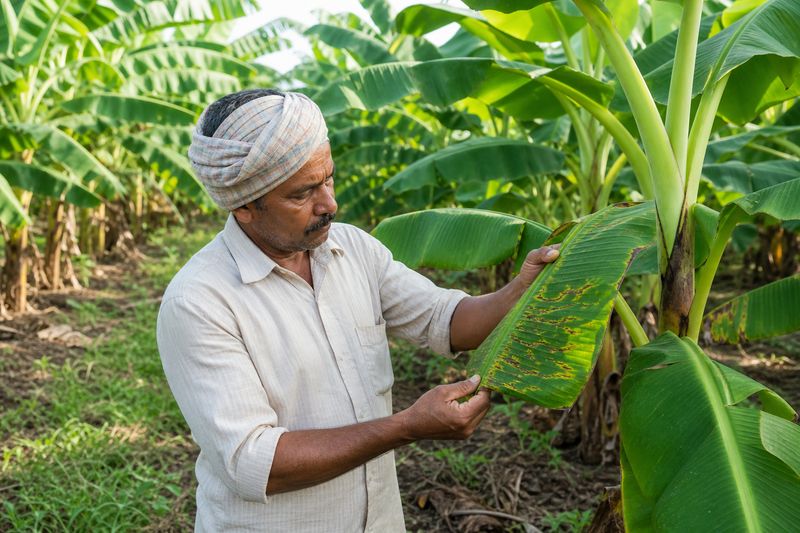
Banana plantation disease management showing healthy leaves and farmer inspecting banana plants for leaf disease

🍌 Sodokka Disease: The Rainy Season Threat You Cannot Ignore

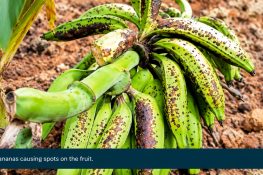
Sodokka disease is being widely seen in banana plants this season. One of the most common mistakes farmers make is cutting the diseased leaves and leaving them right inside the plantation. This practice causes the disease to recur and completely undermines disease control efforts.

⚠️ Important: Never leave cut diseased banana leaves inside the plantation. The cut leaves must be burned and destroyed immediately to prevent the disease from spreading and recurring.


🔬 White Spot Disease: A Calcium Deficiency Problem

White spot disease is also widely seen in banana plants this season. This is a condition caused by a calcium deficiency in the plant. Fortunately, it can be corrected with a straightforward foliar spray treatment.

Remedy: Mix 4 grams of calcium nitrate in one liter of water and spray directly on the affected banana plants to overcome white spot disease caused by calcium deficiency.


🐛 Pseudostem Borer: Prevent the Attack Before It Starts

Tying the dried leaves of the banana plant to its stem creates a favorable condition for the attack of the pseudostem borer. This is a common practice that unknowingly invites pest damage. The dried leaves must be cut and removed from the plant without delay.

To prevent the attack of the pseudostem borer, fill all the leaf axils with a solution of 30 grams of Metarhizium mixed in one liter of water. This biological control method is highly effective when applied correctly and consistently.

💡 Application Tip: To fill the leaf axils with the Metarhizium solution, it is sufficient to operate the backpack sprayer after removing the pin in its nozzle. This simple adjustment ensures effective and targeted delivery of the solution into each leaf axil.
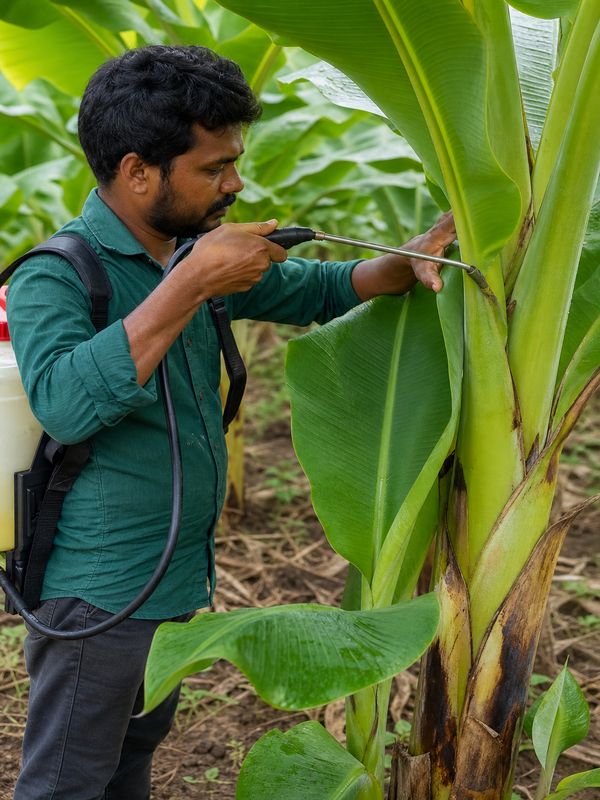
Backpack sprayer applying Metarhizium solution into banana leaf axils to prevent pseudostem borer attack

🌿 The Leaf-to-Bunch Ratio Secret for Maximum Harvest Weight

Here is a critical insight that many banana growers overlook when aiming for maximum bunch weight. If the banana plant has double the number of leaves as there are hands on the bunch, from the time the bunch emerges until it matures, the bunches will attain maximum weight.

📌 Key Example: For a bunch with 6 hands to attain good weight, the banana plant needs 12 leaves. Maintaining this 2:1 leaf-to-hand ratio from bunch emergence to maturity is essential for achieving the best possible harvest weight.

🍃

Sodokka Disease
Burn and destroy cut diseased leaves. Never leave them in the plantation.

🧪

White Spot Disease
Spray 4g calcium nitrate per 1 liter of water on affected plants.

🐜

Pseudostem Borer
Remove dried leaves; fill axils with 30g Metarhizium per 1 liter water.

⚖️

Leaf-to-Hand Ratio
Maintain 2 leaves per hand on the bunch for maximum bunch weight.


❓ FAQ

🌿 What is Sodokka disease in banana plants and how is it controlled?

Sodokka disease is a widely seen disease in banana plantations, especially during the rainy season. The key to controlling it is proper disposal of infected leaves. Cut leaves must never be left inside the plantation, as this causes the disease to recur. All cut diseased leaves should be immediately burned and destroyed to prevent further spread.

🔬 What causes white spot disease in banana plants and what is the remedy?

White spot disease in banana plants is caused by a calcium deficiency. It can be effectively treated by mixing 4 grams of calcium nitrate in one liter of water and spraying it on the affected plants. This foliar application replenishes calcium levels in the plant and helps overcome the deficiency-related symptoms quickly.

🐛 How do you prevent pseudostem borer attack in banana plants?

To prevent pseudostem borer attacks, first remove all dried leaves tied to the banana stem, as they create a favorable environment for borers. Then fill all leaf axils with a solution of 30 grams of Metarhizium mixed in one liter of water. Use a backpack sprayer with the nozzle pin removed for easy and effective application into the axils.

⚖️ How many leaves does a banana plant need for maximum bunch weight?

A banana plant should have double the number of leaves compared to the hands on its bunch for the bunch to attain maximum weight. For example, a bunch with 6 hands requires the plant to maintain 12 leaves from the time the bunch emerges until it matures. This 2:1 leaf-to-hand ratio is critical for achieving the best harvest weight.

💡 Why should dried banana leaves not be tied to the pseudostem?

Tying dried banana leaves to the pseudostem creates a warm, moist, and sheltered environment that is highly favorable for pseudostem borer attacks. This pest can severely damage the internal tissue of the banana plant and reduce yield. Always cut and remove dried leaves from the plant to eliminate potential hiding and breeding spots for this destructive pest.

🧴 How is Metarhizium solution applied in banana leaf axils?

Metarhizium solution is applied into banana leaf axils using a backpack sprayer. The key technique is to remove the pin from the sprayer nozzle before operating it, which allows the solution to flow directly into the narrow leaf axil spaces. Mix 30 grams of Metarhizium in one liter of water and ensure all leaf axils are thoroughly filled with the solution for effective pest control.

🌧️ Which banana diseases are most common during the rainy season?

During the rainy season, banana plantations are most commonly affected by Sodokka disease, white spot disease caused by calcium deficiency, and pseudostem borer pest attacks. Each of these requires a different management approach — proper leaf disposal for Sodokka, calcium nitrate sprays for white spot, and Metarhizium solution application for pseudostem borer prevention.

You may also like