Home » Black Pepper Before Rain: The Simple Step Farmers Miss

Black Pepper Before Rain: The Simple Step Farmers Miss

by Sama Sadhik
4 minutes read

By George K. Mathai, Deputy Director (Retd.), Department of Agriculture  |  mathaigk@gmail.com


Timing and technique make all the difference when establishing black pepper vines. Before the rain intensifies, growers have a critical window to plant correctly and protect their crop from common threats like thrips. Two targeted practices — treating cut vines with Pseudomonas before planting and applying Verticillium spray to combat thrips — can significantly improve the health and survival rate of your black pepper plantation.

These recommendations come from field-tested agricultural expertise and offer practical, low-cost solutions for pepper farmers preparing for the monsoon season.
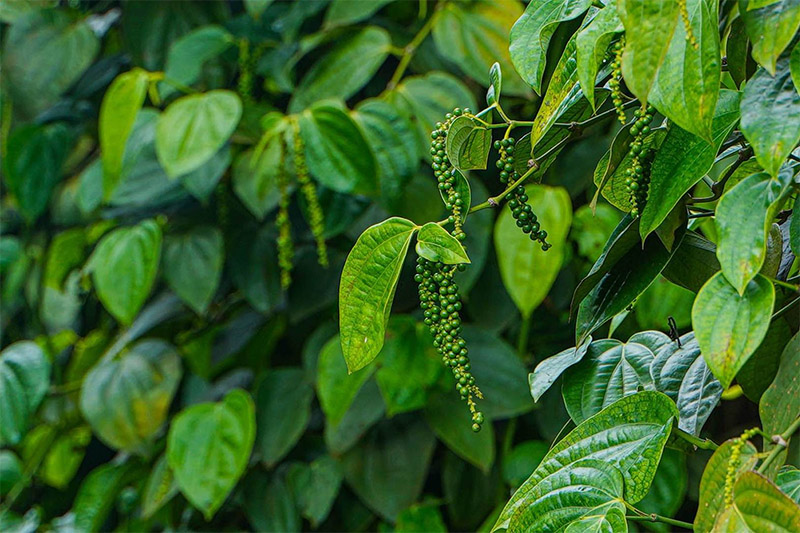
Black pepper vine planting before heavy rain with support tree and Pseudomonas treatment

🌿 Planting Black Pepper Vines Before Heavy Rain

Before the rain intensifies, dip the cut part of the vines in Pseudomonas solution. This biological treatment helps protect the vulnerable cut surface from soil-borne pathogens right at the time of planting — a stage when the vine is most susceptible to infection.

⚠️ Important: Avoid planting on the south side of the support tree. Instead, plant the vine in a pit dug 50 cm away from the base of the support tree.

This positioning helps protect the young vine from excessive heat and sun exposure on the southern face while ensuring it has adequate support for upward growth.

✂️

Step 1
Take cuttings of black pepper vines before heavy rainfall begins.

🧪

Step 2
Dip the cut end into Pseudomonas solution to protect against pathogens.

🕳️

Step 3
Dig a pit 50 cm away from the base of the support tree.

🌱

Step 4
Plant on any side except the south of the support tree.
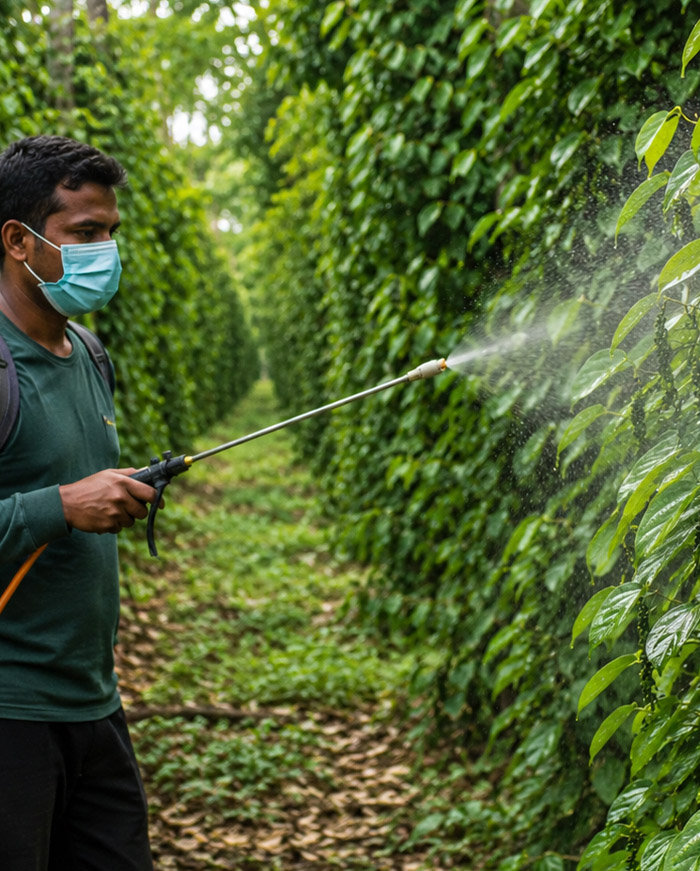

Black pepper plantation thrips management using Verticillium spray in the evening

🐛 Managing Thrips with Verticillium Spray

In plantations where thrips attacks are observed, spray Verticillium in the evening. Verticillium is an entomopathogenic fungus that works effectively against thrips when applied during cooler, low-light conditions — evening application ensures the fungal spores have the best chance of survival and contact with the pest.

💡 Tip: Always spray Verticillium in the evening — UV exposure during the day can reduce the viability of fungal spores, making daytime application far less effective against thrips.


📋 Key Takeaways for Black Pepper Farmers

🌧️

Plant before the rain intensifies for better vine establishment.

🧬

Use Pseudomonas dip on cut vine ends before planting.

🧭

Avoid the south side of the support tree; plant 50 cm from its base.

🌙

Spray Verticillium in the evening where thrips attacks are present.


❓ FAQ

Why should black pepper vines be planted before heavy rain?

Planting before the rain intensifies allows the vine to settle into the pit and begin establishing root contact with the soil. Once heavy rains arrive, the moisture supports early root development. Planting during intense rain can displace the vine, waterlog the pit, and increase the risk of root rot and fungal infections in the newly placed cutting.

What is the role of Pseudomonas in black pepper vine planting?

Pseudomonas is a beneficial biocontrol bacterium applied to the cut end of black pepper vines before planting. It protects the exposed tissue from soil-borne pathogens and promotes healthy root development. Dipping the cut portion in Pseudomonas solution before placing the vine in the pit is a cost-effective, chemical-free method to reduce early infection risk.

Why should I avoid planting black pepper on the south side of the support tree?

The south-facing side of the support tree receives the highest intensity of direct sunlight throughout the day. Young black pepper vines are sensitive to excessive heat and sun exposure, which can stress or dry out the cutting before it establishes roots. Planting on other sides provides natural shade from the support tree, creating a more favourable microclimate.

How far from the base of the support tree should black pepper be planted?

The vine should be planted in a pit dug 50 cm away from the base of the support tree. This distance ensures the vine’s roots are not in direct competition with the dense root zone of the support tree while still remaining close enough for the vine to climb and anchor itself as it grows.

What is Verticillium and how does it control thrips in black pepper?

Verticillium is an entomopathogenic fungus — a naturally occurring microorganism that infects and kills insects, including thrips. When sprayed on black pepper plants where thrips attacks are visible, the fungal spores adhere to and penetrate the pest’s body. Evening application is recommended because UV rays during daytime can destroy fungal spores, reducing effectiveness.

Why is evening the best time to spray Verticillium for thrips control?

Verticillium spores are sensitive to UV radiation, heat, and desiccation. Spraying in the evening reduces exposure to these damaging factors, giving spores a better chance to settle on leaf surfaces and pest bodies overnight. Cooler, humid evening conditions also favour fungal germination and activity, maximising the biological control effect against thrips.

Can Pseudomonas and Verticillium be used together in black pepper farming?

Yes, these two biocontrol agents target different stages and threats — Pseudomonas is used as a protective vine treatment at planting to guard against soil pathogens, while Verticillium is sprayed on established plants to manage thrips infestations. Used at their respective stages, they complement each other well as part of an integrated, eco-friendly black pepper crop protection strategy.


You may also like