✍️ George K. Mathai, Deputy Director (Retd.), Department of Agriculture | mathaigk@gmail.com
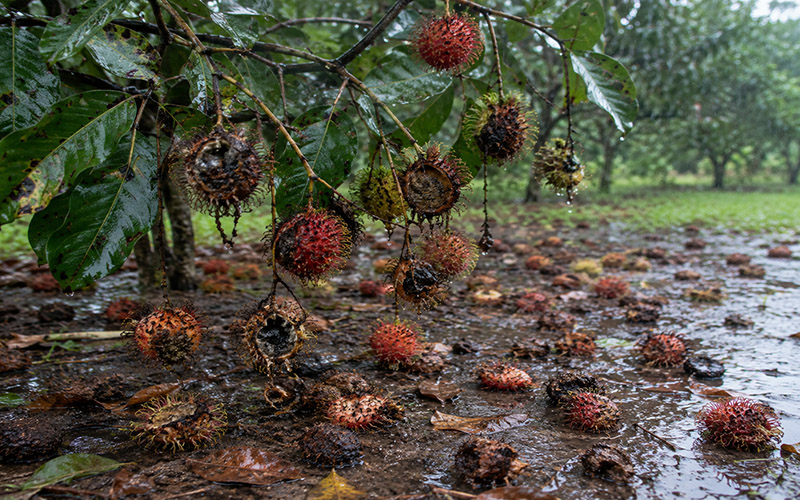
If you grow Rambutan or Pulasan, the rainy season brings a frustrating problem — fruits dropping prematurely before they ever get the chance to ripen. The culprit is a fungal infection that targets the stem area, turning it black and cutting off the fruit’s lifeline. The good news? A simple, affordable biological spray can protect your crop before the damage sets in.
During the rainy season, the combination of high humidity and constant moisture creates the perfect environment for fungal pathogens to thrive on rambutan and pulasan trees. The infection typically begins at the stem area of the fruit, where it causes the tissue to turn black — a tell-tale sign of fungal rot that eventually leads to premature fruit drop.
Left untreated, this fungal disease can wipe out a significant portion of the harvest, causing heavy losses for farmers who are counting on a good yield during the fruiting season.
⚠️ Warning: The blackening of the stem area in rambutan and pulasan is a clear indicator of fungal disease. Act early — once infection spreads widely, fruit loss becomes unavoidable.
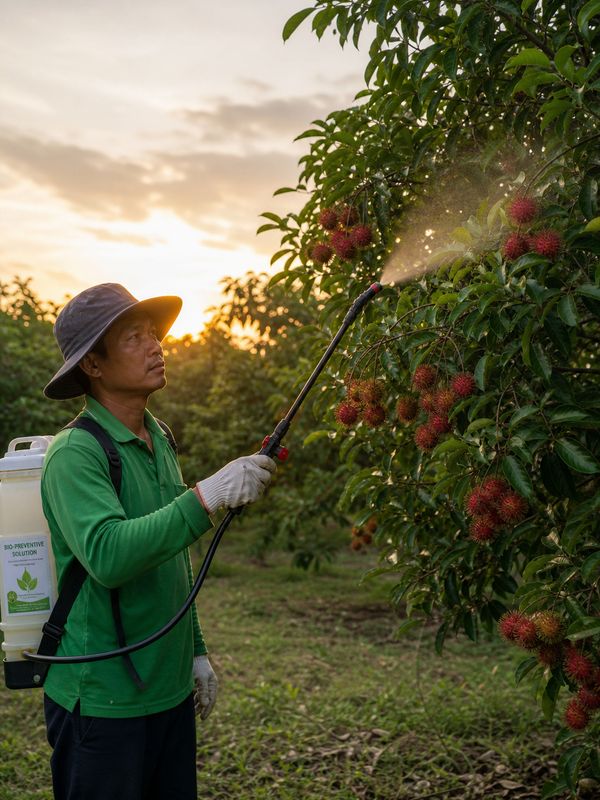
As a preventive measure against this fungal disease, a biological spray using beneficial microorganisms is both effective and eco-friendly. The recommended solution is straightforward to prepare and apply.
Mix either 30 grams of Pseudomonas or 30 ml of Bacillus subtilis in one liter of water, add a non-ionic adjuvant, and spray on the trees. These beneficial microbes work by outcompeting and suppressing the fungal pathogens responsible for stem rot and fruit drop.
Follow these steps carefully to prepare and apply the biological spray for best results:
Choose either 30 g of Pseudomonas or 30 ml of Bacillus subtilis as your biological agent.
Mix the measured biological agent into one liter of water thoroughly.
Add a non-ionic adjuvant to the mixture to improve spray adhesion and coverage on the tree surface.
Apply the spray in the evening to protect the beneficial microbes from UV degradation and ensure maximum effectiveness.
💡 Tip: Always spray in the evening — sunlight and heat during the day can deactivate the live biological agents in Pseudomonas and Bacillus subtilis, reducing their effectiveness significantly.
Biological controls like Pseudomonas and Bacillus subtilis are naturally occurring beneficial bacteria that suppress plant pathogens without leaving harmful chemical residues on fruits. This makes them an ideal choice for farmers who want to protect their crop while maintaining safe, market-ready produce.
Eco-Friendly
No harmful chemical residues on fruit or soil
Preventive Action
Suppresses fungal pathogens before infection spreads
Cost-Effective
Affordable inputs with high return on crop protection
Market Safe
Fruit remains safe for sale and consumption
Why do rambutan fruits fall prematurely during the rainy season?
Rambutan fruits fall prematurely during the rainy season due to a fungal infection that attacks the stem area of the fruit. The high humidity and constant moisture during the rainy season create ideal conditions for these fungi to grow, causing the stem to turn black and cutting off nutrients to the fruit, which then drops before ripening.
How do I identify fungal disease in rambutan and pulasan?
The most visible symptom is blackening of the stem area where the fruit attaches to the tree. This discolouration is caused by fungal rot and is typically accompanied by premature fruit drop. If you notice this during the rainy season, it is a clear sign that fungal infection has set in and preventive spraying should begin immediately.
What is the recommended biological spray for rambutan fungal disease?
The recommended biological spray is made by mixing either 30 grams of Pseudomonas or 30 ml of Bacillus subtilis in one liter of water, along with a non-ionic adjuvant. This solution should be sprayed on the trees in the evening for best results. Both are naturally occurring beneficial bacteria that suppress fungal pathogens effectively.
Why should the biological spray be applied in the evening?
Biological agents like Pseudomonas and Bacillus subtilis contain live beneficial microorganisms that are sensitive to UV radiation and heat. Applying the spray in the evening protects these microbes from sunlight degradation, ensuring they remain active on the plant surface long enough to suppress the fungal pathogens effectively.
What is a non-ionic adjuvant and why is it added to the spray?
A non-ionic adjuvant is a type of surfactant or wetting agent that improves how a spray sticks to and spreads across plant surfaces. Adding it to the biological spray solution ensures better coverage and adhesion on rambutan leaves and fruit stems, making the treatment more effective against the fungal infection during the rainy season.
Can Pseudomonas and Bacillus subtilis be used together on rambutan?
The recommended practice is to use either Pseudomonas (30 grams per liter) or Bacillus subtilis (30 ml per liter) — not both at once. Each of these beneficial biological agents is effective on its own against the fungal disease causing fruit drop in rambutan and pulasan during the rainy season.
Is this biological spray safe for rambutan fruits meant for sale?
Yes. Unlike chemical fungicides, Pseudomonas and Bacillus subtilis are naturally occurring microorganisms that do not leave harmful chemical residues on the fruits. This makes them a safe, eco-friendly option for farmers who want to protect their crop while ensuring the fruits remain safe for consumption and market sale.
When is the best time to start spraying rambutan trees to prevent fruit drop?
It is best to begin spraying as a preventive measure before the onset of heavy rains or at the very start of the fruiting season during the rainy period. Early application of the Pseudomonas or Bacillus subtilis spray helps protect the stem area of developing fruits before fungal infection can take hold and cause premature dropping.