Areca nut is a crop that farmers have been showing a lot of interest in recently. The high price is an advantage. Another reason for this shift in farmers’ focus is the low incidence of invasive pests. Therefore, crop loss is less.
Although many diseases are widespread, there are some problems like fungus. Although it occurs in some areas, it is very rare. However, last month, in a plantation with 200 areca palms in Kottayam district, something like stem bleeding was observed in more than eighty areca palms, less than 3 meters tall.
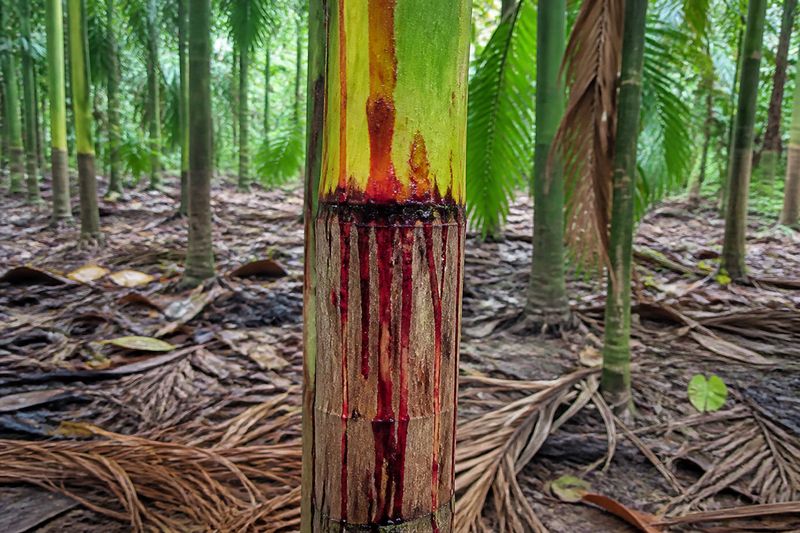
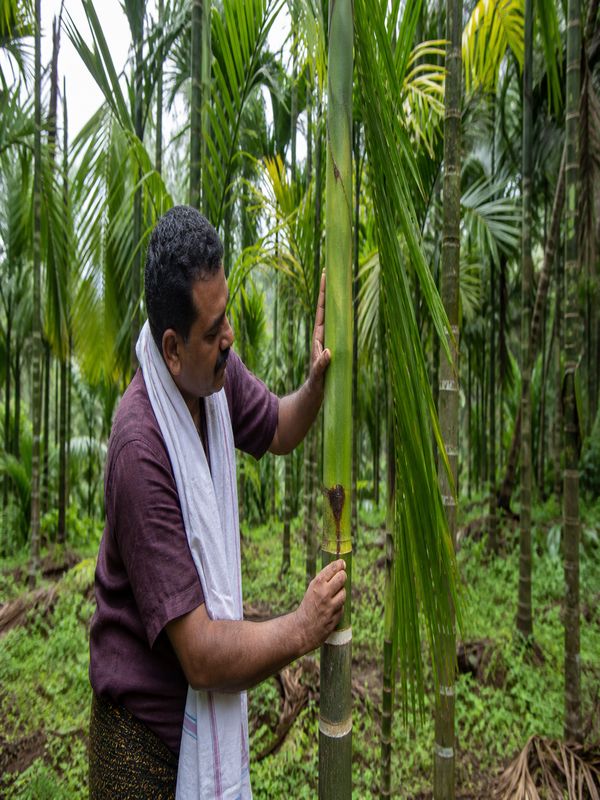
This is a disease commonly seen in summer. Stem bleeding was observed coming out of young areca palms. Farmers in this area say that there is currently no pest infestation and no other crops are grown nearby.
When they later checked by cutting the top of one areca palm, they saw that the inner core was rotting and a dark red liquid was collected at the top.
🔎 Field sign: The inner core was rotting, and a dark red liquid was collected at the top after cutting the palm.
This is stem bleeding disease. Farmers are concerned in two ways because of its deadly impact.
One is that it will spread quickly to other trees. Therefore, the priority is to protect the other nearby areca palms, leaving aside the infected trees.
Stem bleeding has spread from coconut trees to areca palms.
Since areca is more profitable than coconut and requires less maintenance, many people cut down coconut trees and widely turned to areca cultivation.
Scientific methods have to be adopted to control this serious disease.
- 🔥 In an 8-year-old plantation, the diseased trees should be uprooted and burned.
- 🪓 Chisel off the infected part and apply Bordeaux mixture on the wound.
- 🌧️ Spraying one percent strength Bordeaux mixture before and after the monsoon will also help in controlling the disease.
- 💧 If the infection is severe, the disease can be controlled by spraying the fungicide Hexaconazole, 300 ml in 100 liters of water, at a rate of two ml per liter.
🚨 Priority: Protect the other nearby areca palms first, leaving aside the infected trees when the disease is spreading quickly.
What is stem bleeding disease in areca palms?
Stem bleeding disease in areca palms is identified when a dark red liquid comes out from affected parts of the palm. In the Kottayam plantation case, cutting the top of one palm showed that the inner core was rotting and dark red liquid had collected at the top.
When is stem bleeding disease commonly seen in areca palms?
The disease is commonly seen in summer. In the reported plantation, stem bleeding was observed coming out of young areca palms less than 3 meters tall. Farmers should watch palms closely during hot periods, especially when several young palms show similar bleeding symptoms.
How quickly can stem bleeding spread in an areca plantation?
Farmers are concerned because stem bleeding can spread quickly to other trees. In the reported case, more than eighty palms in a 200-palm plantation showed symptoms. Because of this risk, protecting nearby areca palms should be the first priority.
Can stem bleeding spread from coconut trees to areca palms?
Yes. The article notes that stem bleeding has spread from coconut trees to areca palms. This matters because many farmers have shifted from coconut to areca cultivation, as areca is more profitable than coconut and requires less maintenance.
How can Bordeaux mixture help control stem bleeding disease?
Bordeaux mixture is recommended for managing the disease. Farmers can chisel off the infected part and apply Bordeaux mixture on the wound. Spraying one percent strength Bordeaux mixture before and after the monsoon will also help in controlling stem bleeding.
Which fungicide is recommended for severe stem bleeding infection?
If the infection is severe, the disease can be controlled by spraying the fungicide Hexaconazole. The recommended preparation in the article is 300 ml in 100 liters of water, applied at a rate of two ml per liter.