By Shajan Philip
🐐 Besides agriculture, goat farming is an income source. You only need to pay attention to 2 things. One, less labor. Two, the matter of grass trade.
In a short period, Shajan Philip fixed the overflowing goat farms that their owners had ruined by putting them in sheds. He has set up a modern goat shed that can house 80 goats, along with poultry-duck farming and a biogas plant.
Shajan, who occasionally provides marketing facilities, entered this field 4 years ago. The goats here are better than cows, because of the goats’ special diet. Shajan does not limit himself to one or two types of grass.
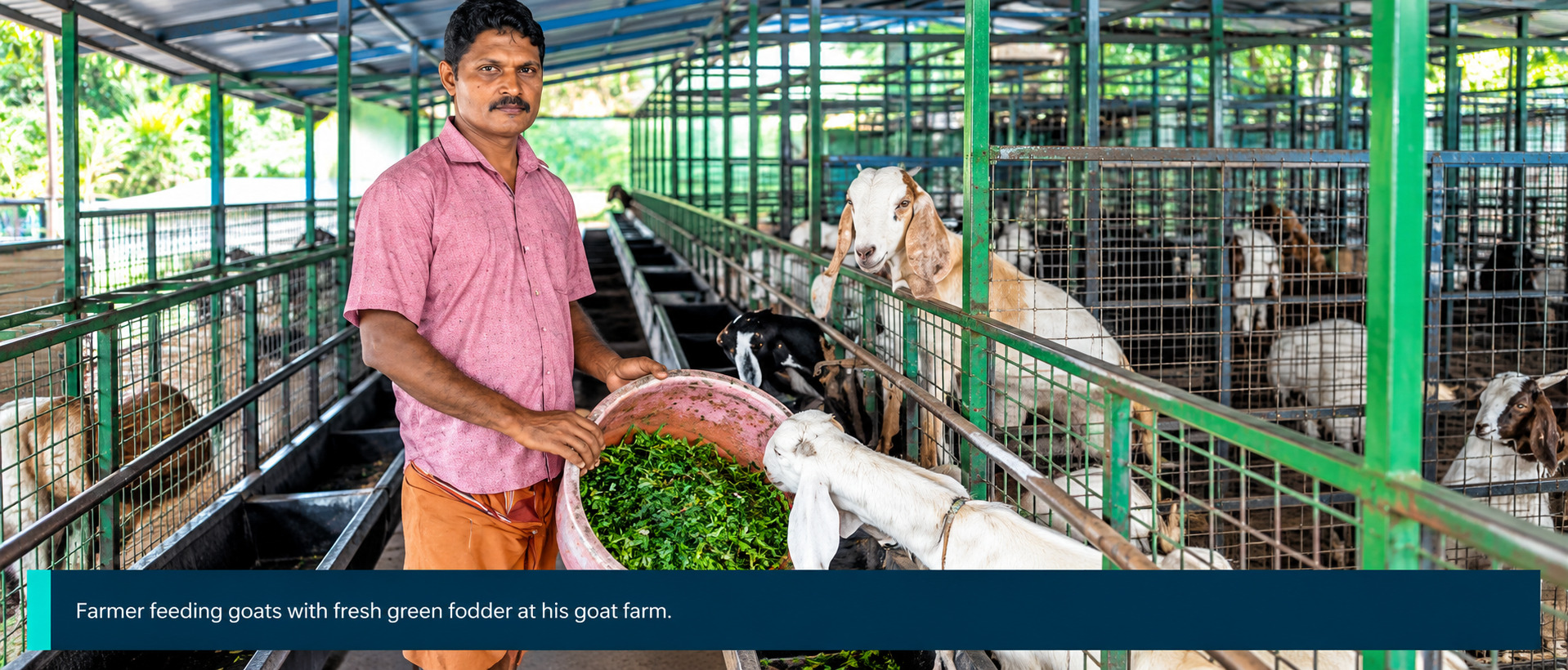
The knowledge gained through maintenance helped him build a 1200 sq. ft. shed suitable for small-scale units of 10 goats. He also suggests providing 10 sq. ft. per goat.
Modern shed
Set up to house 80 goats.
Space planning
10 sq. ft. per goat is suggested.
Partitioned cages
The sheds have been arranged with partitioned cages.
Easy movement
Wide corridors and open space facilities are included.
Below the shed, built at a height of 6 feet from this, Shajan has set up a poultry-duck shed, which provides benefits.
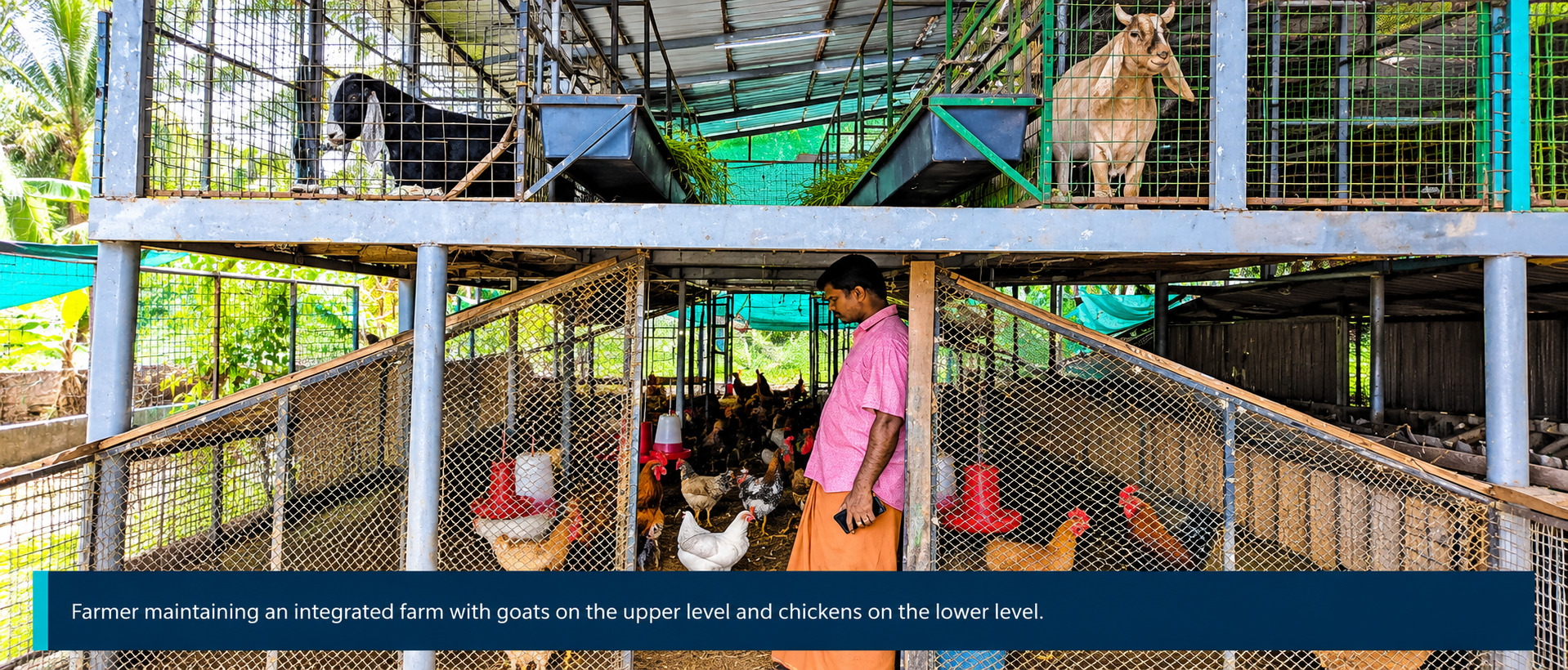
From what is obtained, the dung, urine, drinking water, and feed waste all become manure for the chickens and ducks. The dung from there is sent to the biogas plant.
🔥 Besides cooking gas, good slurry is also obtained. This can be used as manure for the kitchen garden, coconut, areca nut, banana, vegetables, rubber, coconut saplings, cloves, nutmeg, and the like.
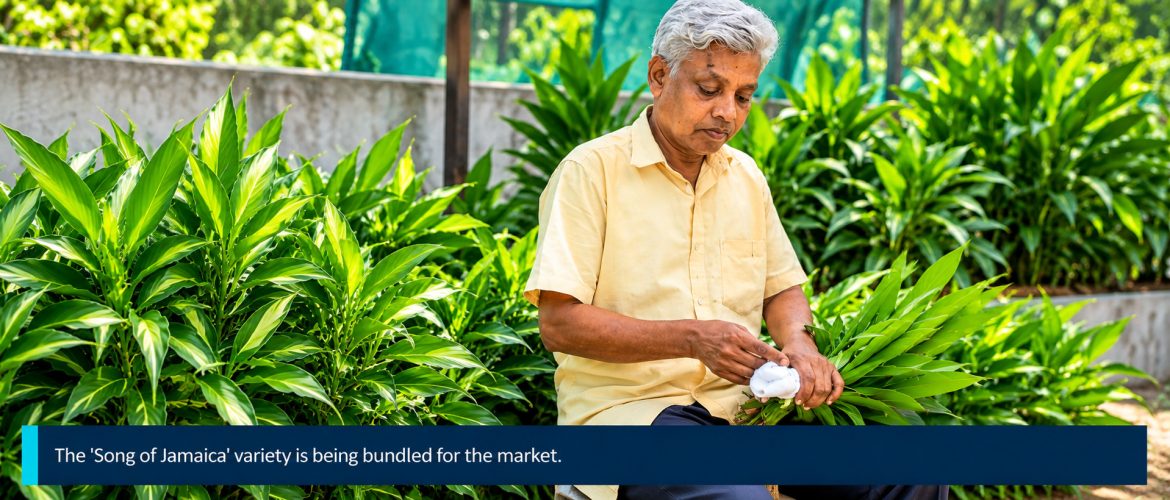
Fodder for the animals is cultivated right here. You only need to pay attention to 2 things. One, less labor. Two, the grass trade.
In the hilly region, one acre of land has been leased to cultivate Co-4, Co-3, Red Napier, groundnut, mulberry, subabul, gliricidia, and agathi.
Co-4
Co-3
Red Napier
Groundnut
Mulberry
Subabul
Gliricidia
Agathi
Since the animals are fed while tied up, the chances of them getting sick are also low.
For those who do not cultivate grass, grass is provided by weighing it. Besides grass cultivation, jackfruit, jackfruit seeds, and vegetable waste are given as food. It is also bought for a price from hotels in the vicinity. Fruit and vegetable waste is also used as feed.
Each goat is given one to one and a half kilograms of feed according to its weight. More than half of the goat’s feed is dry grass. Grass, dry leaves, and hay are dried and powdered before being given.
Malabari and Beetal breeds of goats are mostly raised. High immunity, higher body weight, and price are what prompted their selection. High-quality goat breeds are produced scientifically and provided to customers.
Breeds raised
Malabari and Beetal breeds are mostly raised.
Selection reasons
High immunity, higher body weight, and price.
Kid price
A three-month-old kid is sold for 10,000 rupees.
Kid feeding
The kids are given milk for up to 30 days.
Goats that have given birth are also for sale. High-quality kids are produced through proper breeding. Special care is taken from pregnancy to delivery and post-natal care. The bucks are housed separately.
Proper medicines and vaccinations are given. Additionally, deworming medicine is given at regular intervals. Mother goats that give birth to two or three kids in each delivery are given special attention. Later, they are raised on feed. Since it is stored in a way that it doesn’t spoil, it can be provided to customers whenever required.
Shajan, who occasionally provides marketing facilities, entered this field 4 years ago. For contact: 📞 9447231417