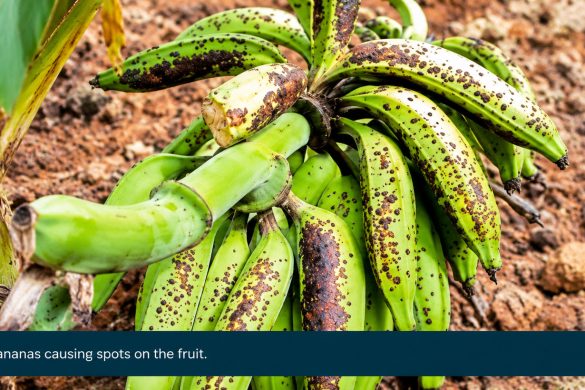
Banana crops are highly susceptible to leaf spot diseases, including Black Spot and Sigatoka disease (yellow Sigatoka). These fungal infections spread rapidly and can significantly reduce plant health and yield. Alongside leaf spot, stem borer attacks and nutrient deficiencies also pose serious threats to banana cultivation. Understanding how to identify these problems early and applying the right biological and chemical treatments — along with a proper fertilizer schedule — is key to maintaining a productive banana plantation.
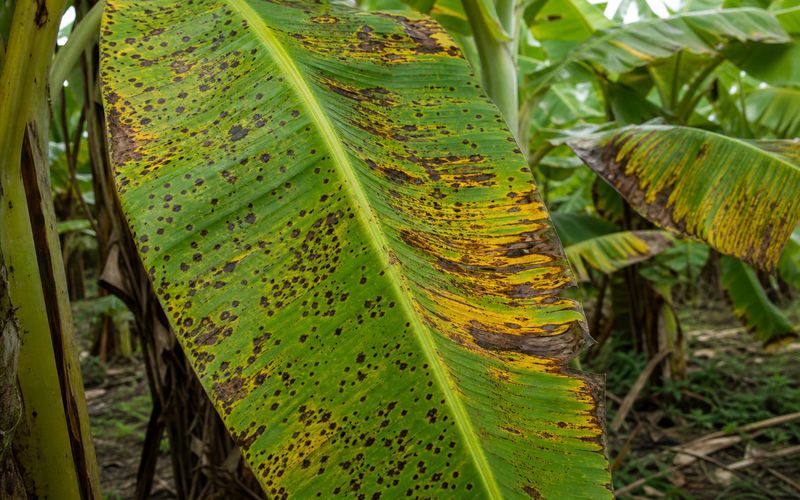
There are many types of leaf spot disease affecting banana plants. The two most common are:
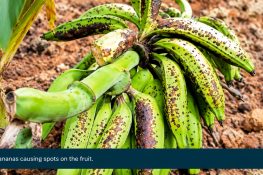
- 🔴 Black Spot — appears as dark lesions on banana leaves and spreads through humid conditions.
- 🟡 Sigatoka Disease (Yellow Sigatoka) — causes yellowish streaks and spots on leaves, reducing photosynthesis and weakening the plant.
Once identified, it is important to clean the farm and remove all affected parts of the banana plant immediately to prevent further spread.
🌿 Biological Treatment Using Pseudomonas
To prevent and manage leaf spot, prepare a spray solution as follows:
- ✅ Mix 30 grams / 15 ml of Pseudomonas in one liter of water.
- ✅ Wait for 5 minutes, then shake well and strain the solution.
- ✅ Spray on the plant evenly.
- ✅ For a 4-liter spray solution, add a non-ionic adjuvant at a rate of 1 ml.
- ✅ Identify and destroy all affected parts of the banana plants.
- ✅ When preparing land for summer cultivation, soak the soil with Pseudomonas.
🍂 December Leaf Spot Management
For leaf spot disease occurring in December, a copper-based fungicide should be used. Once the disease is identified, clean the farm thoroughly and remove the affected plant parts promptly.
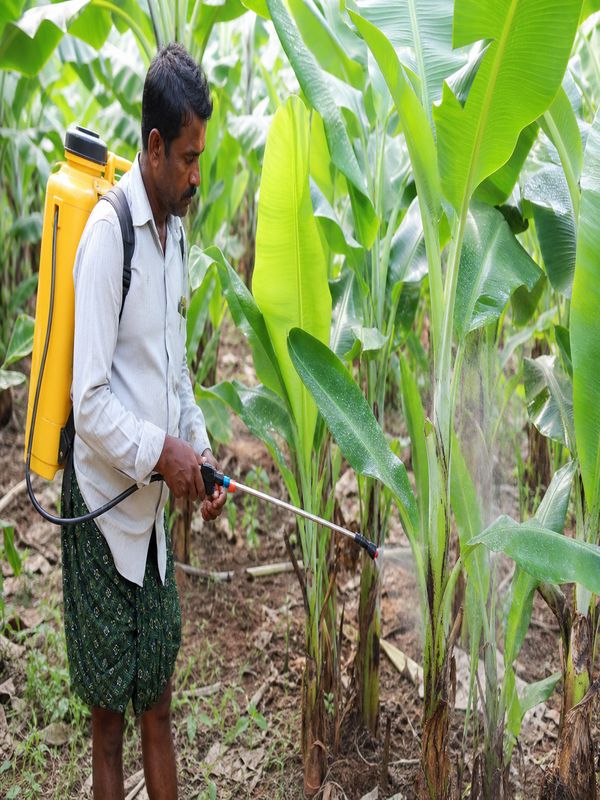
Applying silicon is helpful in resisting pests and preventing stem borer attacks. Two methods are used depending on where the infestation is found:
🌿 Beauveria Treatment (Leaf Sheaths)
Mix 30 grams of Beauveria in one liter of water and pour the solution into the 6 leaf sheaths at the base of the banana plant.
🧂 Rock Salt Treatment (Rhizome Infestation)
If infestation is on the rhizome, mix a handful of rock salt in 15 ml, fill the outer 6 leaf sheaths of the banana plant, and place cotton or cloth soaked in the solution on the infested stump.
For the Nendran banana variety, fertilizer can be applied per plant according to the general recommendation below. Two planting methods are covered — Tissue Culture and Banana Sucker.
🧬 Tissue Culture Plants
| Age / Stage | Urea (g) | Rajphos (g) | Muriate of Potash (g) |
|---|---|---|---|
| 1 month after planting | 110 | 300 | 120 |
| 2 months after planting | 110 | 280 | 120 |
| 3 months after planting | 110 | 0 | 120 |
| 4 months after planting | 110 | 0 | 120 |
| 5 months after planting | 110 | 0 | 120 |
| 7 months after planting | 110 | 0 | 210 |
🌿 Banana Sucker Plants
| Age / Stage | Urea (g) | Rajphos (g) | Muriate of Potash (g) |
|---|---|---|---|
| 1 month after planting | 90 | 235 | 100 |
| 2 months after planting | 60 | 250 | 120 |
| 3 months after planting | 60 | 0 | 120 |
| 4 months after planting | 70 | 0 | 120 |
| 5 months after planting | 70 | 0 | 120 |
| Following months | 60 | 0 | 120 |
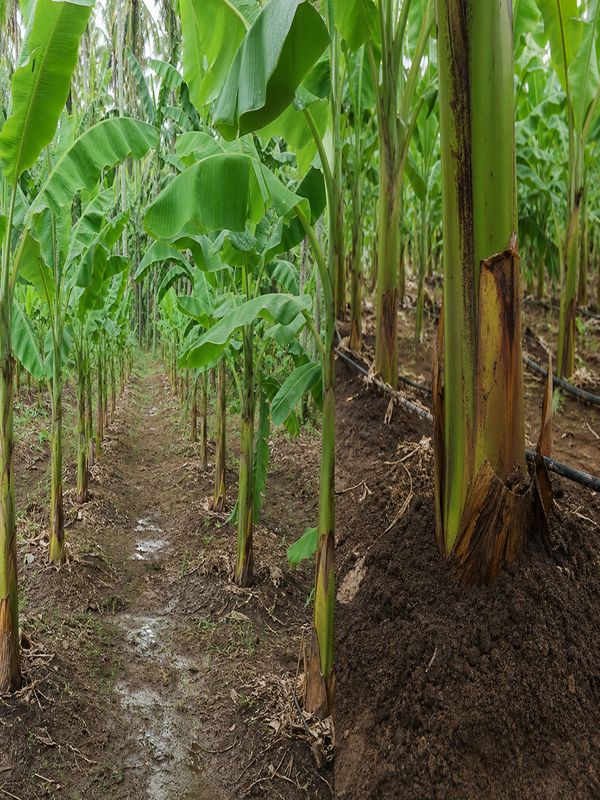
Cut and leave only the central part of the outermost dry leaf of the banana plant. If the soil lacks moisture, a deficiency in the plant’s vigor/sap is observed. Avoid letting the banana plantation become overgrown with weeds.
To maintain soil moisture, a solution of one liter of Pseudomonas mixed in 4 liters of water can be poured. Spray with approximately 4 liters of spray solution mixed with a non-ionic adjuvant at a rate of 1 ml.
Trichoderma is being used on 2,600 Nendran banana plants that showed a deficiency in vigor/sap. Moisture was observed in the soil on the 10th day, and good vigor/sap was also seen. The efficiency was observed to reach 68%.
🌟 Key Takeaways for Banana Leaf Spot Management
- ✅ Use Pseudomonas spray for biological control of leaf spot.
- ✅ Apply copper-based fungicide for December leaf spot outbreaks.
- ✅ Use Beauveria or rock salt solution to manage stem borer attacks.
- ✅ Follow the Nendran fertilizer schedule strictly for tissue culture and sucker plants.
- ✅ Apply Trichoderma to restore soil moisture and plant vigor effectively.