Home » January Care for Pepper Vines: Fighting Fungus with Beneficial Microbes

January Care for Pepper Vines: Fighting Fungus with Beneficial Microbes

by Sama Sadhik
5 minutes read

✍️ By George K. Mathai, Deputy Director (Rtd.), Department of Agriculture  |  📧 mathaigk@gmail.com

January is an active month on the pepper farm. Pepper harvesting continues, and alongside it, farmers must focus on protecting young saplings from fungal threats, managing the upcoming summer heat with mulch, and setting the stage for better yields through smart planting practices. This guide covers the key farm activities recommended for January, drawn from traditional and science-backed methods that work together for healthier, more productive pepper gardens.
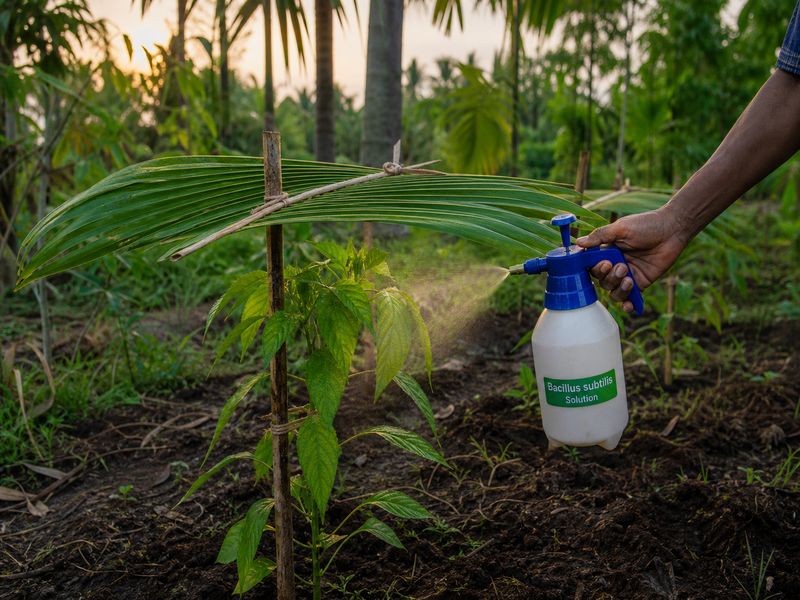
Young pepper sapling protected with areca palm fronds and Bacillus subtilis spray in January

🌿 Shade Protection for Saplings Under 2 Years

For saplings less than 2 years old, shade should be provided using areca palm fronds or coconut fronds. To do this correctly, tie the base of the frond to the support stake so that it sits above the tip of the sapling. This simple positioning ensures the frond acts as a natural canopy over the young plant.

💡 Tip: After tying the frond in place, spray a mixture of 30 grams of Bacillus subtilis or Pseudomonas in one liter of water in the evening. Make sure the spray falls on both the frond and the sapling. This helps avoid fungal infection effectively.


✂️ Post-Harvest Pruning: A Traditional Practice That Pays Off

After the harvest is complete, pruning the branches of the plantation is a traditional farming practice. This step serves an important purpose — through pruning, the fungal spores present in the soil are destroyed, reducing the risk of disease in the next growing cycle.


🌧️ Summer Wilting and the Advantage of Rain Sprouting

It is said to be an advantage for the farmer that pepper plants, after wilting in the summer, will sprout well when it rains. On close inspection, this can be found to be true. The natural cycle of summer dormancy followed by vigorous post-rain sprouting is something experienced pepper farmers have long relied on.

📌 Key Insight: For higher yield, continue to plant pepper in clusters. Cluster planting has been shown to improve productivity and makes management of individual plants more efficient.


🪨 Mulching to Reduce Summer Stress

To reduce the severity of summer, apply mulch in a circle, one span away from the support tree. This circular mulching technique helps retain soil moisture around the base of the pepper plant, moderates soil temperature, and protects the root zone from intense summer heat.

Maintaining this one-span gap from the trunk of the support tree is important — it prevents excess moisture buildup directly at the base, which could otherwise invite rot or fungal issues.
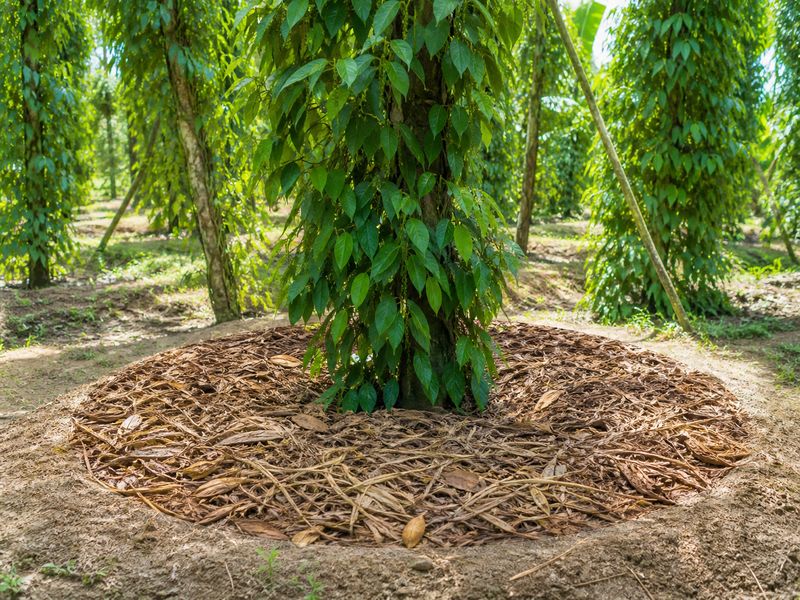
Circular mulch applied around pepper plant support tree for summer heat protection

📋 January Pepper Farm: Quick Action Checklist

🌴

Provide shade with areca or coconut fronds for saplings under 2 years old

🧪

Spray Bacillus subtilis or Pseudomonas (30g per liter) in the evening on fronds and saplings

✂️

Prune plantation branches after harvest to destroy fungal spores in the soil

🌱

Continue cluster planting of pepper for higher yield

🪨

Apply circular mulch one span away from the support tree to combat summer heat


❓ FAQ

🌿 Why should shade be provided to pepper saplings under 2 years old?

Young pepper saplings under 2 years are especially vulnerable to heat stress and fungal infections. Providing shade using areca or coconut fronds shields them from harsh sunlight and creates a microclimate that, when combined with a Bacillus subtilis or Pseudomonas spray, significantly reduces the risk of fungal disease during this critical growth phase.

🧪 How do Bacillus subtilis and Pseudomonas help pepper plants?

Both Bacillus subtilis and Pseudomonas are beneficial microbes that act as biological fungicides. When sprayed at 30 grams per liter of water in the evening, they colonize plant surfaces and outcompete harmful fungal pathogens. They are a safe, eco-friendly alternative to chemical fungicides and are especially effective when applied on fronds and saplings together.

✂️ Why is pruning pepper plants after harvest recommended?

Post-harvest pruning is a traditional practice that removes old and diseased branches, which helps destroy fungal spores that accumulate in the soil. This reduces the chance of disease carryover into the next season. Pruning also improves air circulation around the plant, encouraging healthier new growth in the following growing cycle.

🪨 How should mulch be applied around pepper support trees in summer?

Mulch should be applied in a circular pattern, keeping a gap of one span from the base of the support tree. This spacing prevents waterlogging and rot at the trunk base while still protecting the root zone of the pepper plant. The mulch layer retains soil moisture and moderates temperature during intense summer months.

🌧️ Do pepper plants really sprout better after summer wilting?

Yes, pepper plants that wilt during summer tend to sprout vigorously once the rains arrive. This natural cycle has been observed by experienced farmers and is considered a known advantage. The temporary dormancy during heat stress is followed by a burst of new growth with moisture, making the natural rhythm of summer and rain an important part of pepper plant management.

🌱 What is cluster planting in pepper farming and why does it improve yield?

Cluster planting refers to growing pepper vines in grouped clusters rather than as isolated individual plants. This approach is recommended for higher yield because it maximizes space utilization, promotes better canopy formation, and makes farming operations more efficient. Continuing this practice during January planting windows helps set a productive foundation for the coming season.

You may also like