Home » Fungal Poisoning in Cows: Symptoms, Causes & Prevention

Fungal Poisoning in Cows: Symptoms, Causes & Prevention

by Sama Sadhik
4 minutes read

🧑‍⚕️ Expert Source

Livestock
Dr. C.K. Shaju, Peruva
Deputy Director (Rtd.), Department of Animal Husbandry.
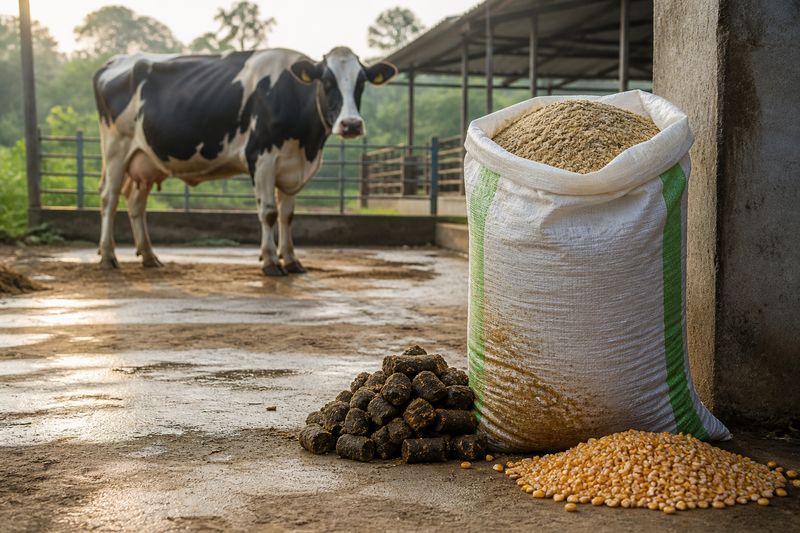
Damp cattle feed at risk of fungal growth and aflatoxin poisoning in dairy cows

What are the problems caused by fungal poisoning in cattle? How can this be solved scientifically?

If the feed given to cattle gets damp, fungus will grow. There are many types of toxins produced by fungus. Aflatoxin is the most important one.

Main ingredients in cattle feed like groundnut cake, corn, and cottonseed have a high chance of growing fungus and causing poisoning. Additionally, if the cattle feed is stored in places where it is likely to get damp, it can be affected by fungus.


🌾 How Feed Turns Risky

The risk increases again if, during floods, they consume feed along with water while dipping their heads to drink.

💧

Damp feed encourages fungal growth in cattle feed.

🌽

Groundnut cake, corn, and cottonseed have a high chance of growing fungus.

🏚️

Feed stored in places where it is likely to get damp can be affected by fungus.

🌊

During floods, contaminated feed and water increase the risk again.


🐄 Symptoms Farmers Should Notice

Symptoms of fungal infection include prolonged diarrhea, loss of appetite, weakness, and reduced milk production.

  • ⚠️ Prolonged diarrhea
  • 🍽️ Loss of appetite
  • 🐮 Weakness
  • 🥛 Reduced milk production

For mastitis that occurs in dairy cows, an unhygienic living space may not be the only reason. Now…


🐮 Reproductive Problems From Mild Poisoning

Mild fungal poisoning can cause reproductive problems. It also leads to an increase in uterine diseases in cattle. It also leads to problems like difficulty in conceiving and miscarriages.

These signs are important because fungal poisoning is not limited to digestion or milk yield. It can affect fertility, conception, pregnancy, and udder health in dairy cows.

🧪 Scientific Prevention With Toxin Binders

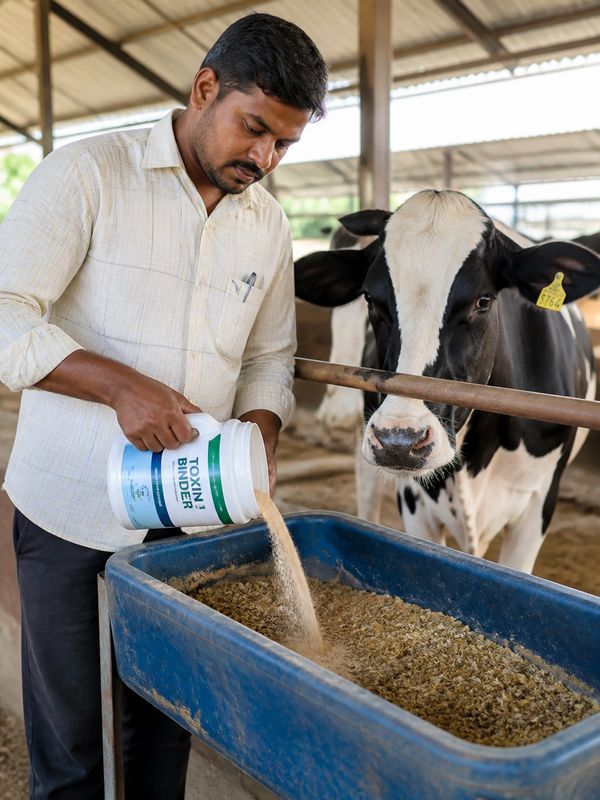
Toxin binder being added to dairy cow feed to prevent fungal toxin absorption

To prevent the feed from getting damp, it is best to use one packet at a time, opening the next only after the first is finished. Fungal poisoning can be prevented to an extent by measures including drying the given feed in the sun.

It can be added to the feed. There is no need to worry about it being unavailable. To prevent fungal poisoning, Toxin Binders available in the market such as Toxin / Himtox / Feed Safe can be added.

This counters the fungal poison in the feed. It also prevents it from being absorbed into the body. Administering a Toxin Binder through water as well will help flush out toxins mixed in the water.


🏥 Vet Clinic Contact

VET Clinic

For treatment facilities for cows, goats, and other livestock.
Vet Clinic, Karimbana, Kottayam 1.
Phone: 8714617871
E-mail: karsha@mmi.co.in



FAQ

What causes fungal poisoning in cattle feed?

Fungal poisoning in cattle usually starts when feed gets damp and fungus begins to grow. Ingredients such as groundnut cake, corn, and cottonseed are especially likely to develop fungus if storage is poor. These fungi can produce toxins, with aflatoxin being the most important toxin mentioned in the article.

What are the common symptoms of fungal poisoning in dairy cows?

Common symptoms include prolonged diarrhea, loss of appetite, weakness, and reduced milk production. Farmers may also notice fertility-related problems when poisoning is mild. Because symptoms can look similar to other cattle diseases, damp feed history and feed storage conditions should always be checked carefully.

Can fungal poisoning reduce milk production?

Yes. Reduced milk production is one of the symptoms listed for fungal infection in cattle. When fungal toxins affect digestion, appetite, and general health, dairy cows may become weak and produce less milk. Preventing damp feed and controlling toxin exposure helps protect production performance.

How does fungal poisoning affect cattle reproduction?

Mild fungal poisoning can cause reproductive problems in cattle. The article specifically mentions increased uterine diseases, difficulty in conceiving, and miscarriages. This makes fungal toxin control important not only for immediate cattle health but also for herd fertility and long-term dairy farm productivity.

How can farmers prevent cattle feed from getting fungus?

To prevent cattle feed from getting damp, it is best to use one packet at a time and open the next only after the first is finished. Storing feed away from moisture and drying the given feed in the sun can also help prevent fungal poisoning to an extent.

What are toxin binders used for in cattle feed?

Toxin binders are added to cattle feed to counter fungal poison in the feed and prevent it from being absorbed into the body. The article mentions market-available products such as Toxin, Himtox, and Feed Safe. A toxin binder may also be administered through water to help flush toxins mixed in water.

You may also like