By Dr. Subin K. Mohan
Associate Professor, Department of Veterinary & Animal Husbandry (Extension), College of Veterinary and Animal Sciences, Mannuthy.
With the arrival of the cold season, the high-risk foot-and-mouth disease (FMD) that occurs in livestock across the country poses a significant threat to the livelihoods of farmers. More awareness is needed about this disease.
It is found in cloven-hoofed animals. Generally, horses, cats, and dogs are not affected by FMD. It is caused by a picornavirus, of which there are seven strains. Only 22-30 nanometers in size, this very small aphthovirus is the cause of FMD.
Animals susceptible to the disease: Cattle, buffalo, pigs.
The sight of small sores or maggots on the hooves of cattle is often mistaken for FMD by many farmers. But is every disease that shows symptoms on the hooves FMD? Are all conditions that appear on the hooves FMD?
FMD is a viral disease that affects cloven-hoofed domestic and wild animals. This disease is seen in cattle, buffalo, pigs, goats, sheep, and also in wild animals like elephants, deer, wild boar, nilgai, and gaur.
Cattle and buffalo are major farm animals affected by FMD.
Pigs can show high severity and spread more virus.
Goats and sheep usually show less severity.
Wild animals like elephants, deer, wild boar, nilgai, and gaur can also be affected.
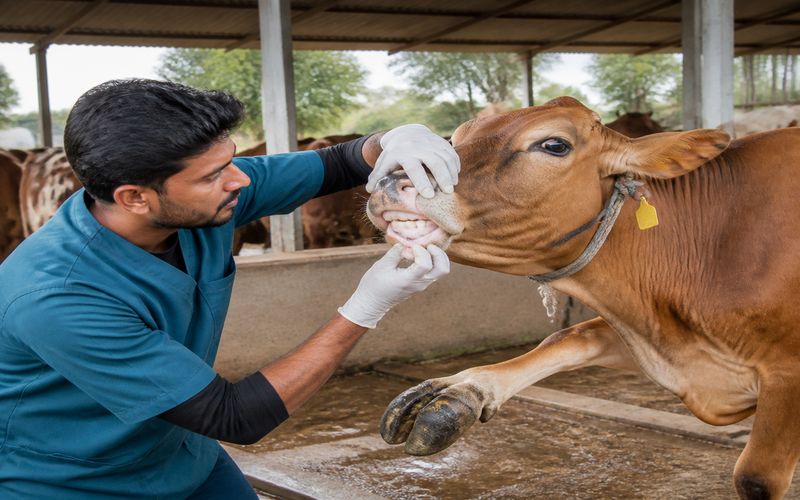
Fever is the first symptom. A fever of up to 40 degrees Celsius may occur. Farmers often notice a loss of appetite. This is followed by the appearance of blisters on the tongue, gums, and inside the lips. Wounds in the mouth make it difficult to eat.
Profuse, stringy drooling of saliva is seen. When the mouth is opened, one can see redness, swelling, peeling of the skin on the tongue, and sores. Swelling on all four legs, lameness, blisters between the hooves, pus, and maggots can also be seen.
⚠️ Key warning sign: Drooling saliva is a symptom of the disease. Blisters can also be seen on the udder and teats. Wounds forming in the lungs, heart, and digestive tract can lead to death. These are the main symptoms of sudden death.
Diagnosis: Serological tests like CFT, NT, AGPT, FAT, and ELISA are used.
Treatment: There is no specific cure for FMD. Treatment is administered based on the symptoms.
- ✅ To clean the mouth: 2% alum solution or a 1:4000 potassium permanganate solution can be used to wash the mouth. After cleaning, apply boroglycerin paste or honey. Apply fly-repellent ointments to wounds.
- ✅ To wash the feet: Dissolve 2 grams of copper sulphate in 100 ml of water. Use this solution to wash the feet. After that, a mixture of coal tar and copper sulphate (5:1) can be applied to the wounds between the hooves.
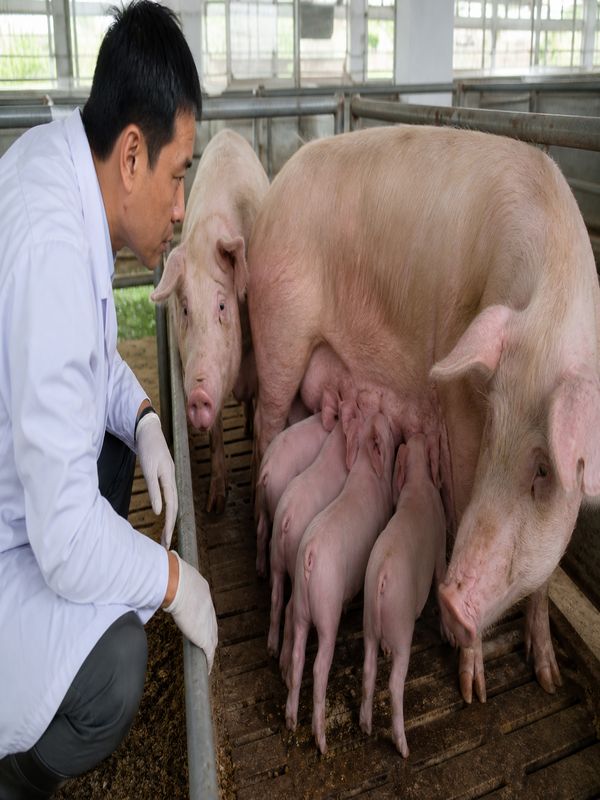
The high-intensity disease can sometimes show fatal symptoms in suckling piglets. Many farmers are unaware of this. Later, blisters appear on the snout, tongue, udder, and hooves. These symptoms often lead to the hooves peeling off.
Lameness, fever, and difficulty walking are also observed, which farmers often confuse with other diseases like swine fever.
The disease shows high severity in pigs. Blisters appear on the snout, tongue, udder, and hooves. These symptoms often lead to the hooves peeling off. Lameness, fever, and difficulty walking are other symptoms. Suckling piglets die.
Blisters may not appear. Myocarditis (inflammation of the heart muscle) is the cause of death. White or yellowish streaks on the heart muscle are a sign. Sometimes small blisters are seen. For this reason, farmers often mistake it for other diseases.
🚨 Important: Pigs spread the disease more than cattle. They can shed up to 50 times more virus than cattle. Therefore, biosecurity is paramount. It is important to prevent pigs and cattle from mixing. Only a few diseases affect both pigs and cattle kept in close proximity on a farm.
Symptoms in pigs: Compared to cattle, pigs show higher fever, shivering, loss of interest in eating, and reluctance to move. This is followed by fever, drooling, and blisters on the mouth and hooves. The skin on the udder and snout may peel off.
If the disease is severe, even in the absence of fever, the entire hoof may slough off. In piglets up to 14 days old, the disease is more severe, and death from myocarditis is common without the typical blisters.
Symptoms in goats: The severity of the disease is less in goats and sheep. Fever followed by blisters on the mouth, hooves, and udder are the symptoms.
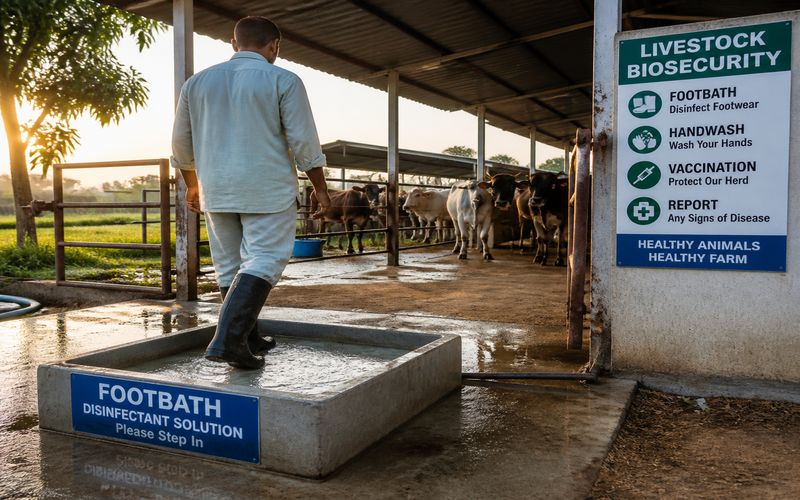
FMD spreads very quickly in cattle. This disease also causes myocarditis in calves. Up to 50 percent of them die. The virus also spreads through the air. Therefore, biosecurity is paramount.
Quarantine is important. Entry into farms where the disease has occurred should be restricted. Only those who look after the cattle should enter the sheds. It’s a good practice to have a footbath with disinfectant at the entrance of the shed.
Preventive vaccination is the most effective method. A preventive vaccination campaign has been running in Kerala since 2004.
Timely diagnosis and quarantine of animals in areas where FMD is prevalent are crucial.
Quarantine: Newly purchased animals must be isolated for at least 21 days.
Isolation: Sick animals should be isolated from healthy ones.
Vaccination: FMD vaccination is mandatory. A booster shot should be given every 6 months, 15-21 days after the primary vaccine.
Quarantine incoming animals from other states for 6 months and vaccinate them. Do not use trucks that have transported infected animals (Truck bath). Place foot baths at the entrance of farms.
In cattle sheds: Isolate sick animals from healthy ones.
Preventive vaccination: In Kerala, as part of the prevention campaign, vaccination is done twice a year. The first dose is given to calves between 2 and 4 months of age. A booster dose is given after 6 months. Calves from 4 months of age are vaccinated. A booster dose is given after 8 months.
There are other diseases with symptoms similar to FMD.
Bluetongue is a viral disease. Lesions on the coronary band of the hoof are a major symptom. Viruses that cause sores in the mouth are often confused with this.
Conditions like acidosis in cattle, goats, and sheep can be a cause of laminitis. This condition can also be caused by overeating grains, jackfruit, mangoes, etc.
Lack of vitamins and minerals can also cause diseases. Providing antibiotic treatment for sick cattle is essential. Along with that, they should be given feed with sufficient vitamins and minerals. Spraying a mixture of turmeric and neem on the hooves, and keeping the cattle in a clean environment are also beneficial.
Interdigital Dermatitis: This affects the soft tissues of the foot. Pus, sores, ulcers between the hooves, swelling, and pain are the symptoms. In cattle that are tied up, this disease is commonly seen on the hind legs. In grazing cattle, it is seen on all four legs.
This is because the skin between the hooves gets injured due to walking on rough ground or thorns. Bacteria enter through these wounds and cause infection. Treating the hooves at the right time and checking for wounds between the hooves on other days is important. If there are wounds, give antibiotics.
Hoof Rot: This affects the bone under the hoof. Pus, maggot infestation, and odor are the symptoms.
🌿 To fight against pathogens: A lack of vitamins can cause diseases. For cattle returning to health, provide vitamin therapy.
Clean this wound and give antibiotics. Every day, apply a povidone-iodine or chlorhexidine solution with cotton to the affected areas and leave it for 10-15 minutes. Wounds between the hooves can be held with forceps, and after cleaning, an antiseptic lotion should be applied to heal the wound.
Tie it with a bandage. Use medicines like potassium permanganate, copper sulphate, boric acid, and zinc oxide for cleaning wounds. After the pus is gone, applying neem oil is good for healing.
Dogs, cats, tigers, foxes, and leopards can spread the disease through their saliva.
Overgrowth of the Hoof: Trimming the hooves at regular intervals is necessary. Otherwise, the overgrowth of the hoof can cause lameness. Properly trimming the overgrown hoof can solve the lameness in many cattle.
Digital Dermatitis: Caused by certain bacteria present in the air and atmosphere. It appears as a wound like a strawberry on the skin just above the hoof. It is also found in areas with poor hygiene. Ulcers can also be seen on the hoof.
Pus, odor, etc., are seen between the hooves. The main bacteria that cause this are Fusobacterium necrophorum and Bacteroides melaninogenicus. Fever, lameness, swelling, pain, itching, and hair loss are the main symptoms.
Give antibiotic treatment. For sick cattle, wash their feet with a 7-10% Turpentine oil solution, a 3-5% Copper sulphate solution, or Formaldehyde solution. Bandage the feet by applying antiseptic ointment.
If you see symptoms of the disease, you must seek the help of a veterinarian. They should be the ones to take the decision on treatment. Self-medication can be dangerous and can suddenly worsen the disease.
After the treatment is over, seek advice. Do not tie the cattle up on concrete floors. It would be better to make a sand bed. This can prevent complications.
What are the first signs of foot-and-mouth disease in cattle?
The first sign is usually fever, which may reach up to 40 degrees Celsius. Farmers often notice loss of appetite, followed by blisters on the tongue, gums, inside the lips, between the hooves, and sometimes on the udder and teats. Profuse, stringy drooling and lameness are also important warning signs.
Is every hoof wound or maggot problem foot-and-mouth disease?
No. Small sores, pus, maggots, laminitis, interdigital dermatitis, hoof rot, digital dermatitis, mineral deficiencies, and injuries can all affect the hooves. FMD is a viral disease of cloven-hoofed animals, so a veterinarian should examine the animal and decide whether serological tests or supportive treatment are needed.
How does FMD spread so quickly on farms?
FMD spreads very quickly among cattle and can also spread through the air. Pigs are especially important because they can shed up to 50 times more virus than cattle. Restricting farm entry, isolating sick animals, using disinfectant footbaths, and preventing pigs and cattle from mixing are essential biosecurity steps.
What is the best prevention method for foot-and-mouth disease?
Preventive vaccination is the most effective method. In Kerala, vaccination is done twice a year as part of the prevention campaign. FMD vaccination is mandatory, and booster shots are advised at proper intervals. Quarantine of newly purchased animals and isolation of sick animals are also crucial for prevention.
Can calves and piglets die from FMD?
Yes. FMD can cause myocarditis, or inflammation of the heart muscle, in calves, and up to 50 percent of them may die. In suckling piglets, death from myocarditis is common, especially up to 14 days of age, and typical blisters may not always appear before sudden death.
What should farmers use to clean the mouth and feet during FMD care?
For mouth cleaning, a 2% alum solution or a 1:4000 potassium permanganate solution can be used, followed by boroglycerin paste or honey. For feet, dissolve 2 grams of copper sulphate in 100 ml of water. Treatment should still be guided by a veterinarian because FMD has no specific cure.
Why should farmers avoid self-medication when FMD is suspected?
Self-medication can be dangerous and may suddenly worsen the disease. Several diseases can look similar to FMD, including vesicular stomatitis, bluetongue, laminitis, hoof rot, and digital dermatitis. A veterinarian should decide the treatment, advise wound care, and recommend follow-up steps after recovery.