By George K. Mathai
Deputy Director (Rtd.), Department of Agriculture
E-mail: mathaigk@gmail.com
As the glorious season of jackfruit and mango begins to fade, mangosteen announces its arrival. Since the summer rains arrived before the 20th this time, it is expected that mangosteen will arrive at least fifteen days earlier compared to previous years.
Those who harvest top-quality mangosteen for sale can expect it by the end of May. As has been seen in previous years, as soon as fruiting begins, leaf scorch due to heat/drought has started to appear on the leaves in most orchards.
☀️ Although the monsoon is expected by the end of May, the heat until then is more than the plant can bear, even with watering.
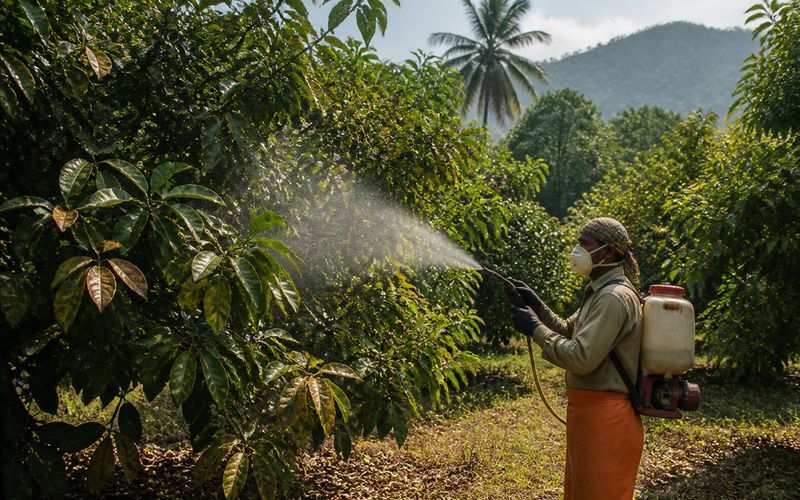
Signs of heat affecting mangosteen plants began to appear in April itself. Without delay, mix 4 ml of Potassium and Silicon in one liter of water and spray.
First spray: Mix 4 ml of Potassium and Silicon in one liter of water and spray.
After three days: Mix Calcium Nitrate at a rate of four grams for those with fruits and three grams for those without fruits in one liter of water and spray.
Drench the plant well, so that it falls on both sides of the leaves, and spray. Gummosis disease, which reduces the quality of mangosteen fruits, has been seen in many places. To avoid this and to survive the heat and drought, the previously suggested spray is sufficient.
🌿 In most places, a deficiency of silicon is seen in mangosteen. As soon as the monsoon starts, applying a micronutrient mixture containing zinc and magnesium, but no iron at all, in spray form will help the fruits to grow in size.
Two days after applying the zinc spray, mix 4 ml of Nano DAP in one liter of water and spray.
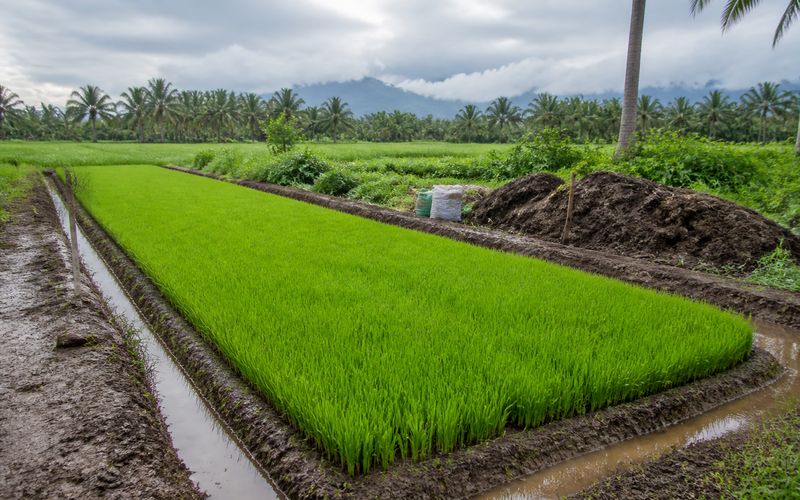
In fields where seeds were broadcasted in dry soil in April, they can be transplanted after 30 days. In fields where this is not necessary, the general recommendation is to apply 50 kg of urea per hectare for local varieties and 60 kg for short-duration varieties.
To reduce the acidity of urea, add rock phosphate weighing one-fifth of its weight, mix well, and apply after 12 hours.
For Virippu cultivation, when preparing the nursery, plow in organic manure at the rate of one kilogram per square meter. Full-grain paddy seeds are needed for preparing the nursery.
- ✅ The field for transplanting the seedlings must be prepared on a fixed schedule even before sowing in the nursery.
- ✅ At the time of planting, the maximum age of seedlings for short-duration varieties should be 18 days, and for medium-duration varieties, 25 days.
- ✅ If the seedlings are older, it will significantly affect the plant’s growth and yield.
To prevent leafhopper attacks that can occur immediately after planting, spray Verticillium on the nursery after the sun has set. In areas prone to rice bug attacks, to control them, spray Beauveria as well, 3 days after the Verticillium spray.
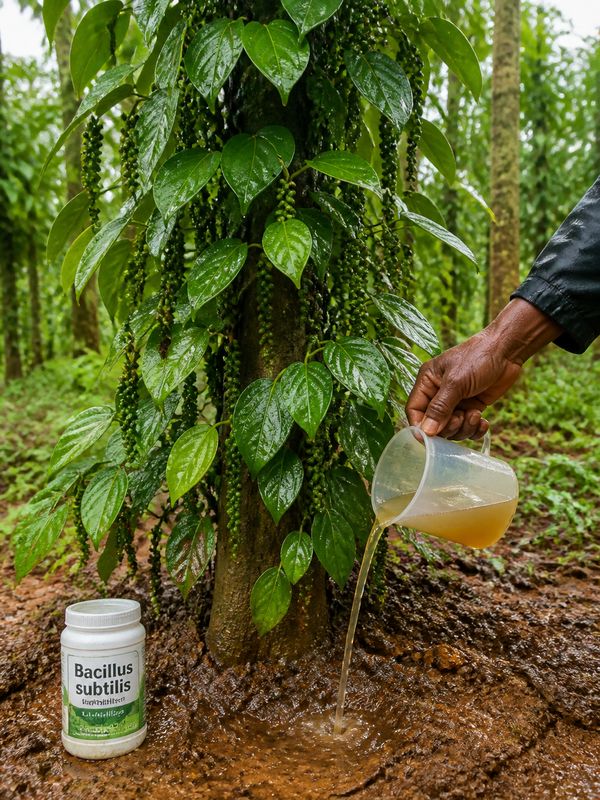
If the monsoon arrives by the end of May, the evening after a good rain, as a precaution, dissolve Bacillus subtilis at the rate of 30 grams/20 ml in one liter of water and pour at least 100 ml each into the soil near the stem of the pepper vine.
Spread one kilogram each of organic manure enriched with Trichoderma, 15-20 cm away from the support tree.
⚠️ In plantations where quick wilt disease is persistent, spreading 500 grams of lime around the support tree will reduce acidity and control the growth of the fungus.
Once the rain is certain, remove the shade that was tied up for summer protection.
Avoid watering the plants with chlorinated water. Both of these, especially orchids, are very sensitive to chlorine. Just watering with chlorinated water can cause some buds to dry up.
🐌 To destroy snail eggs, which look like small pearls and have a jelly-like appearance, found among dry leaves and organic debris, gather them together and expose them to the sun at the beginning of this month.
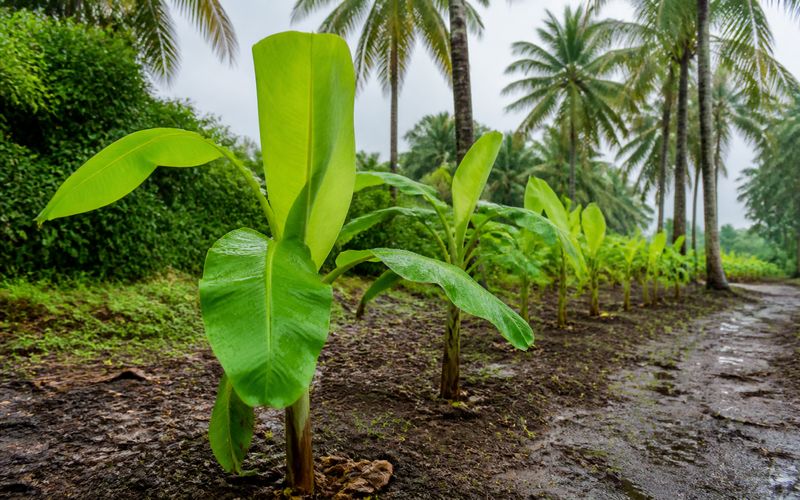
When banana suckers planted in dry soil sprout with 2-3 leaves after the summer rains, dissolve 3 grams of 19.19.19 fertilizer in one liter of water and spray.
After one week, in the evening, mix 30 grams of Bacillus subtilis in one liter of water, take the clear supernatant liquid, and spray.
For banana plants older than 3 months showing symptoms like reduced greenness of the pseudostem, the central leaf not unfurling properly, the next leaf emerging through the previous one before it has fully opened, or the tip of the leaf not unfurling even after the leaf has opened, a solution of Calcium Nitrate dissolved at a rate of 4 grams per liter of water should be sprayed well on all leaves, including the central leaf and tender leaves.
For those younger than 3 months, a spray of calcium dissolved at a rate of 2 grams per liter of water will improve their survival rate.
If the monsoon starts by the end of the month, the coconut basins can be opened after 2-3 rains. The basin should be opened up to the tip of the fronds.
For saplings still in pits that haven’t had their basins turned yet, the soil inside the pit should only come up to the level below the oldest frond. Excess soil must be removed.
🪲 Subsequently, applying EPN, Entomopathogenic nematode, in the pits will reduce termite infestation and red palm weevil attacks.
Towards the end of the month, apply organic manure around the tree at the edge of the leaf canopy, ranging from 10 kg to 50 kg according to age.
For the first 2 years, apply 10 kg.
Then increase by 5 kg each year up to 10 years.
For those older than that, apply 50 kg.
In papaya, attacks by several pests are being observed in this year’s climate. Mealybug attacks on jackfruit and snow scale attacks on papaya are seen.
To control them, the liquid produced from the "kappu" leaf is most effective. If the liquid is not available, spraying a solution of Verticillium mixed with a non-ionic adjuvant is sufficient.
When should mangosteen farmers spray Potassium and Silicon in summer?
Mangosteen plants showing leaf scorch or heat stress should be sprayed without delay. The recommendation is to mix 4 ml of Potassium and Silicon in one liter of water and spray well. This is especially important before the monsoon arrives, because watering alone may not be enough to help the plant tolerate summer heat.
What Calcium Nitrate dose is suggested for mangosteen with fruits?
After three days of the Potassium and Silicon spray, mangosteen plants with fruits should receive Calcium Nitrate at four grams per liter of water. Plants without fruits should receive three grams per liter. The spray should drench the plant well and fall on both sides of the leaves for better coverage.
How can black pepper vines be protected when the monsoon starts?
After a good rain in the evening, dissolve Bacillus subtilis at the suggested rate in one liter of water and pour at least 100 ml into the soil near each pepper vine stem. Organic manure enriched with Trichoderma should also be spread 15-20 cm away from the support tree.
What is the right seedling age for paddy transplanting?
For paddy, the maximum seedling age at planting should be 18 days for short-duration varieties and 25 days for medium-duration varieties. If seedlings are older than this, plant growth and yield can be significantly affected. The transplanting field should be prepared on a fixed schedule before nursery sowing.
Why should orchids and anthuriums avoid chlorinated water?
Orchids and anthuriums, especially orchids, are very sensitive to chlorine. Watering with chlorinated water can cause some buds to dry up. Farmers growing these plants should avoid chlorinated water and also remove snail eggs from dry leaves and organic debris by exposing them to sunlight.
What spray helps young banana suckers after summer rains?
When banana suckers planted in dry soil sprout with 2-3 leaves after summer rains, dissolve 3 grams of 19.19.19 fertilizer in one liter of water and spray. After one week, Bacillus subtilis mixed in water can be sprayed in the evening using the clear supernatant liquid.
When should coconut basins be opened during the monsoon?
If the monsoon begins by the end of the month, coconut basins can be opened after 2-3 rains. The basin should extend up to the tip of the fronds. For saplings still in pits, excess soil should be removed, and EPN can be applied to reduce termite and red palm weevil attacks.