By C.V. Raman Kuzhiyaniyil
Noni fruit, which reduces symptoms of diseases like nerve disorders and knee pain, is drawing fresh interest through the cultivation efforts of farmer C.V. Raman.
The cultivation of Noni by farmer C.V. Raman is gaining popularity without any distinction between villages and cities. The Noni cultivation, which started for household needs, is now a large-scale enterprise. He has planted around 300 Noni saplings in his house compound.
Raman, a member of the Kuzhiyaniyil family, which is at the forefront of agriculture and medicinal plant conservation, started consuming Noni after facing many health issues following the great flood of 2018.
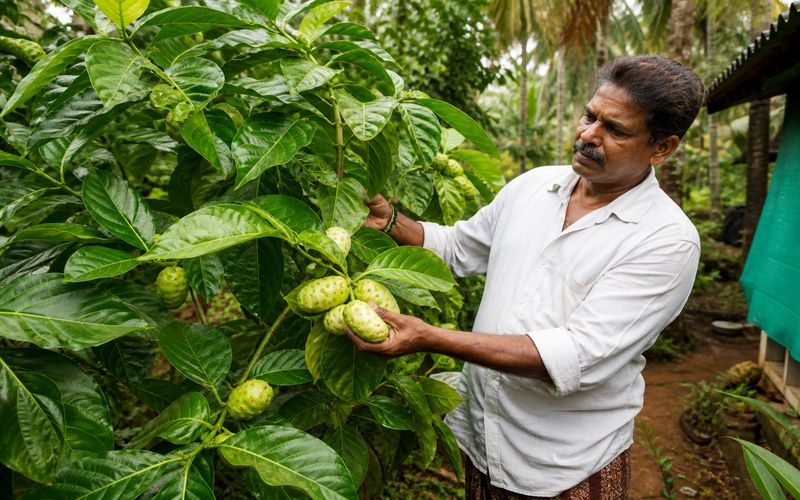
He says that after drinking one spoonful of Noni fruit juice mixed in a glass of water for 21 days, discomforts like body pain and cramping in hands and legs reduced, which prompted him to study more about Noni and start its cultivation.
He testifies that Noni fruit juice is also a remedy for numerous diseases like knee pain, joint pain, migraine, nerve disorders, cough, phlegm, asthma, and cancer.
- ✅ Knee pain and joint pain
- ✅ Migraine and nerve disorders
- ✅ Cough, phlegm and asthma
- ✅ Rheumatic diseases, insomnia and mental stress
Raman says that adverse conditions like cold weather and the monsoon season of Karkidakam are not a problem for the growth of Noni. Favorable conditions are also helping Raman expand the cultivation.
It will grow lushly in any soil except waterlogged areas. Raman helps those interested in expanding Noni cultivation in the Nilavilakku, Kannur, Kasaragod, and Kozhikode districts. He delivers saplings to customers both in person and via post. He also ensures good quality.
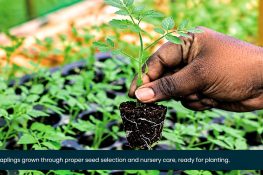
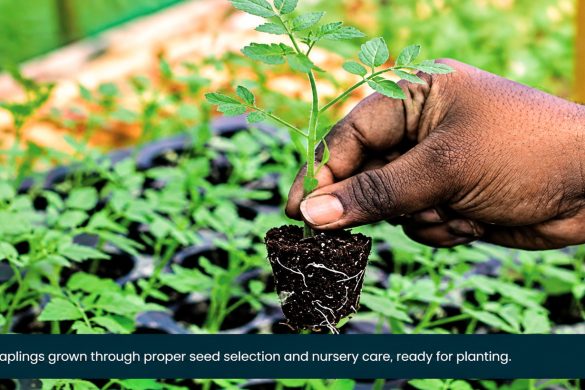
The saplings are planted in polythene bags filled with coir pith mixed with cow dung powder and bone meal. Fruits will start to appear from the 6th month after planting.
Before planting the saplings in pits, the pits should be filled with bone meal and cow dung powder as a basal fertilizer. The pits should be 2 feet long, 2 feet wide, and 2 feet deep.
As Noni is cultivated in a completely organic manner without adding chemical fertilizers, quality can be ensured. The stem should be broken and planted.
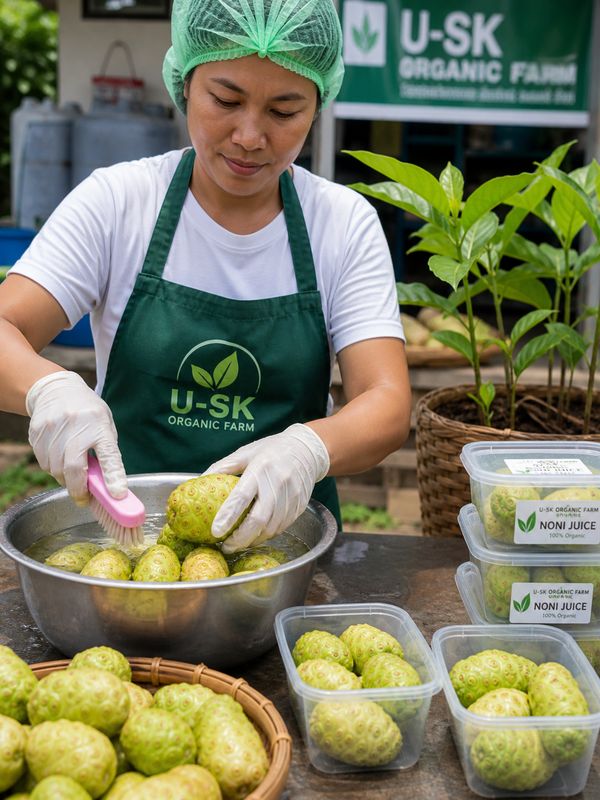
Raman prepares the harvested fruits for marketing by keeping them sealed in a plastic container daily.
Raman finds time to let the customers who come to buy it harvest the Noni themselves and to share knowledge about its use.
Raman himself prepares the organic fertilizer mixture by combining organic manure, cow dung, bone meal, groundnut cake, ash, and neem cake. He also charges 1500 rupees for one ton of organic fertilizer.
Its price will be determined according to the number of fruits harvested. Fruit – 2600 per kilo. Noni will yield continuously from six months to 20 years.
It is enough to just clean the harvested fruits easily and keep them sealed in containers. If kept indoors, they will ripen in 2-3 days at one’s convenience.
The ripened fruits can be conveniently made into Noni juice and used. It is better to prepare it fresh for daily needs rather than storing it in the refrigerator.
In the morning, on an empty stomach, you can drink one teaspoon of Noni juice mixed in a glass of lukewarm water. It is best to eat food only after one hour.
Diabetic patients can drink Noni juice mixed with honey instead of sugar. Non-diabetics can use sugar or jaggery.
Both dried and fresh Noni leaves can be boiled in water and drunk. It can also be used as a decoction. Like the fruit, the leaves also have about 40 medicinal properties.
Pregnant and lactating mothers should not consume Noni. Those with sulfur allergies and those taking medication for heart-related diseases should only consume Noni under a doctor’s advice. Others can consume Noni without fear.
Noni provides relief to a certain extent for nerve disorders, rheumatic diseases, and insomnia that affect both the elderly and the young alike. It helps reduce mental stress and improves digestive issues.
He says it also helps to overcome difficulties in urination and defecation when elderly people become bedridden, and it is also good for reducing depression.
In the past, many were unaware of the Noni that grew in their homes. Many people used to just throw it away because of the pungent smell from the fruit. However, once they learned about its medicinal properties, everyone is now returning to Noni cultivation.
Raman provides pure Noni juice and fruit to those who need it. For more details and for those who need it, Raman can be contacted.
📱 9349201849 — WhatsApp message only.
What is Noni fruit mainly used for according to Raman?
According to C.V. Raman, Noni fruit juice helps reduce symptoms connected with knee pain, joint pain, migraine, nerve disorders, cough, phlegm, asthma, rheumatic diseases, insomnia, mental stress and digestive issues. He started studying and cultivating Noni after personally experiencing relief from body pain and cramping.
How soon does a Noni plant start fruiting?
In Raman’s farming method, Noni fruits start to appear from the 6th month after planting. Noni can yield continuously from six months to 20 years, and harvesting can be done up to 7 times a year when the plant is maintained well in suitable soil.
What soil and climate conditions are best for Noni cultivation?
Raman says cold weather and the monsoon season of Karkidakam are not a problem for Noni growth. Noni will grow lushly in any soil except waterlogged areas, making it suitable for many homestead and farm conditions where drainage is available.
How is Noni planted organically?
The saplings are first planted in polythene bags filled with coir pith mixed with cow dung powder and bone meal. Before field planting, 2 feet long, 2 feet wide and 2 feet deep pits are filled with bone meal and cow dung powder as basal fertilizer.
How much Noni fruit can one tree produce?
The weight of one Noni fruit can be from one kilo to one and a half kilos. Raman says 5 to 15 kilos of fruit can be obtained from one tree, and harvesting can be done up to 7 times a year depending on plant condition and fruiting.
How should Noni juice be consumed?
The article recommends preparing Noni juice fresh for daily needs instead of storing it in the refrigerator. In the morning, on an empty stomach, one teaspoon of Noni juice can be mixed in a glass of lukewarm water, with food taken after one hour.
Who should avoid or be careful with Noni?
Pregnant and lactating mothers should not consume Noni. Those with sulfur allergies and those taking medicine for heart-related diseases should consume Noni only under a doctor’s advice. Diabetic patients can drink Noni juice mixed with honey instead of sugar.