Rhinoceros beetle, also known as Komban Chellu (Malayalam), Komban Poochi (Tamil), Kombina Hula (Kannada), Gandam Purugu (Telugu), and Genda Keeda (Hindi), is one of the most destructive pests affecting coconut trees. It mainly attacks the crown region and damages newly emerging leaves, leading to weak growth and reduced yield.
This problem often starts when saplings are not properly maintained. With simple care and timely action, it can be effectively controlled.
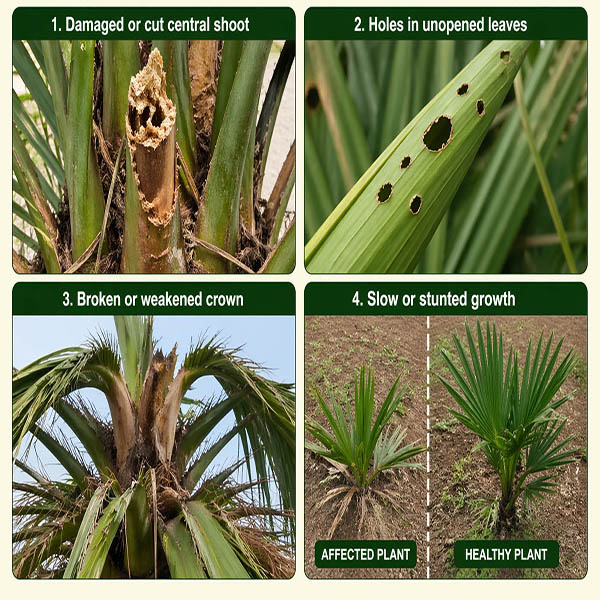
⚠️ Signs of Rhinoceros Beetle Attack
- Damaged or cut central shoot
- Holes in unopened leaves
- Broken or weakened crown
- Slow or stunted growth
🌱 Importance of Early Care
Coconut saplings are highly vulnerable to pest attacks. When regular care is ignored, beetle infestation becomes more likely and growth is affected. Maintaining cleanliness and monitoring the crown area from the early stages ensures healthy development of the tree.
🧹 Cleaning and Removing Affected Parts
Proper cleaning is the most important step in controlling rhinoceros beetle. The crown region must always be clean and free from debris. Dried leaves, organic waste, and decaying matter should be removed regularly, as they attract beetles.
If the tree is already affected, all damaged parts of the crown should be cut and removed completely. Infected leaves must be trimmed neatly, and the top portion should be cleaned thoroughly to restore the tree structure.
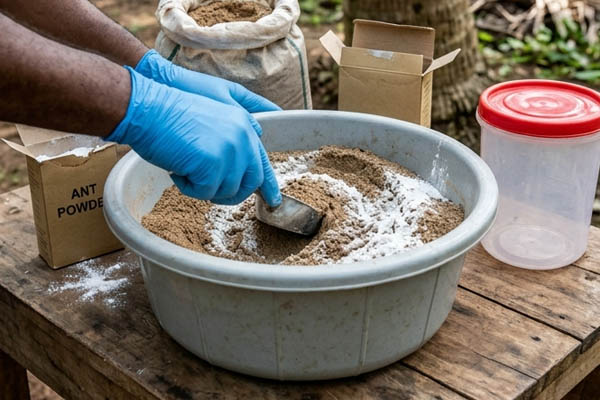
🧪 ₹20 Low-Cost Treatment Method
Materials Required:
- M-sand or fine sand
- Ant powder
Preparation:
- Mix sand and ant powder thoroughly
- Use gloves while handling
- Store remaining powder in an airtight container
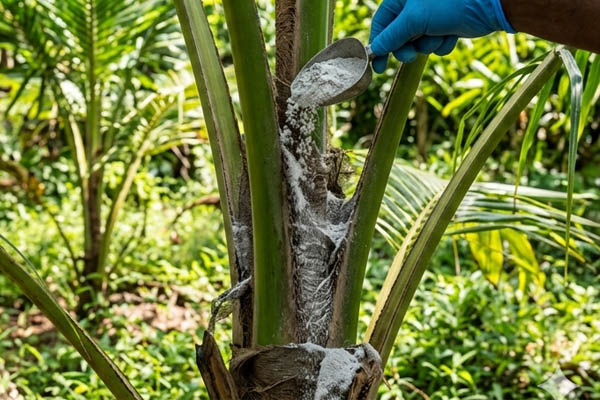
🌿 Application Method
- Apply the mixture inside leaf axils and crown
- Ensure it fills all gaps properly
- Slightly shake the tree for even distribution
✔ Provides protection for up to 6 months
Applying this from the sapling stage helps prevent future infestation effectively.
💧 Additional Liquid Treatment
During dry periods, mix 50 grams of ant powder in 1 liter of water and pour it into the crown and leaf axils.
Alternatively, insecticides like “Jump” can be mixed with water and sprayed on the crown and growing point for added protection.
🌾 Soil Health & Maintenance
- Apply lime once every 3 months
- Maintains proper soil pH
- Supports better growth and pest resistance
Key Prevention Insights
Regular maintenance is essential to avoid rhinoceros beetle attacks. Keeping the crown clean, removing organic waste, and applying preventive treatment twice a year ensures long-term protection with minimal cost.
Neglect can lead to severe crown damage and irrecoverable.
Early treatment ensures healthy growth
Effective control possible at very low cost (₹20)
What is rhinoceros beetle in coconut tree?
Rhinoceros beetle (Komban Chelli, Komban Poochi, Kombina Hula, Gandam Purugu, Genda Keeda) is a pest that attacks the crown and damages new leaves.
How do I identify rhinoceros beetle attack?
It can be identified by damaged central shoots, holes in leaves, and a weakened crown.
What is the cheapest way to control rhinoceros beetle?
Using M-sand mixed with ant powder is an effective low-cost solution that protects for up to six months.
Can rhinoceros beetle kill coconut trees?
Yes, severe infestation can destroy the crown and stop growth completely.
How often should treatment be done?
Preventive treatment should be applied twice a year along with regular cleaning.
What are the regional names of rhinoceros beetle?
- Malayalam: Komban Chellu
- Tamil: Komban Poochi
- Kannada: Kombina Hula
- Telugu: Gandam Purugu
- Hindi: Genda Keeda