✍️ Dr. B. Pradeep
Subject Matter Specialist (Fisheries), Danalika, Pavumbakkuzhi, Kozhikode | 📞 9496134220 | ✉️ nairpradeep2@gmail.com
If you’ve noticed your Tilapia fish’s eyes bulging outward, you’re not alone. This is a commonly asked concern among fish farmers, and the good news is there is more than one identifiable reason — and more than one actionable solution. The condition is most commonly known as Pop-eye, and it can affect one eye, both eyes, or both equally. Understanding what’s causing it is the first step toward effective treatment.
Below, we break down every major cause of eye bulging in Tilapia and walk you through what you can do about it — from water quality corrections to antibiotic treatment protocols.
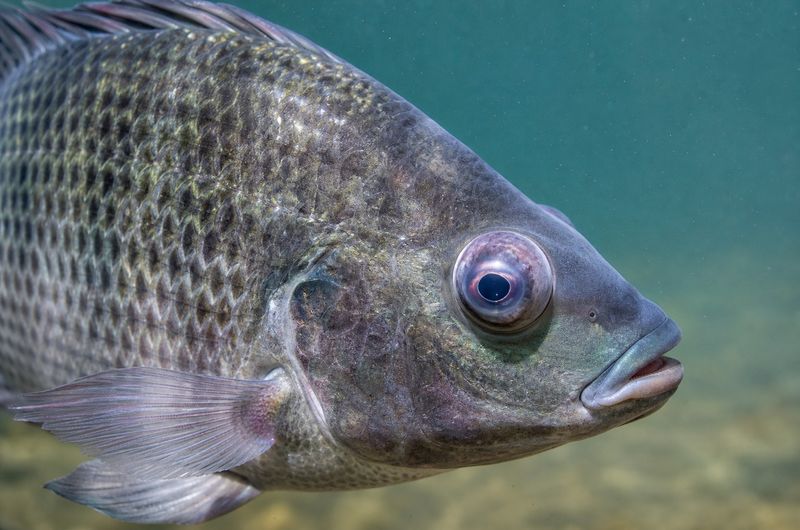
Eye of a Tilapia affected by Pop-eye
There is more than one reason behind this condition. Each cause differs in its mechanism and requires a slightly different response. Here are the primary causes identified:
💧 Poor Water Quality
Low oxygen levels below 2 ppm, ammonia above 0.5 ppm, and nitrate above 50 ppm can cause stress in the fish, leading to bulging eyes. Variations in pH, hardness, and chlorine can also trigger this condition.
🐟 Physical Trauma
Generally the reason for one eye bulging out. This can be caused by fish biting each other or hitting foreign objects. Wounds may also be visible. If treatment is delayed, infection can follow quickly, making it more complicated to manage.
🧬 Inbreeding & Reduced Immunity
If good quality Tilapia are inbred unscientifically, the immunity of their eyes will decrease. Malnutrition resulting from inbreeding can also cause this condition.
🍽️ Unscientific / Excessive Feeding
Excessive use of feed can cause fat to accumulate around the eye, which in turn can cause the eye to bulge outward.
🦠 Bacterial Infection
Diseases like Megabacteriosis and Iridovirus (Tilapia Lake Virus) can cause fluid to accumulate and swell around the eye, pushing it outward. Pathogens block the blood vessels behind the eye, preventing fluid from draining. This fluid retention can also lead to wounds forming on the eye surface.
Once you identify the likely cause, here is a step-by-step approach to treatment and management:
- 🔒 Isolate infected fish immediately. Fish infected with Pop-eye bacteria should not be housed with healthy ones — this could cause the disease to spread.
- 🧪 Check water quality — test levels of pH, hardness, ammonia, and nitrate in the fish pond.
- 💧 Replace 30%–40% of the water with fresh water if water quality is not right. Repeat this 2–3 times.
- 🚫 Never use chlorinated water under any circumstances.
- 💉 Administer antibiotic medicine in the feed if a bacterial Pop-eye infection is confirmed.
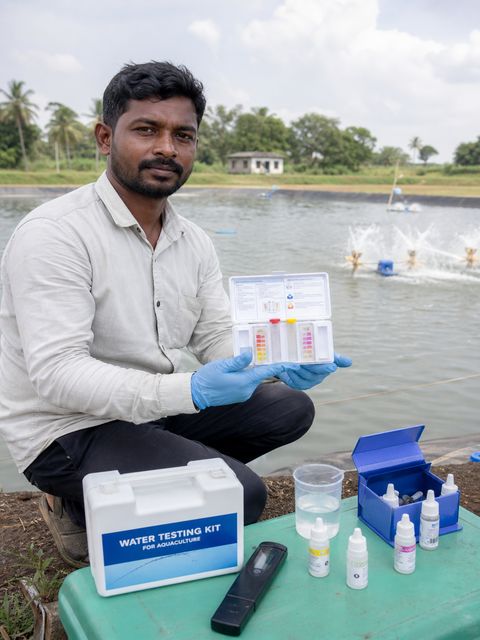
Regular water quality checks are essential to prevent Pop-eye and other fish diseases
For bacterial Pop-eye infections, Terramycin is recommended as an effective antibiotic treatment option. Here is how it is administered:
- ✅ Mix Terramycin in feed at a rate of 2 grams per kilo of feed for 7 to 10 days.
- ✅ Dissolve 10,000 units of water-soluble Terramycin in water and mix it with the feed before offering it to the fish.
- ✅ Alternatively, it can be given in the feed at a rate of 0.5–1 gram. Since this medicine dissolves in the internal organs of the fish, there are no side effects. Along with the food, this medicine is also added to the fish pond.
⚠️ Important: Never house Pop-eye infected fish alongside healthy fish. The disease can spread rapidly. Always isolate symptomatic fish at the earliest sign of infection and avoid delaying treatment, especially in cases of physical trauma — delays can lead to secondary bacterial infections that complicate recovery.
Maintaining the right water conditions is your first line of defence against Pop-eye and many other fish diseases. Keep these parameters in the safe range at all times:
| Parameter | Danger Level | Recommended Action |
|---|---|---|
| Dissolved Oxygen | Below 2 ppm | Increase aeration immediately |
| Ammonia | Above 0.5 ppm | Partial water change 30–40% |
| Nitrate | Above 50 ppm | Partial water change 30–40% |
| Chlorine | Any detectable level | Use only dechlorinated water |
| pH | Significant variation | Stabilize with appropriate buffers |
Expert Consultation
For partnership projects, preparation, and fish farming training, contact: Vet Clinic, Keezhmad, Kottayam, Kerala.
📱 WhatsApp: 8714617871 | ✉️ karsha@mm.co.in
Poor water quality is the number one cause of Pop-eye in Tilapia
Isolate infected fish immediately to stop disease spread
Terramycin for 7–10 days is effective against bacterial Pop-eye