Deputy Director (Rtd.), Animal Husbandry Department
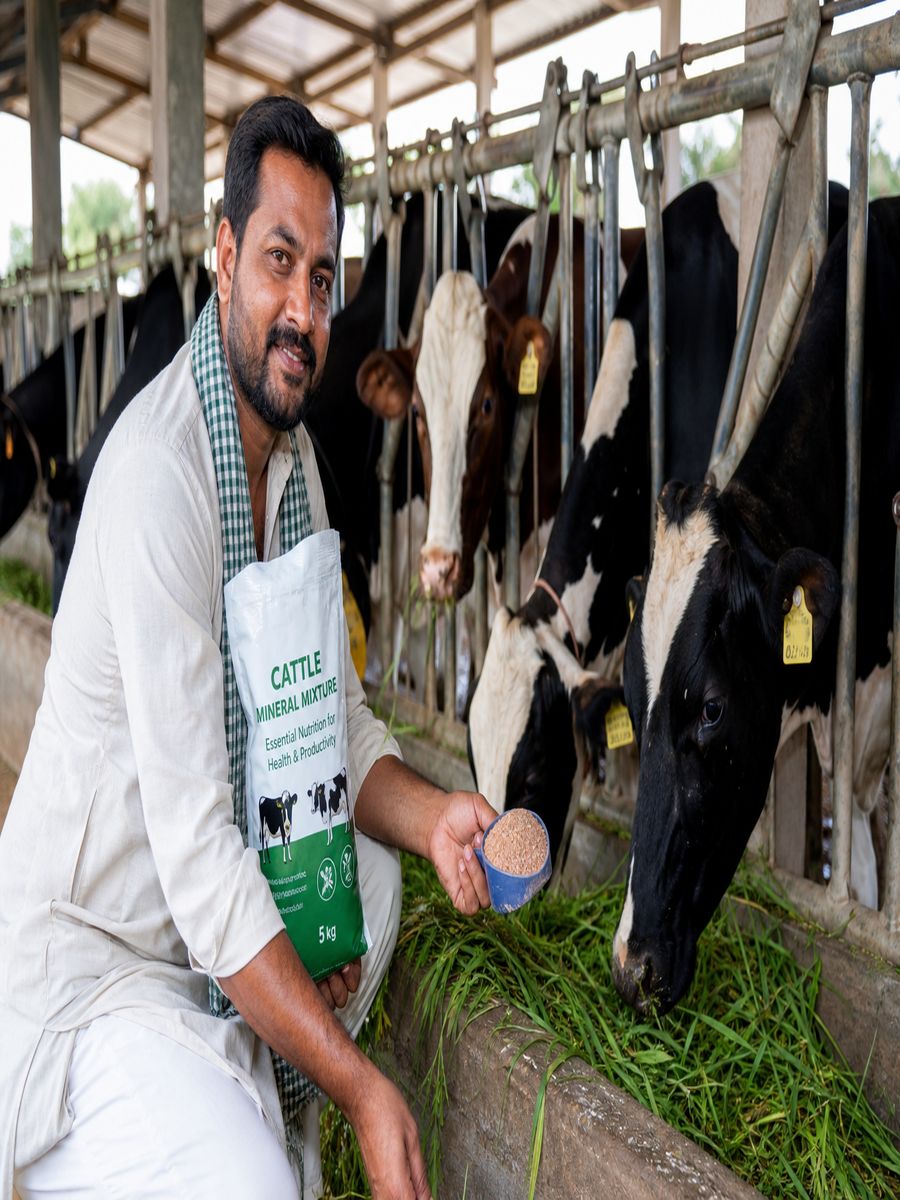
Mineral deficiency in dairy cows can be avoided by giving a quality mineral mixture daily in the right quantity for the animal’s stage, along with regular green fodder. The National Dairy Development Board recommends 20-25 grams for calves, 50 grams for heifers and non-pregnant cows, and up to 100-200 grams for milking cows depending on milk production.
Reputable mineral salt mixtures, chelated minerals, micronutrients, calcium, phosphorus, sodium, magnesium and vitamins are important for milk production, reproduction, muscle function, immunity and overall dairy cattle health.
Daily Mineral Feeding
Give mineral mixture daily as recommended for calves, heifers, non-pregnant cows and milking cows.
Higher Need After Calving
More minerals will be needed in the first three months after calving.
Green Fodder Helps
To ensure a higher availability of minerals, green fodder should be provided regularly.
Choose Quality Mixtures
Use mineral salt mixture made by reputable companies and follow the amount they prescribe.
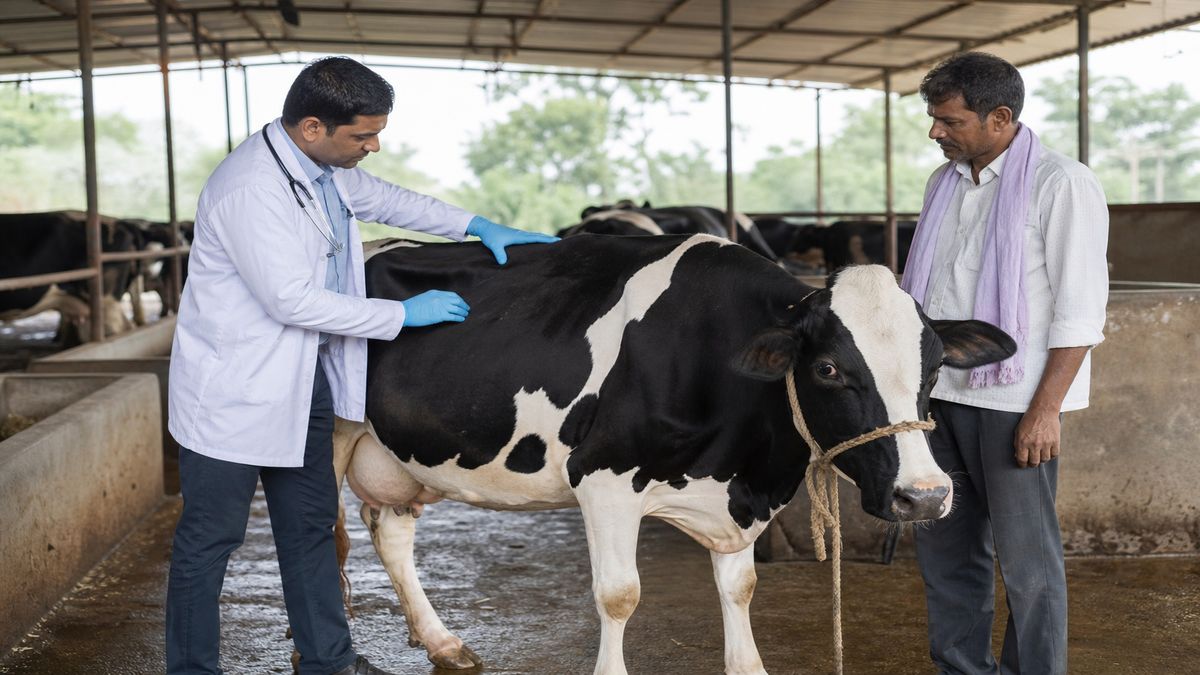
I have 10 cows on my dairy farm. One of them, 6 months after calving, showed discomfort near the bone in its hip region after the morning milking. I immediately called the veterinary doctor and had an injection administered. Within a few hours, the cow returned to normal. The doctor informed me that it was a disease caused by a mineral deficiency. How can this be avoided in the future?
— P. Madhavan Nair, Nedumbassery
Mineral deficiency in domestic animals is a condition linked to inadequate availability or absorption of required mineral salts and micronutrients needed for milk production, reproduction, muscle function, immunity and bone strength.
The presence of all types of mineral salts in the soil is essential. The National Dairy Development Board identifies the mineral content in the soil of various regions in India and provides instructions for preparing the mineral mixture required for cattle in each region.
Minerals from the soil reach plants, and from there reach animals, only in very small amounts. Therefore, routine feeding management is important in preventing mineral deficiency in dairy cows.
The National Dairy Development Board recommends that a mineral mixture be given daily in the following amounts:
| Animal Stage | Daily Mineral Mixture Quantity | Why It Matters |
|---|---|---|
| Calves | 20-25 grams | This is essential for the growth of calves. |
| Heifers | 50 grams | Supports growth and preparation for future production. |
| Non-pregnant cows | 50 grams | Helps maintain normal mineral availability. |
| Milking cows | Up to 100-200 grams, depending on milk production | Calcium, phosphorus, sodium and other minerals are necessary for milk production and reproduction. |
It must also contain the required micronutrients. Calcium, phosphorus, sodium, etc., are necessary for milk production and reproduction. Magnesium for muscle function and Vitamin K to control bleeding are essential. Vitamins C and E play a major role in boosting immunity. For example, Vitamins A, C, and E.
Phosphorus, necessary for bodily functions, as well as iodine, other minerals, and zinc are required for calcium formation. These help in the formation of mineral salts.
- 1 Check the animal’s stage.
Give mineral salt mixture according to the animal’s stage, such as heifer, the first three months after calving, the period of low milk production, pregnancy, etc. - 2 Follow the correct daily quantity.
Use the National Dairy Development Board recommended range for calves, heifers, non-pregnant cows and milking cows. - 3 Prefer reputable mineral mixtures.
The mineral salt mixture made by reputable companies should be given in the amount they prescribe. - 4 Provide green fodder regularly.
To ensure a higher availability of minerals, green fodder should be provided regularly. - 5 Look for chelated minerals.
When selecting a mineral salt mixture, one must ensure the availability of chelated minerals.
To ensure the efficient absorption of trace minerals, their molecules are combined with amino acids. These are called Chelated Minerals. When selecting a mineral salt mixture, one must ensure their availability.
| Mineral Mixture Choice | Pros | Cons or Cautions |
|---|---|---|
| Reputable company mineral mixture | Can be given in the amount they prescribe and is a safer choice for routine dairy cattle mineral feeding. | Farmers still need to match the quantity with the animal’s stage and milk production. |
| Market mineral salt mixtures of uncertain quality | Available in the market. | May contain various raw materials that hinder absorption. |
| Excess mineral feeding | None mentioned as a benefit. | An excess amount of some minerals will hinder the absorption of others. |
| Chelated mineral mixture | Designed for efficient absorption of trace minerals because molecules are combined with amino acids. | Availability should be checked when selecting a mineral salt mixture. |
Good quality mineral salt mixtures are available through government agencies like the Ksheerasamithi (Dairy Society) and Grass Fed.
Mineral deficiency in dairy cows can be reduced by giving the right mineral mixture daily, using reputable sources, providing regular green fodder and adjusting the quantity according to the animal’s stage. Calves, heifers, non-pregnant cows, milking cows, pregnant animals and cows in the first three months after calving do not all need the same level of mineral support.
For better dairy cattle health, milk production, reproduction, muscle function and immunity, choose mineral salt mixtures with required micronutrients and ensure the availability of chelated minerals.
How can mineral deficiency in dairy cows be prevented?
Mineral deficiency in dairy cows can be prevented by giving mineral mixture daily in the recommended quantity, providing green fodder regularly and choosing a good quality mineral salt mixture. The quantity should match the animal’s stage, such as calf, heifer, non-pregnant cow, milking cow, pregnancy or the first three months after calving.
How much mineral mixture should be given to a milking cow daily?
The National Dairy Development Board recommends up to 100-200 grams of mineral mixture daily for milking cows, depending on their milk production. Calves need 20-25 grams, while heifers and non-pregnant cows need 50 grams. The actual amount should follow the prescribed quantity from a reputable mineral mixture manufacturer.
Why do cows need more minerals after calving?
More minerals will be needed in the first three months after calving because this period places higher demand on the animal. Minerals such as calcium, phosphorus and sodium are necessary for milk production and reproduction. Proper mineral feeding during this stage also supports overall health and is essential for the growth of calves.
Are all cattle mineral mixtures available in the market safe?
The article cautions that mineral salt mixtures available in the market may contain various raw materials that hinder absorption. Excess amounts of some minerals may also hinder the absorption of others. Therefore, mineral salt mixtures made by reputable companies should be used only in the amount they prescribe.
What are chelated minerals in cattle feed?
Chelated minerals are trace minerals whose molecules are combined with amino acids to ensure efficient absorption. When selecting a mineral salt mixture for dairy cattle, one must ensure the availability of chelated minerals, especially when the goal is better mineral absorption and prevention of deficiency-related problems.
Which vitamins and minerals are important for dairy cows?
Calcium, phosphorus and sodium are necessary for milk production and reproduction. Magnesium is essential for muscle function, while Vitamin K helps control bleeding. Vitamins C and E play a major role in boosting immunity. Iodine, zinc and other minerals are also required for calcium formation and mineral salt formation.
Where can farmers get good quality mineral salt mixtures?
Good quality mineral salt mixtures are available through government agencies like the Ksheerasamithi, or Dairy Society, and Grass Fed. Farmers should select mineral mixtures based on the animal’s stage and ensure they contain required micronutrients and chelated minerals for efficient absorption.