Field reference: Roy’s mango grafting experience.
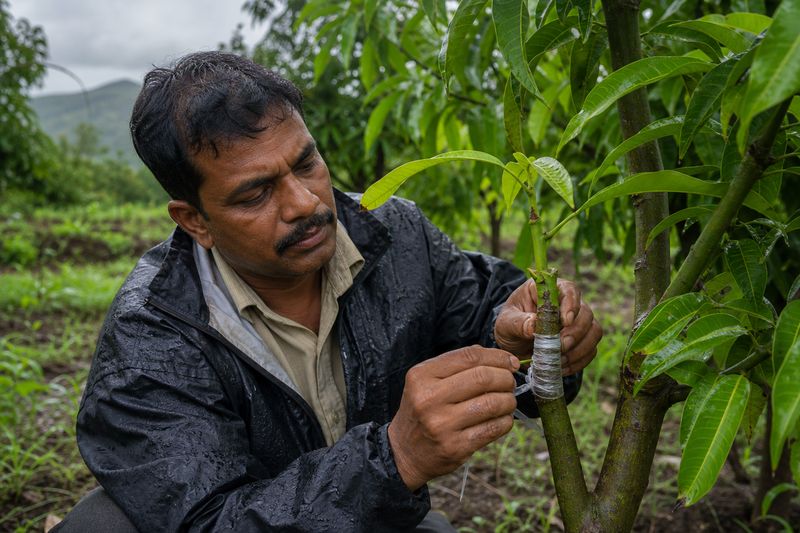
These practical mango grafting notes highlight the timing, scion selection, humidity management, and multi-variety grafting points that matter most in the field.
Roy’s experience also shows why the condition of the scion and the season can strongly influence whether a mango graft succeeds, flowers early, or fails.
Season matters: The rainy season from June to December is suitable for grafting. The chances of a graft succeeding in summer are very low.
For mango growers, this means grafting work should be planned around moisture and weather conditions rather than done at random. The rainy season creates a more favorable environment for the graft union to establish.
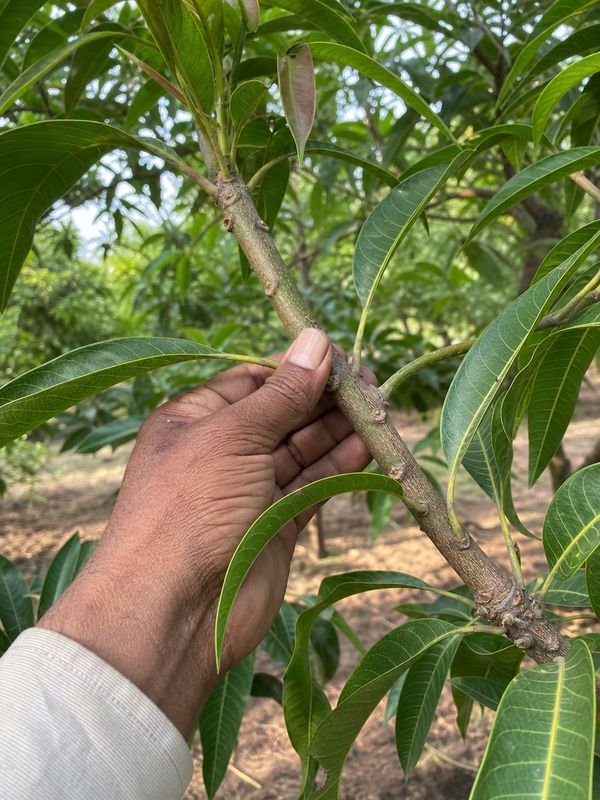
If mature scions from a fruit-bearing mango tree are used in time, there is a high probability that the graft will start bearing fruit within a year.
However, Roy has experienced that if a mature scion is taken from a local mango tree that has not yet started bearing fruit and is grafted, it will flower in the very first year.
Only mature and strong branches should be selected as scions. Using tender, sprouting branches as scions will not be successful.
Covering with a wet bag is done to create a humid atmosphere around the graft.
This small step helps protect the grafted area from drying out while the graft is still delicate. In mango grafting, keeping the surroundings humid can support the early healing stage.
By finding more suitable scions from different branches, more than one variety can be grafted onto a single mango tree.
Practical takeaway: A single mango tree can carry multiple varieties when suitable scions are selected carefully from different branches.
Graft during the rainy season from June to December.
Avoid summer because the chances of success are very low.
Select only mature and strong branches as scions.
Do not use tender, sprouting branches as scions.
Use suitable scions from different branches for more than one variety on one mango tree.