Coconut (Cocos nucifera) is a major plantation crop grown in more than 80 countries. In India, it is known as “Kalpavriksha” because every part of the tree is useful — from food and oil to fiber and fuel.
India ranks:
- 1st in coconut production
- 3rd in cultivation area
However, productivity is still not at its maximum, especially in regions like Karnataka’s maidan (dry) tract.
👉 One major reason:
Use of less productive varieties and lack of location-specific hybrids.
🌱 Why This Study Was Conducted
- To identify high-yield coconut hybrids
- To test their performance in dry (maidan) conditions
- To compare them with local varieties
- To improve farmer income and productivity

💡 Simple Insight: Not all coconut varieties perform the same everywhere. Choosing the right hybrid for your region makes a huge difference.
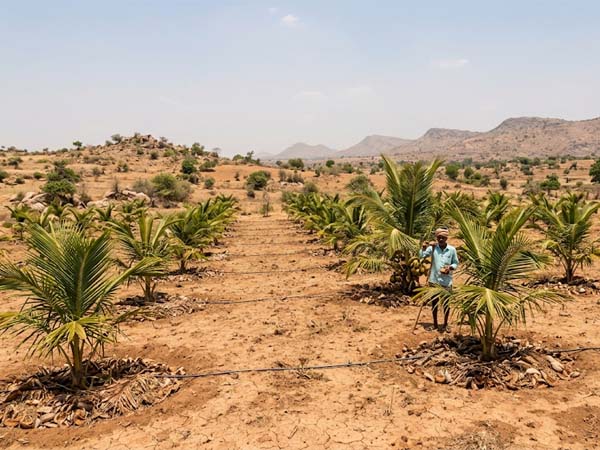
📍 About the Study Area (Maidan Region)
- Location: Arsikere, Karnataka
- Climate:
- Low rainfall (~704 mm/year)
- High temperature variation
- Soil: Clay loam
- Condition: Rain-shadow area (dry zone)
👉 These conditions make it challenging for coconut farming, so selecting the right hybrid is critical.
🧪 Materials and Methods
Experimental Setup
- Design: Randomized Block Design (RBD)
- Replications: 4
- Plants per treatment: 6
- Spacing: 7.5 m × 7.5 m
Planting Details
- Pit size: 1 m × 1 m × 1 m
- Filled with:
- Sand
- Red soil
- Farmyard manure
Irrigation
- Drip irrigation: 35–40 liters/day per palm
🌴 Coconut Hybrids Evaluated
Tested Hybrid Combinations:
- TPT × PHOT
- TPT × LCOT
- LCOT × MYD
- LCOT × MOD
- TPT × MYD
- TPT × MOD (Best performer) ⭐
Control Variety:
- Tiptur Tall (Local check)

🌿 Growth Performance Analysis
📊 Observed Parameters:
- Palm height
- Number of leaves per year
- Functional leaves per palm
- Number of flowers (inflorescences)
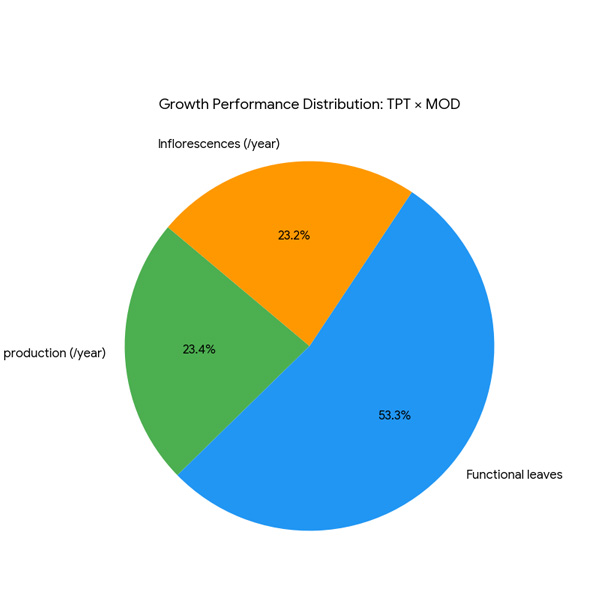
🏆 Best Growth Performer: TPT × MOD
Leaf production: 12.63/year
Functional leaves: 28.75
Inflorescences: 12.52/year
📉 Lowest Performance:
TPT (local variety) showed lower growth values
💡 What this means:
Better growth leads to more flowers → more coconuts.
🥥 Yield and Production Results
📊 Key Yield Factors:
✅ Number of nuts per palm
✅ Copra content per nut
✅ Copra yield per palm
Top Performing Hybrid: TPT × MOD
- Nuts per palm: 103.54
- Copra content: 147.25 g
- Copra yield: 15.45 kg/palm
Second Best: TPT × MYD
- Nuts per palm: 99.75
- Copra yield: 14.08 kg/palm
Lowest Performer:
- LCOT × MYD had the lowest copra yield (7.94 kg/palm)
📈 Why TPT × MOD Performed Best
- More flowers per year
- Higher nut production
- Balanced plant growth
- Better adaptation to dry conditions
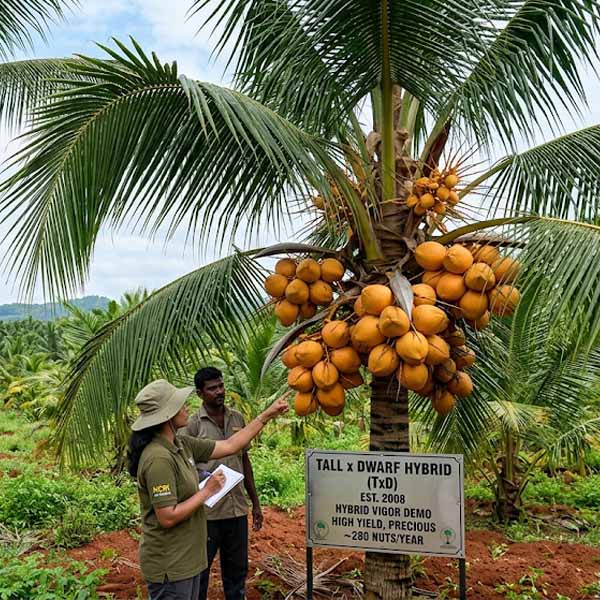
👉 This is due to hybrid vigor (heterosis) — a natural advantage seen in crossbred plants.
🌾 Scientific Insights Explained
🔬 What is Hybrid Vigor?
Hybrid vigor means:
- Faster growth
- Early fruiting
- Higher yield
👉It happens when two strong varieties are crossed.
🌍 Why Location Matters
- A hybrid performing well in Kerala may not perform well in Karnataka
- Climate, soil, and rainfall affect results
👉 That’s why location-specific testing is important
📊 Summary of Results
✔ Best Hybrid:
TPT × MOD
✔ Key Benefits:
- Highest yield
- Best copra quality
- Suitable for dry areas
- Early flowering
📢 Important Recommendation
Before large-scale farming: 👉 These hybrid should be tested in multiple locations to confirm stability and adaptability.
📢 Final Conclusion
The study clearly shows that:
👉 TPT × MOD is the most promising coconut hybrid for Karnataka’s maidan region
⚠️ However: It should be tested in multiple locations before large-scale commercial release.
🎓 Acknowledgement
The study was supported by:
- AICRP on Plantation Crops
- ICAR-CPCRI
- University of Horticultural Sciences, Bagalkot
❓ FAQ
Which is the best coconut hybrid for Karnataka dry regions?
How many coconuts can one hybrid palm produce?
What is copra yield and why is it important?
Which coconut hybrid gives the highest copra content?
Are hybrid coconut trees better than traditional varieties?
Yes, hybrid coconut varieties offer:
- Higher yield
- Early bearing
- Better stress tolerance
- Improved quality
What is the ideal spacing for coconut farming?
A spacing of 7.5 m × 7.5 m is recommended for optimal growth, sunlight exposure, and yield.
How much water does a coconut tree need in dry regions?
Around 35–40 liters per palm per day using drip irrigation is ideal for maintaining healthy growth in dry areas.
Can coconut hybrids grow in low rainfall areas?
Yes, hybrids like TPT × MOD are well-suited for low rainfall regions when supported with proper irrigation methods.
Why should farmers choose hybrid coconut varieties?
Farmers prefer hybrids because they provide:
- Higher productivity
- Better copra quality
- Improved profitability
- Adaptability to stress conditions
Is TPT × MOD ready for commercial cultivation?
TPT × MOD is highly promising, but multi-location trials are recommended before adopting it for large-scale commercial farming.
What is hybrid vigor in coconut?
Hybrid vigor (heterosis) refers to the enhanced growth, yield, and resilience seen in hybrid plants compared to their parent varieties.