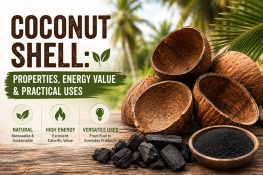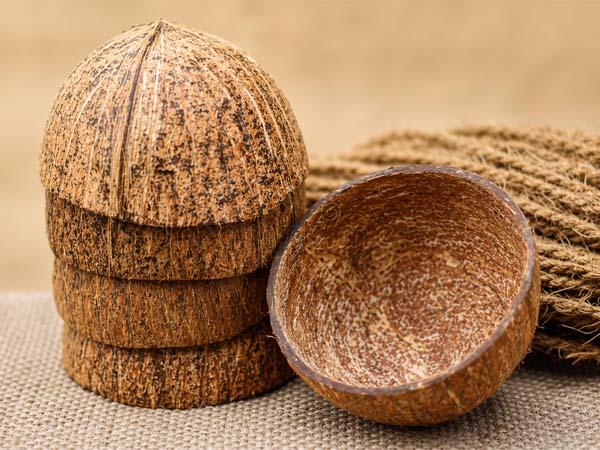

Coconut shells are one of the most common agricultural waste materials in India. Instead of being discarded, they can be used as a valuable renewable energy source.
- India is the 3rd largest coconut producer
- Generates 3–4 million tonnes of coconut shells annually
- Each coconut tree produces 21–30 kg of shells per year
👉 This study focuses on understanding the physical and chemical properties of coconut shells and their potential uses.
🌱 Why Coconut Shell Matters
🔹 Key Advantages
- Readily available throughout the year
- Low cost and eco-friendly
- High carbon content (good for fuel)
- Low ash content (clean burning)
👉 Coconut shells can be used for:
- Cooking fuel
- Charcoal production
- Biomass energy generation
- Handicrafts and industrial products
📊 Physical Characteristics of Coconut Shell
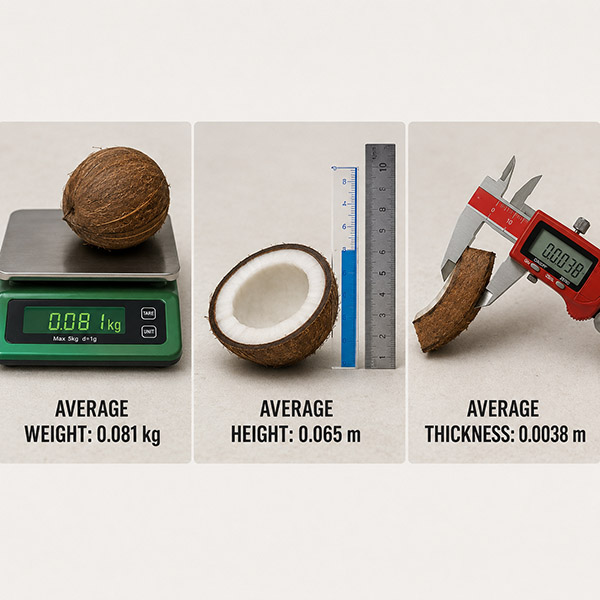
The study analyzed 25 coconut shell samples.
📌 Average Values
- Weight: 0.081 kg
- Height: 0.065 m
- Thickness: 0.0038 m
👉 These properties make coconut shell similar to hardwood, giving it strong fuel characteristics.
🔬 Chemical Properties (Proximate Analysis)
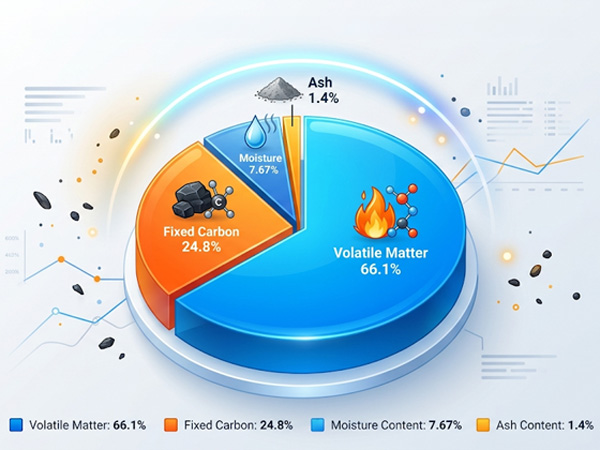
This analysis shows how the shell behaves during burning.
📌 Key Results
- Moisture Content: 7.67%
- Volatile Matter: 66.1%
- Ash Content: 1.4%
- Fixed Carbon: 24.8%
💡 What This Means (Simple Explanation)
- Low moisture → burns easily
- High volatile matter → ignites quickly
- Low ash → less residue after burning
- Good fixed carbon → better charcoal yield
👉 Overall, coconut shell is an excellent biomass fuel.
🔥 Calorific Value (Energy Output)
- Calorific Value: 4339.85 kcal/kg
💡 Why It’s Important
Higher calorific value means:
- More heat generation
- Better fuel efficiency
- Suitable for cooking, drying, and industrial heating
🧪 Ultimate Analysis (Elemental Composition)
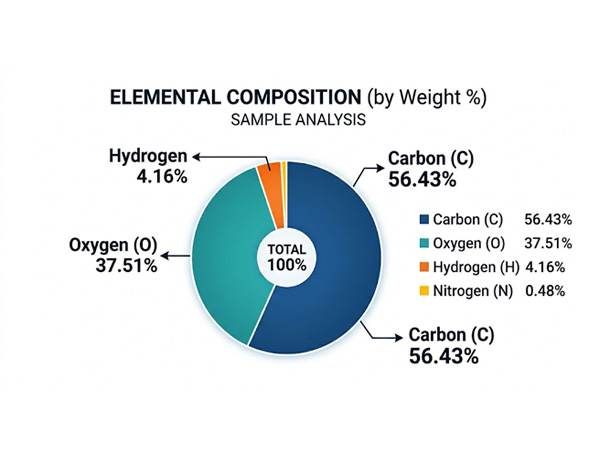
This shows what the shell is made of at the chemical level.
📌 Composition
- Carbon (C): 56.43%
- Hydrogen (H): 4.16%
- Oxygen (O): 37.51%
- Nitrogen (N): 0.48%
💡 Key Insight
- High carbon content → strong combustion performance
- Low nitrogen → less harmful emissions
⚙️ How the Study Was Conducted
🧪 Sample Collection
Coconut shells collected from hotels and temples
📊 Testing Methods
- Physical measurements (weight, thickness, height)
- Proximate analysis (moisture, ash, etc.)
- Calorific value using bomb calorimeter
- Ultimate analysis using MLR model equations
🌍 Applications of Coconut Shell
Energy & Fuel
- Biomass fuel for cooking
- Industrial heating
- Charcoal and activated carbon
Industrial Uses
- Coconut shell powder
- Construction materials
- Activated carbon filters
Other Uses
- Handicrafts
- Decorative items
⚠️ Environmental Importance

Improper disposal of coconut shells:
- Causes pollution
- Adds to agricultural waste

Proper utilization helps:
- Reduce waste
- Promote renewable energy
- Lower dependence on fossil fuels


Improper disposal of coconut shells:
- Causes pollution
- Adds to agricultural waste

Proper utilization helps:
- Reduce waste
- Promote renewable energy
- Lower dependence on fossil fuels
📢 Key Takeaways
- Coconut shell is a highly efficient biomass fuel
- Low moisture and ash improve burning efficiency
- High carbon content boosts energy output
- Widely available and cost-effective
- Ideal for sustainable and eco-friendly applications
❓FAQs
What is the calorific value of coconut shell?
Coconut shell has a calorific value of around 4339 kcal/kg, making it a strong and efficient biomass fuel.
Why is coconut shell considered a good fuel?
It has low moisture, high carbon, and low ash content, which helps it burn efficiently and produce more heat.
What are the main uses of coconut shell?
How much coconut shell is produced in India?
India produces around 3 to 4 million tonnes of coconut shells annually as agricultural waste.
What is the moisture content of coconut shell?
The moisture content is approximately 7.67%, which is ideal for combustion.
Can coconut shell be used for making charcoal?
Yes, due to its high fixed carbon content, coconut shell is widely used for charcoal production.
What is proximate analysis of coconut shell?
It measures moisture, ash, volatile matter, and fixed carbon, which determine fuel quality.
Is coconut shell eco-friendly?
Yes, it is a renewable, biodegradable, and sustainable resource when properly utilized.
What is the carbon content in coconut shell?
Coconut shell contains around 56% carbon, which supports strong combustion.
How does coconut shell help in waste management?
Using coconut shells reduces agricultural waste and environmental pollution while generating useful energy.