782
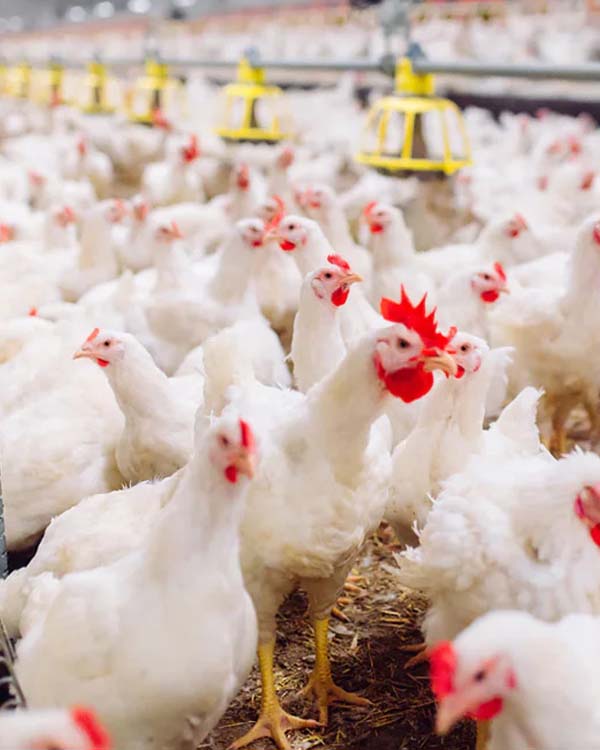
Broiler farming in Kerala can be profitable, but earnings vary widely depending on feed costs, market pricing, and how effectively farmers manage sales channels. Understanding key cost drivers and strategies to increase profits is essential for success in this sector.
How Broiler Farming Costs Work
✅ Production Cost Breakdown
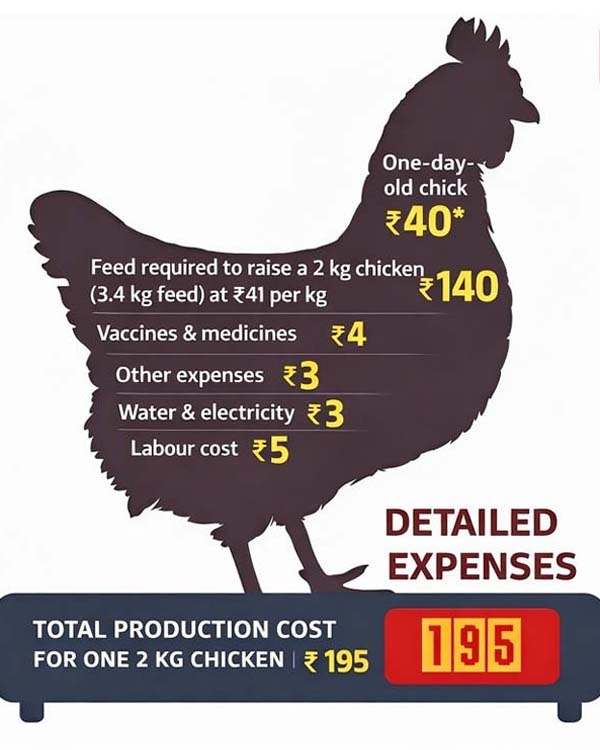
- Feed accounts for ~70% of total production costs.
- A broiler bird reaching 2 kg over ~40 days requires about 3.4 kg of feed, based on a 1.7 feed-to-weight conversion ratio.
- Poor care or suboptimal feeding can increase mortality and feed usage, reducing profitability.
✅ Feed and Chick Price Variations
- Feed and chick prices fluctuate seasonally and based on supply sources, which directly impacts production costs.
Market Price Dynamics
✅ Typical Price Structure
- Live broiler cost to farmer: ~₹97.5 per kg.
- Middlemen purchase from the farm around ₹110 per kg.
- Retail price to consumers reaches ~₹140 per kg.
✅ Profit Example for 1,000 Birds
- If sales prices remain stable year-round, a farmer selling 1,000 birds every ~2 months can earn ~₹25,000 per cycle after feed and operational costs.
- Eliminating middlemen could increase margins by ~₹15 per kg, potentially adding ~₹30,000 extra profit per cycle — about ₹55,000 profit in 60 days.
Why Middlemen Affect Profitability
✅ Price Control by External Players
- Larger poultry companies from neighboring states can influence chick, feed, and live bird prices due to greater scale and control of supply chains.
- During peak supply from outside states, farm gate prices can drop as low as ~₹70 per kg for live birds.
✅ Marketing Challenges for Small Farmers
- Small farmers raising ~1,000 birds struggle to supply retail buyers consistently year-round, making them dependent on intermediaries.
Strategies to Boost Broiler Farming Profits
✅Cooperative or Group Farming Units
To ensure year-round supply:
- Set up multiple batches staged every 10 days for a steady flow of market-ready birds.
- Example: Five units of 1,000 birds (total 5,000 birds) can be staggered so one batch is ready every 10 days.
✅ Build Market Access Without Middlemen
- Partner directly with butcher shops or retailers willing to purchase regularly.
- Even better: Establish your own retail outlet to capture direct consumer pricing, potentially increasing margin by ₹20+ per bird.
Capital Investment and Scaling
✅ Estimated Investment for Larger Units
- Setting up 5,000 broiler birds across multiple units (including sheds and equipment) may require ~₹35 lakh in capital.
- Farmers unable to bear this alone can consider joint ventures to share costs and risks.
✅ Infrastructure Needs
Key infrastructure to ensure higher returns:
- Scientifically designed and hygienic broiler sheds
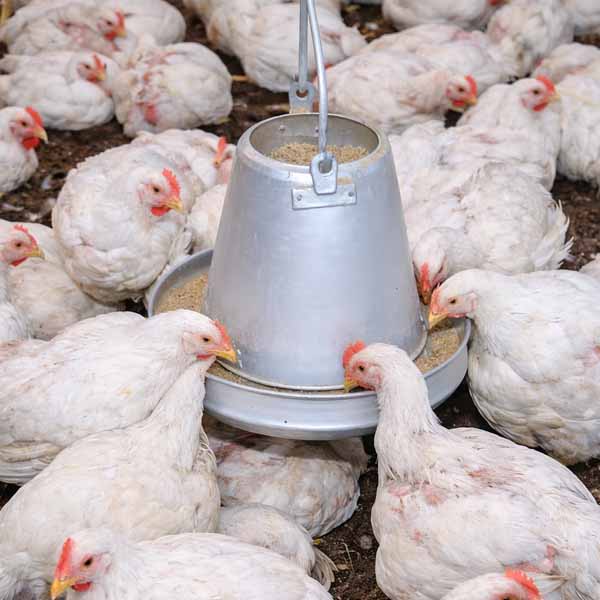
- Efficient feeding systems
- Access to veterinarians and vaccination programs
Broiler farming in Kerala holds solid potential for profitability when done with careful planning. Critical success factors include controlling feed costs, reducing reliance on middlemen, and securing direct retail access. By organizing production in staggered units and investing in proper infrastructure, farmers can capture higher market value, increase earnings, and build a sustainable poultry business.
FAQ
Is broiler farming profitable in Kerala?
Yes, broiler farming can be profitable if feed costs are controlled and farmers secure direct market access rather than relying on middlemen.
What percentage of cost does feed represent in broiler farming?
Feed accounts for approximately 70% of the total production cost in broiler farming.
How much profit can a farmer earn from 1,000 broiler birds?
With favorable pricing and minimal middlemen, a farmer could expect around ₹55,000 profit per production cycle of ~40–45 days.
Why do broiler prices fluctuate in Kerala?
Prices in Kerala fluctuate due to dependence on supplies from neighboring states and market pricing controlled by larger firms.
How can small farmers avoid middlemen?
Small farmers can form groups, stagger multiple batches, and negotiate supply contracts with local retailers to secure steady demand without intermediaries.
What are key investments for scaling broiler units?
Major investments include construction of sheds, feeding and watering systems, and vaccinations, totaling several lakhs depending on scale.
How often can broiler chickens be sold?
Broilers typically reach market weight in 40–45 days, enabling multiple production cycles annually.