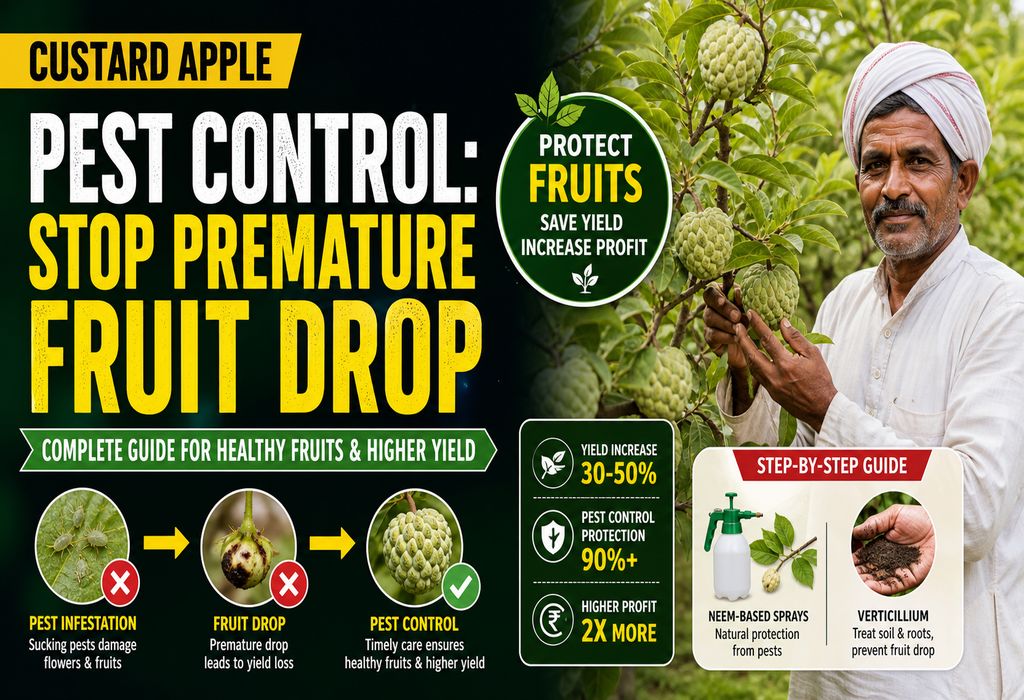
Fruit shedding in nutmeg is likely to intensify this month. The main reasons are the deficiency of elements like boron, calcium, and potassium, and fungal infection. Finding the exact cause early — with the help of the Krishi Bhavan — and adopting the right control measures is essential to prevent serious crop loss.
Unnecessary nutrition often leads to the destruction of the plant or an increase in shedding, so precision matters more than guesswork when managing this condition.

Two primary factors drive nutmeg fruit drop. Understanding both helps you take targeted action rather than applying broad treatments that may worsen the problem.
🧪
Nutrient Deficiency
Deficiency of boron, calcium, and potassium are the key nutritional causes behind premature fruit drop in nutmeg trees.
🦠
Fungal Infection
Fungal pathogens attacking the tree can accelerate fruit shedding and must be treated with biological controls promptly.
⚠️ Important: Find the exact cause with the help of the Krishi Bhavan before applying any treatment. Unnecessary nutrition often leads to the destruction of the plant or an increase in shedding.
To control the fungal infection causing fruit drop, follow this step-by-step spray preparation and application method carefully:
-
1
Mix 30 grams (or 15 ml) of Bacillus subtilis or Pseudomonas in one liter of water. -
2
Wait 10 minutes, then add 1 ml of non-ionic adjuvant to 4 liters of the spray solution. -
3
Drench the entire tree with the spray solution — apply only after the sunlight has faded in the evening.
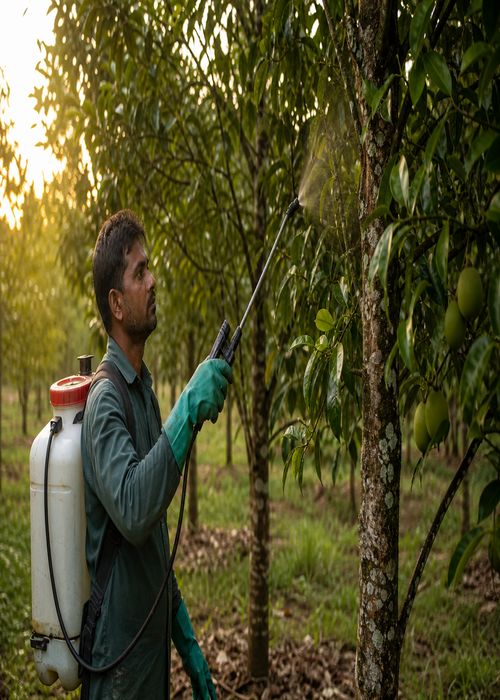
💡 Tip: Always apply the spray after sunset or when sunlight has faded. Spraying during peak sunlight hours reduces the effectiveness of biological agents like Bacillus subtilis and Pseudomonas.
| Ingredient | Quantity | Dilution |
|---|---|---|
| Bacillus subtilis / Pseudomonas | 30 g (or 15 ml) | Per 1 litre of water |
| Non-ionic adjuvant | 1 ml | Added to 4 litres of spray solution (after 10 minutes) |
| Application timing | Evening only | After sunlight has faded — drench entire tree |