Home » Coconut Tree Drying From Top? Causes, Thanjavur Wilt Treatment & Prevention

Coconut Tree Drying From Top? Causes, Thanjavur Wilt Treatment & Prevention

by Sama Sadhik
4 minutes read

Expert: Joseph John Thoppil
Address: Assistant Director, Department of Agriculture, Pazhayangadi, Thrissur.
E-mail: johnjt139@gmail.com

❓ Farmer’s Question

The bark on the base of the coconut tree appears to be peeling off. Initially, it looked like oil was smeared on the base of the tree, and later, a reddish liquid seems to be oozing out. What is this disease? What is the solution?

Asked by: Thomas Vettikkatt
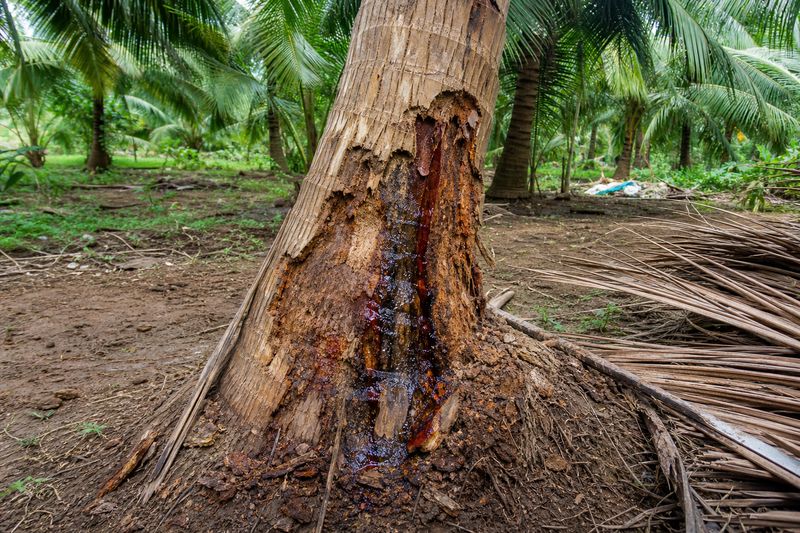
Thanjavur wilt symptoms on coconut tree trunk with reddish liquid oozing near the base

Thanjavur wilt in a coconut tree.


🦠 What The Symptoms Indicate

Among the diseases affecting coconut trees in Kerala, Thanjavur wilt is a fungal disease that, despite its severe appearance, causes extensive damage. The symptoms mentioned in the question are those of Thanjavur wilt.

This disease, which is widespread in Tamil Nadu, is now spreading in Kerala as well.

🌱

Initially, the roots of the coconut tree are seen drying up.

🔥

The trunk appears burnt.

🩸

A reddish liquid can also be seen oozing from the outer trunk of the tree.

🌿

New fronds wilt and droop, and tender fronds rot and decay.

🥥

By then, the nuts in the filled bunches will have turned brown and been destroyed.


🧪 Cause And Control Approach

The cause of the disease is a fungus called Ganoderma. Integrated control measures are effective in controlling it.

✅ Regulate the application of chemical fertilizers to affected coconut trees.
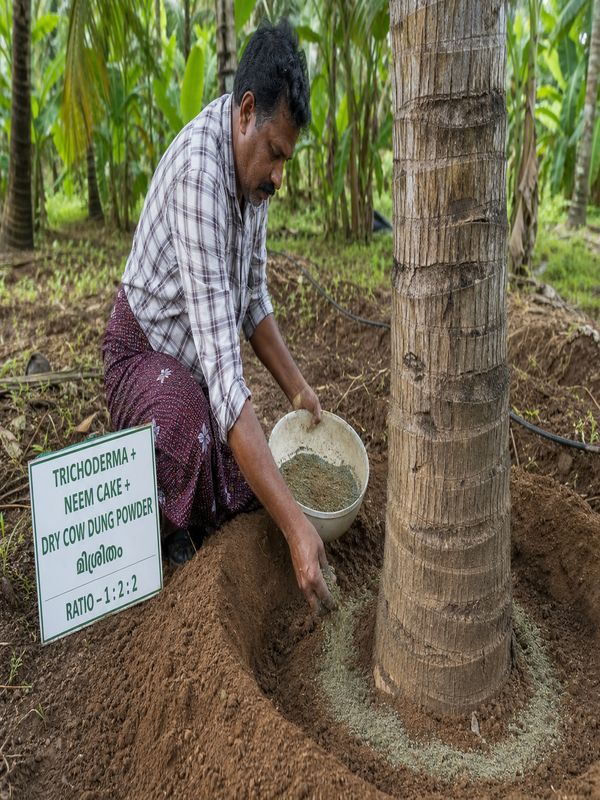

🌿 Neem Cake And Trichoderma Treatment

Applying Trichoderma and neem cake mixture in the basin of an affected coconut tree
  1. 1. Provide one dose of neem cake to the trees, using 15 kilos of neem cake + legume powder.
  2. 2. In addition, for each basin, mix 5 kilos of dry cow dung powder with Trichoderma and apply it to the coconut tree.
  3. 3. This mixture can be diluted in 5 liters of water and poured into the basin.
  4. 4. It is sufficient to pour 5 liters of water once a week.

🩹 Treat The Oozing Trunk Area

Along with this, scrape off the part where the reddish liquid has oozed, apply Bordeaux paste to it, and allow it to dry.

🔬 It is also helpful for the disease to subside by collecting samples from the trunk and soil of the affected coconut tree and applying Trichoderma in a paste form to the soil continuously for two weeks, once a week.


⚠️ Avoid Spreading The Disease

To control diseases in coconut trees, you should not mark, cut, or make small incisions on the trees with tools in many places. That will cause the disease to spread.

This includes not applying chemical pesticides if the tree is not infected.

🧯 Therefore, use a fungicide like Hexaconazole as per the instructions of agricultural experts.


FAQ

What is Thanjavur wilt in coconut trees?

Thanjavur wilt is a fungal disease affecting coconut trees. It is severe in appearance and can cause extensive damage. It is widespread in Tamil Nadu and is now spreading in Kerala as well. The disease is linked to a fungus called Ganoderma.

Why is reddish liquid oozing from my coconut tree?

A reddish liquid oozing from the outer trunk, especially near the base, is one of the symptoms mentioned for Thanjavur wilt. In affected trees, the bark may appear to peel, the trunk may look burnt, and roots may begin drying before fronds wilt and decay.

What fungus causes Thanjavur wilt?

The cause of Thanjavur wilt is a fungus called Ganoderma. Because it is fungal, integrated control measures are recommended, including regulated fertilizer use, neem cake, Trichoderma application, Bordeaux paste on the affected trunk area, and expert-guided fungicide use when required.

How is Trichoderma used for affected coconut trees?

For each basin, mix 5 kilos of dry cow dung powder with Trichoderma and apply it to the coconut tree. This mixture can be diluted in 5 liters of water and poured into the basin. Pouring 5 liters of water once a week is sufficient.

Should Bordeaux paste be applied to a coconut trunk with reddish oozing?

Yes. Along with the basin treatment, scrape off the part where the reddish liquid has oozed, apply Bordeaux paste to it, and allow it to dry. This is one of the recommended steps in the integrated control approach for Thanjavur wilt symptoms.

Can cutting or marking coconut trees spread disease?

Yes. To control diseases in coconut trees, do not mark, cut, or make small incisions on the trees with tools in many places. Such wounds can cause the disease to spread. Chemical pesticides should also not be applied if the tree is not infected.

Can Hexaconazole be used for Thanjavur wilt?

A fungicide like Hexaconazole may be used, but only as per the instructions of agricultural experts. The article specifically advises expert-guided use rather than routine chemical application, especially because unnecessary pesticide use on uninfected trees should be avoided.

You may also like