Home » Hairy Caterpillars in Winter Vegetables: Natural Control Guide

Hairy Caterpillars in Winter Vegetables: Natural Control Guide

by Sama Sadhik
4 minutes read

Hairy caterpillars are a serious threat to winter vegetables, often appearing in large groups and causing rapid damage to crops like cabbage, cauliflower, beans, and local vegetables. Understanding the right control methods — both biological and cultural — can help farmers protect their harvest without relying heavily on chemical pesticides.
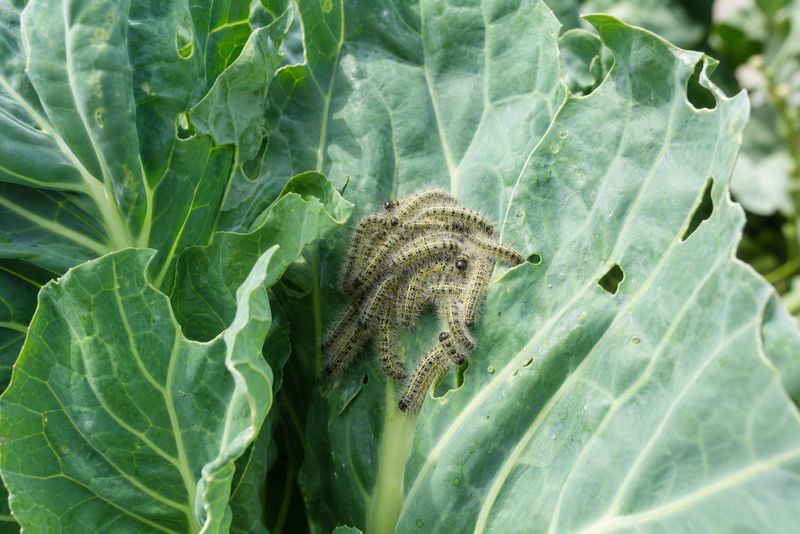
Hairy caterpillar damage on winter vegetables like cabbage and cauliflower

🥬 Managing Hairy Caterpillars in Cabbage & Cauliflower

Hairy caterpillars attack winter vegetables and are typically seen in groups, making early detection easier. The first line of defence is to destroy the eggs laid by moths using Trichogramma cards — a proven biological control method that targets eggs before they hatch.

For cabbage and cauliflower, hand-picking the caterpillars is sufficient to keep pest populations under control. No chemical intervention is needed if scouting and removal are done regularly.

An important cultural tip: after the cabbage head has formed, ensure that water does not fall into its center. If water gets inside, it will cause rotting there, leading to significant post-formation crop loss.

Trichogramma cards used for biological control of hairy caterpillars in cabbage and cauliflower

💡 Tip: Use Trichogramma cards at the egg stage of moths to prevent caterpillar populations from establishing. Place cards near affected plants during the early crop growth phase.


🌿 Controlling Muzhuthamara & Red Caterpillar in Local Vegetables

For local vegetable varieties affected by the Muzhuthamara caterpillar and red caterpillar, two bio-sprays are highly effective:

🧫

Bacillus subtilis Spray

Controls caterpillars biologically and also helps manage the fungal disease in beans known as Karimpankedu.

🪨

Potassium Silicate Spray

Strengthens plant cell walls and is equally effective against caterpillars and fungal diseases on local vegetables.

Both sprays are sufficient for controlling the Karimpankedu fungal disease in beans as well, offering dual-action benefits with a single treatment.


🪱 Using EPN to Control Termites in Farmlands

In farmlands, EPN (Entomopathogenic Nematodes) will be effective for controlling termites. These are naturally occurring soil organisms that target and kill soil-dwelling pests, including termites, without harming the surrounding ecosystem.

⚠️ Note: Apply EPN in moist soil conditions for best results, as nematodes require adequate moisture to move through the soil and reach target pests.


📋 Quick Reference: Pest Control Methods at a Glance

Pest / Problem Crop Control Method
Hairy caterpillars (moth eggs) All winter vegetables Trichogramma cards
Hairy caterpillars Cabbage, Cauliflower Hand-picking
Water rotting Cabbage (after head formation) Avoid water in center of head
Muzhuthamara & Red caterpillar Local vegetables Bacillus subtilis + Potassium silicate spray
Karimpankedu (fungal disease) Beans Bacillus subtilis + Potassium silicate spray
Termites Farmland (soil) EPN (Entomopathogenic Nematodes)

❓ FAQ

What are Trichogramma cards and how do they work against hairy caterpillars?

Trichogramma cards contain tiny parasitic wasps that lay their eggs inside moth eggs, destroying them before they hatch into caterpillars. They are a safe, biological pest control tool used to prevent hairy caterpillar infestations in winter vegetables like cabbage and cauliflower.

Is hand-picking enough to control hairy caterpillars in cabbage?

Yes. For cabbage and cauliflower, hand-picking the caterpillars is sufficient for control, especially since the pests tend to appear in groups, making them easier to locate and remove. Regular scouting of the crop is recommended to catch infestations early.

Why should water not fall into the center of a cabbage head?

After the cabbage head has formed, water accumulating in its center creates a moist environment that promotes rotting. This internal rot can destroy the cabbage head from within, causing significant crop loss. Directing irrigation away from the head center helps prevent this issue.

What is Karimpankedu and how can it be controlled in beans?

Karimpankedu is a fungal disease that affects beans. It can be effectively controlled using Bacillus subtilis spray and Potassium silicate spray. These bio-based treatments are the same ones used to manage Muzhuthamara and red caterpillars in local vegetables, offering dual-action benefits.

What are Entomopathogenic Nematodes (EPN) and how do they control termites?

EPN, or Entomopathogenic Nematodes, are naturally occurring microscopic organisms that live in the soil and parasitize soil-dwelling insects including termites. They are applied to farmland soil and are effective for termite control without the use of chemical pesticides.

Can Bacillus subtilis spray be used on all vegetables?

Bacillus subtilis spray is particularly recommended for local vegetables to control the Muzhuthamara caterpillar and red caterpillar. It also helps manage the Karimpankedu fungal disease in beans. It is a broad-spectrum bio-pesticide that is generally safe for use across a variety of vegetable crops.

What is the best time to apply Trichogramma cards in the field?

Trichogramma cards should be placed in the field when moth activity is first observed, ideally before eggs hatch. Early application during the egg stage of the pest’s lifecycle ensures maximum effectiveness in preventing caterpillar populations from establishing in winter vegetable crops.

You may also like