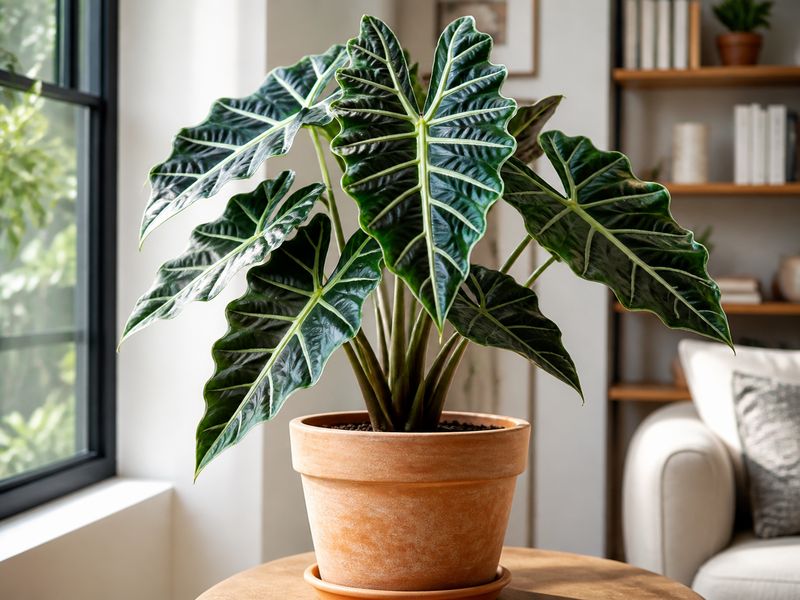
The Alocasia amazonica, popularly known as the Elephant Ear Plant or African Mask, originates from the tropical and subtropical regions stretching from Asia to Eastern Australia. Despite carrying the name ‘African Mask’, this plant has no actual connection with Africa. It earned this nickname purely because its striking leaves closely resemble the masks worn during traditional African ceremonies, dances, and celebrations. Its other well-known nickname, ‘Amazonian Elephant Ear’, adds to its exotic identity, making it one of the most visually distinguished ornamental houseplants in the world.
🎭 Why Is It Called the African Mask?

Traditional African masks that inspired the plant’s iconic nickname
The Alocasia amazonica earned its famous nickname the ‘African Mask’ not from its origin, but from the remarkable resemblance its broad, dark green leaves bear to the ceremonial masks of Africa. In many African societies, these masks are worn during traditional ceremonies, dances, and celebrations — and the deep lobed shape, bold white veining, and dramatic outline of the Alocasia leaf mirrors this iconic imagery strikingly well.
This visual connection is so compelling that the nickname has become globally recognised, even though the plant itself is native to Asia and Eastern Australia — not Africa at all.
🌱 Soil, Planting & Early Care
The Elephant Ear Plant thrives in fertile and moist soil. A mixture of soil and sand works well. Planting is done using the rhizome, and sprouts will typically appear within two to three weeks. Once the roots have grown to about one inch, those growing it at home can move it to larger pots depending on weather conditions.
🌿 After Planting: Keep the plant in the shade for a week or two. Once leaves are fully established, move it to a sunny spot.
☀️ Light Preference: Prefers bright indirect light rather than direct sunlight.
🪴 Mulching: Applying mulch on top of the potting soil is beneficial for moisture retention.
🌡️ Climate: Loves a warm and humid climate. Rests during winter and needs more water in summer.
💧 Watering Tips & Choosing the Right Pot
Proper watering is one of the most critical aspects of Elephant Ear Plant care. Water should never be allowed to stagnate in the pot — if it does, the rhizomes will rot. When watering, make sure the water flows out through the hole at the bottom of the pot.
Important: Do not get it too wet during the rainy season. It doesn’t need much watering in winter either. Allow the soil to start drying out between waterings — after one to two hours, drain any remaining water from the pot.
When choosing pots, always opt for clay pots. Water is more likely to stagnate in plastic pots. The Elephant Ear Plant is actually happier in smaller pots — larger pots hold more soil, which retains more water, increasing the risk of rot. Move the plant to a bigger pot only when its roots become pot-bound. The soil should not form clumps when watered.
During summer, this plant also appreciates having water sprayed on its leaves. However, when watering normally, be careful not to let water fall directly on the leaves.
🌾 Feeding & Fertilisation
Vermicompost is the favourite food of the Elephant Ear Plant. Additionally, a 20-20-20 ratio of Nitrogen (N), Phosphorus (P), and Potassium (K) dissolved in water, applied moderately every two weeks, keeps this plant thriving. During winter, feeding can be reduced — but never let the soil dry out completely.
🌿 Pro Tip: It is best to water first and then allow the soil to begin drying out before watering again. This cycle prevents waterlogging and promotes healthy root development.
🌿 Popular Indoor Varieties of Alocasia
There are many varieties of Alocasia that can be successfully grown indoors. One of the most well-known compact varieties is Bambino. Here are some of the most popular varieties loved by plant enthusiasts around the world:
Polly
Bambino
Green Velvet
Elaine
Frydek
Silver Dragon
Morning Dew
Black Velvet
Black Suit
🏡 A Globally Loved Ornamental Houseplant
Because of its thick, dark green leaves and striking ornamental appearance, the Elephant Ear Plant is widely grown as a houseplant in homes across the world. Its very distinguished look is so admired that in some countries, the distinctive pattern of its leaves is even imitated on polyester fabrics, reflecting just how deeply this plant has captured the imagination of people worldwide.
📋 Quick Care Summary
| Care Factor | Recommendation |
|---|---|
| 🌍 Origin | Tropical & subtropical Asia to Eastern Australia |
| 🪴 Soil | Fertile, moist; mix of soil and sand |
| ☀️ Light | Bright indirect light; no direct sunlight |
| 💧 Watering | Allow drying between waterings; avoid stagnation |
| 🌡️ Climate | Warm and humid; rests in winter |
| 🌾 Fertiliser | Vermicompost + 20-20-20 NPK every 2 weeks |
| 🏺 Pot | Clay pots preferred; smaller pots over large ones |
❓ FAQ
Why is Alocasia amazonica called the African Mask plant?
The Alocasia amazonica is called the African Mask plant because its large, dark green leaves with bold white veining closely resemble the ceremonial masks worn in many African societies during traditional dances and celebrations. Despite this nickname, the plant has no botanical connection to Africa — it actually originates from tropical Asia and Eastern Australia.
How often should I water the Elephant Ear Plant?
Water the Elephant Ear Plant when the topsoil begins to dry out. After watering, allow any excess water to drain through the pot’s bottom hole within one to two hours. Avoid overwatering, especially in the rainy season and winter. In summer, it needs more frequent watering, and misting the leaves is also beneficial during hot months.
What type of pot is best for growing Alocasia amazonica?
Clay pots are the best choice for growing Alocasia amazonica. Plastic pots tend to retain water and cause stagnation, which can lead to root and rhizome rot. Smaller clay pots are preferred since larger pots hold more soil and moisture, increasing the risk of overwatering. Repot only when the roots become pot-bound.
What is the best fertiliser for the Elephant Ear Plant?
Vermicompost is the preferred organic fertiliser for the Elephant Ear Plant. Additionally, a balanced 20-20-20 NPK (Nitrogen, Phosphorus, Potassium) fertiliser dissolved in water and applied every two weeks works very well. During winter, reduce feeding frequency but never allow the soil to dry out completely.
Can the Elephant Ear Plant be grown indoors?
Yes, the Elephant Ear Plant is very well suited for indoor growing. Many varieties are specifically popular as houseplants, including Polly, Bambino, Green Velvet, Frydek, Black Velvet, Silver Dragon, and more. It thrives in bright indirect light and a warm, humid indoor environment, making it one of the most admired ornamental houseplants worldwide.
What are the most popular varieties of Alocasia for home growing?
Some of the most popular Alocasia varieties for home growing include Polly, Bambino, Green Velvet, Elaine, Frydek, Silver Dragon, Morning Dew, Black Velvet, and Black Suit. Among these, Bambino is particularly well-loved for its compact size, making it ideal for smaller indoor spaces and container gardening.
Does the Elephant Ear Plant need direct sunlight?
No, the Elephant Ear Plant prefers bright indirect light rather than direct sunlight. Direct sun exposure can scorch its leaves. After planting, keep it in the shade for the first week or two until the leaves are established, then gradually move it to a brighter spot with filtered or indirect natural light for best results.
Where does the Alocasia amazonica plant originally come from?
Despite its common name ‘Amazonian Elephant Ear’, the Alocasia amazonica does not come from the Amazon. It is native to the tropical and subtropical regions of Asia, extending to Eastern Australia. Its nicknames — ‘African Mask’ and ‘Amazonian Elephant Ear’ — are both inspired by its appearance rather than its actual geographic origin.