Coconut, often called the “Kalpavriksha” (Tree of Life), plays a major role in agriculture and livelihoods in India. However, diseases like Grey Leaf Blight can significantly reduce yield and plant health.
This article simplifies a scientific study on the fungus Pestalotiopsis sp., which causes this disease, and explains how it grows, spreads, and thrives under different conditions
⚠️ What is Grey Leaf Blight in Coconut?
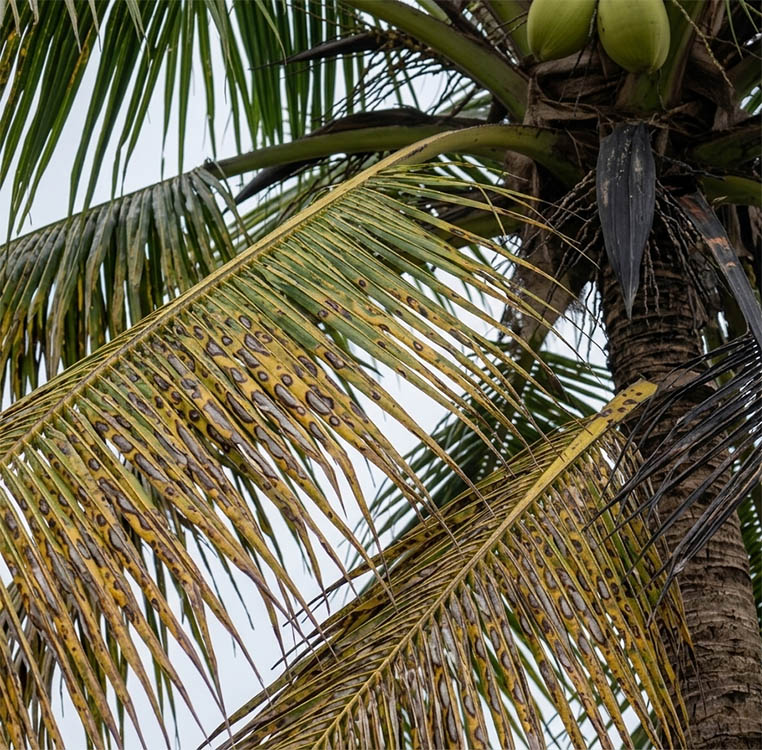
Grey Leaf Blight is a fungal disease affecting coconut leaves.
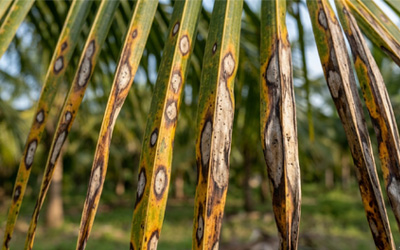
🔍 Common Symptoms:
- Small yellow or brown spots on leaves
- Spots surrounded by grey rings
- Gradual drying and weakening of leaves
👉 If not managed, it can reduce photosynthesis and overall yield.
🧪 Purpose of the Study
The research focused on:
- Understanding how the fungus grows
- Identifying best conditions for its development
- Studying nutrient media, temperature, and pH impact
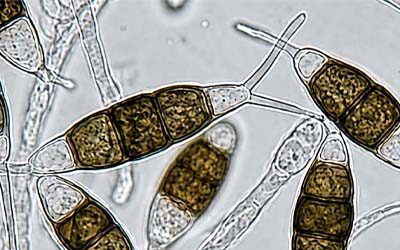
🦠 What Causes the Disease?
- Caused by fungus: Pestalotiopsis sp.
- Thrives in favorable environmental conditions
- Common across major coconut-growing regions
🧫 Cultural Study (Growth on Different Media)
✅ Best Media for Growth:
- Potato Dextrose Agar (PDA)
- Oatmeal Agar
- Sabouraud’s Dextrose Agar
➡️ These showed maximum fungal growth (90 mm) and excellent spore formation.
❌ Least Effective Media:
- Richard’s Agar
- Host Leaf Extract Agar
➡️ These showed reduced growth and poor sporulation
💡 Key Insight: Fungi grow faster in media rich in carbohydrates and nutrients
🌡️ Effect of Temperature on Fungus Growth
The fungus was tested at different temperatures.
🌟 Optimal Temperature:
- 20°C to 25°C
- Best growth at 25°C
❄️ Poor Growth Conditions:
- Very low temperatures (5°C–10°C)
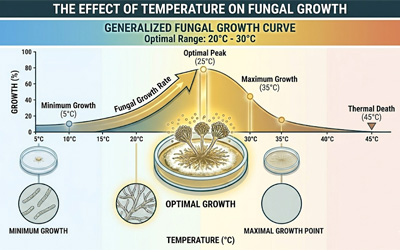
👉 Moderate temperature conditions favor rapid disease spread in coconut farms.
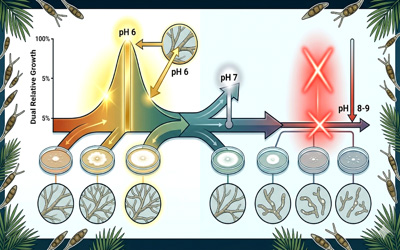
⚖️ Effect of pH on Fungus Growth
The fungus was also tested under different pH levels.
🌟 Optimal pH:
- pH 5 to 6 (slightly acidic)
- Maximum growth at pH 6
❌ Poor Growth:
Highly alkaline conditions (pH 8–9)
👉 Slightly acidic environments promote fungal activity and infection.
📊 Key Findings Summary
| Factor | Best Condition | Poor Condition |
|---|---|---|
| Temperature | 20–25°C | Below 10°C |
| pH Level | 5–6 | Above 8 |
| Growth Media | PDA, Oatmeal Agar | Richard’s Agar |
🧠 Why This Study Matters for Farmers
Understanding these conditions helps farmers:
- Predict disease outbreaks
- Take preventive measures
- Improve crop management
- Reduce yield losses
🛡️ Practical Takeaways for Coconut Growers
- Monitor plantations during moderate temperatures (20–25°C)
- Avoid excess moisture and poor air circulation
- Maintain soil health and avoid extreme pH imbalance
- Regularly inspect leaves for early symptoms
🔗 Full Research Paper
👉 Read the complete scientific study here:
https://www.biochemjournal.com/archives/2024/vol8issue3/PartJ/8-3-114-214.pdf
❓ FAQ
What causes grey leaf blight in coconut?
Grey leaf blight is caused by a fungus called Pestalotiopsis sp., which infects coconut leaves under favorable environmental conditions.
What are the early symptoms of grey leaf blight?
Early signs include small yellow or brown spots with grey rings, which gradually spread and damage leaves.
What temperature is ideal for fungal growth in coconut diseases?
The fungus grows best between 20°C and 25°C, making moderate climates more prone to infection.
What pH level supports the growth of Pestalotiopsis fungus?
The fungus thrives in slightly acidic conditions (pH 5–6).
Which media supports maximum fungal growth in laboratory conditions?
Potato Dextrose Agar (PDA), Oatmeal Agar, and Sabouraud’s Agar support the highest fungal growth.
How does grey leaf blight affect coconut yield?
It reduces leaf health, affecting photosynthesis and overall nut production.
Can environmental conditions increase disease spread?
Yes, moderate temperature and slightly acidic conditions promote rapid fungal growth and spread.
How can farmers prevent grey leaf blight?
Farmers should:
- Monitor crop regularly
- Maintain proper spacing
- Ensure good air circulation
- Avoid excessive moisture
Is grey leaf blight common in India?
Yes, it is commonly found in major coconut-growing states like Kerala, Karnataka, and Tamil Nadu.
Why is understanding fungal growth conditions important?
It helps in early detection, prevention, and effective disease management, reducing crop losses.