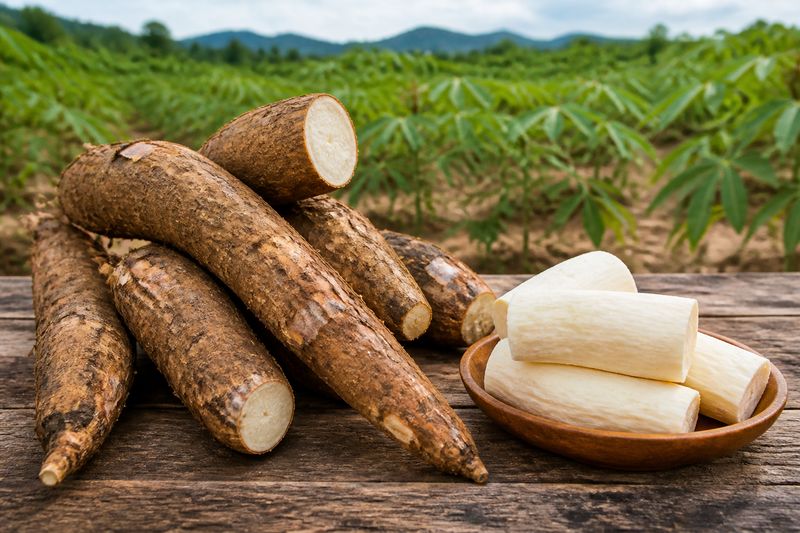
Cassava (also known as Kappa / Tapioca / Maracheeni) is mainly of 2 types: Sweet & Bitter. The difference in the amount of two cyanogenic glucosides contained in the tuber is behind this classification.
These glucosides are Linamarin and Lotaustralin. Due to the action of enzymes in our digestive tract, these turn into the extremely dangerous hydrocyanic acid (HCN).
| Type | HCN Amount | Key Point |
|---|---|---|
| Sweet cassava | Less than 50 milligrams of HCN per kilogram of cassava | Those with less than 50 milligrams of HCN per kilogram of cassava fall into the Sweet category. |
| Bitter cassava | Up to 400 milligrams of HCN | Those with up to 400 milligrams of HCN fall into the Bitter category. |
Because the difference is linked to cyanogenic glucosides in the tuber, cassava should not be treated as an ordinary root crop without proper preparation.
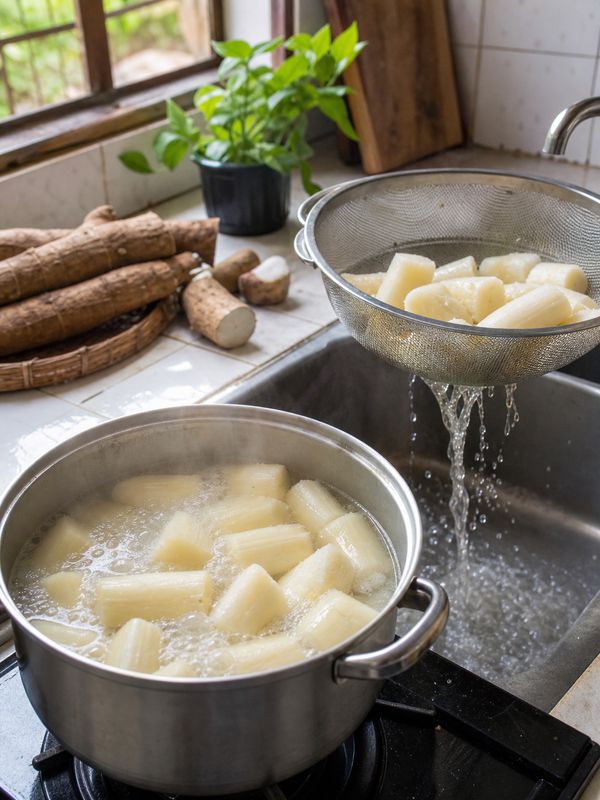
When cooking cassava, it should be soaked in water for some time, then boiled, drained, and the poison removed before use.
- ✅ Soak cassava in water for some time.
- ✅ Boil it properly.
- ✅ Drain it before use.
- ✅ Remove the poison before eating.
These steps are especially important when the cassava variety is unknown or when bitter cassava may be present.
Otherwise, extremely serious problems like Konzo syndrome, Ataxia, and Tropical Calcific Pancreatitis can occur. This can also cause problems with the functioning of the thyroid gland.
Konzo syndrome can occur when cassava poison is not properly removed before use.
Ataxia is another serious problem mentioned in relation to unsafe cassava consumption.
Tropical Calcific Pancreatitis can also occur if cassava is not prepared safely.
Cassava poison can also cause problems with the functioning of the thyroid gland.
If cassava with high HCN is consumed, thiosulfate is given as an antidote. Then the poison HCN will change into the non-poisonous thiocyanate.
Also, eating food containing sulfur-containing amino acids, such as fish, along with it can overcome this problem to some extent.
Is cassava poisonous before cooking?
Cassava can be dangerous if it is not prepared properly because it contains cyanogenic glucosides called Linamarin and Lotaustralin. Due to enzymes in the digestive tract, these can turn into hydrocyanic acid, or HCN. Soaking, boiling, and draining cassava helps remove the poison before use.
What is the difference between sweet and bitter cassava?
Cassava is mainly of 2 types: Sweet and Bitter. Those with less than 50 milligrams of HCN per kilogram of cassava fall into the Sweet category. Those with up to 400 milligrams of HCN fall into the Bitter category, which has a higher poison risk.
How should cassava be cooked safely?
When cooking cassava, it should be soaked in water for some time, then boiled and drained before use. This process helps remove the poison from the tuber. It is especially important when the cassava type is unknown or when bitter cassava may be involved.
What health problems can unsafe cassava cause?
If cassava is not properly soaked, boiled, and drained, extremely serious problems like Konzo syndrome, Ataxia, and Tropical Calcific Pancreatitis can occur. It can also cause problems with the functioning of the thyroid gland due to exposure to hydrocyanic acid.
What is HCN in cassava?
HCN means hydrocyanic acid. In cassava, Linamarin and Lotaustralin can turn into this extremely dangerous compound due to the action of enzymes in the digestive tract. The amount of HCN is the key reason cassava is classified as Sweet or Bitter.
What antidote is given after eating high-HCN cassava?
If cassava with high HCN is consumed, thiosulfate is given as an antidote. The poison HCN will then change into the non-poisonous thiocyanate. This is a serious situation, so medical help should be sought immediately if poisoning is suspected.
Can fish help reduce cassava poisoning risk?
Eating food containing sulfur-containing amino acids, such as fish, along with cassava can overcome this problem to some extent. However, this does not replace proper cassava preparation. Soaking, boiling, and draining cassava before eating remain essential safety steps.