Home » How to Protect Black Pepper Saplings From Dry & Hot Months (Bio-Agent Against Fungus & Mulching Protection Methods)

How to Protect Black Pepper Saplings From Dry & Hot Months (Bio-Agent Against Fungus & Mulching Protection Methods)

by Sama Sadhik
5 minutes read

By George K. Mathai, Deputy Director (Retd.), Department of Agriculture

📧 mathaigk@gmail.com

January is a busy month in the pepper plantation. Harvesting continues while farmers must simultaneously protect young saplings, guard against fungal threats, and prepare for the coming summer. From tying palm leaf covers to the stem base of young plants to spraying beneficial bio-agents in the evening, these traditional and science-backed practices together keep the crop healthy and productive.

Applying mulch before summer arrives and continuing to plant pepper on support crops like coconut trees are equally important tasks this month.
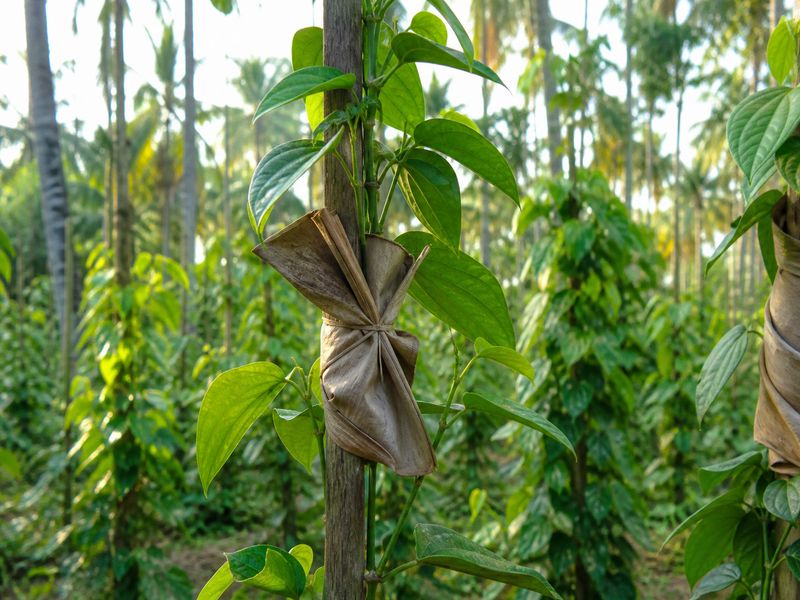
Young pepper sapling with areca nut palm leaf cover tied at stem base for summer protection

🌿 Protecting Young Pepper Saplings in January

Pepper harvesting continues through January. For saplings that are less than 2 years old, special attention is needed at the stem base. The base should be covered using either areca nut palm leaves or coconut fronds to shield the young plant from heat and physical damage.

The correct method is to tie the base of the palm leaf to the stem so that it sits above the sapling’s shoot. After tying, it is important not to press it down on the leaf or on the sapling itself, as this can cause damage or restrict growth.

Step-by-Step: Covering the Stem Base

  • ✔ Use areca nut palm leaves or coconut fronds as cover material.
  • ✔ Tie the base of the palm leaf securely to the sapling’s stem.
  • ✔ Position the cover so it sits above the shoot, not pressed against it.
  • ✔ Do not press the leaf down onto the plant after tying.
🧫 Using Bio-Agents to Prevent Fungal Infections

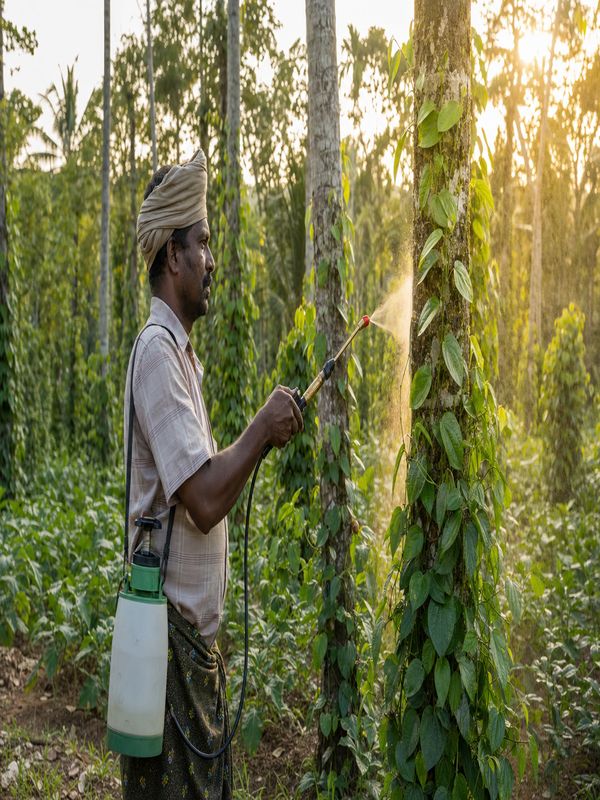
Farmer spraying Bacillus subtilis bio-agent solution on pepper plants in the evening for fungal infection control

Spraying a mixture of 30 grams of Bacillus subtilis or Pseudomonas in one liter of water in the evening is recommended to help prevent fungal infections. Evening application is preferred for better efficacy of these bio-agents.

After the harvest is complete, it is a traditional farming practice to bring down the pruned cuttings. This practice helps destroy the fungal spores present in the soil, reducing the risk of disease carry-over into the next growing season.

💡 Tip: Always spray Bacillus subtilis or Pseudomonas in the evening — UV exposure during the day can reduce the effectiveness of these beneficial bio-agents.


☀️ Mulching & Summer Preparation for Pepper Plants

Before the summer becomes harsh, it is important to apply mulch in a circular shape one span away from the plant’s base in the plantation. This protects the root zone from moisture loss and heat stress during the dry months ahead.

An interesting traditional observation about pepper is that it tends to produce good spikes when it receives rain after wilting during the summer. On close examination, this is found to be true — and is considered an advantage for the farmer.

January is also a good time to continue planting pepper on other crops, including coconut trees, which serve as natural support systems.

🌧️

Rain After Summer Wilting
Pepper produces good spikes when it receives rain after wilting — a traditional observation confirmed on close examination.

🥥

Multi-Crop Planting
Continue to plant pepper on support crops including coconut trees for effective land use and natural structural support.

🌾

Circular Mulch Application
Apply mulch in a circular shape one span away from the plant’s base before summer intensifies to retain soil moisture.

✂️

Bring Down Pruned Cuttings
Post-harvest, bring down pruned cuttings as per traditional practice — this helps destroy fungal spores in the soil.



❓ FAQ

🌶️ Why should I cover the stem base of young pepper saplings in January?

For saplings less than 2 years old, covering the stem base with areca nut palm leaves or coconut fronds protects the young plant from heat stress and physical damage. The cover should be tied correctly above the shoot without pressing down on the plant, ensuring good airflow and protection during the critical early growth stage.

🧫 How do I use Bacillus subtilis or Pseudomonas for pepper plants?

Mix 30 grams of Bacillus subtilis or Pseudomonas in one liter of water and spray it on pepper plants in the evening. Evening application is recommended because daytime UV exposure can reduce the effectiveness of these biological agents. This spray helps prevent fungal infections and supports overall plant health.

☀️ When should I apply mulch to pepper plants before summer?

Mulch should be applied before the summer becomes harsh — January is the ideal time. Apply it in a circular shape one span away from the plant’s base. This helps retain soil moisture, regulate soil temperature, and protect the root zone from the stress of the dry season ahead.

✂️ Why is it important to bring down pruned cuttings after pepper harvest?

Bringing down pruned cuttings after harvest is a traditional farming practice that helps destroy fungal spores present in the soil. Leaving infected cuttings in the field can allow fungal diseases to carry over into the next season. Removing them reduces disease pressure and maintains better soil hygiene in the pepper plantation.

🌧️ Is it true that pepper produces better spikes after summer wilting followed by rain?

Yes, this is a traditional farming observation that has been confirmed on close examination. Pepper is said to produce good spikes when it receives rain after wilting during summer. This natural stress-response mechanism appears to trigger improved spike formation, which is considered an advantage for the pepper farmer managing rainfed plantations.

🥥 Can pepper be planted on coconut trees as support crops?

Yes, January is a suitable time to continue planting pepper on support crops including coconut trees. Coconut trees serve as natural standards for pepper vines, making them an efficient and space-saving cropping system. This multi-crop approach maximises land use and is a widely practiced method in traditional pepper farming systems.

🍃 What are the key agricultural tasks for pepper farmers in January?

Key January tasks include: continuing pepper harvest, covering the stem base of saplings under 2 years with palm leaves or coconut fronds, spraying bio-agents like Bacillus subtilis or Pseudomonas in the evening to control fungal infections, bringing down pruned cuttings post-harvest, applying circular mulch before summer, and continuing pepper planting on coconut and other support trees.

You may also like