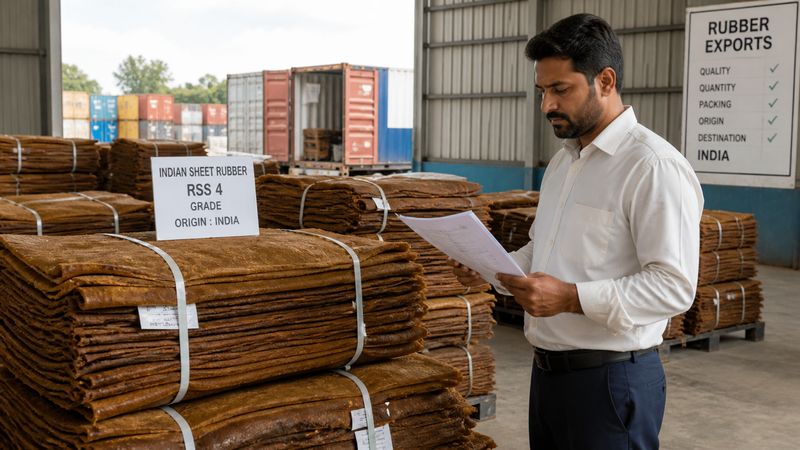
Sheet rubber prices have opened a fresh export discussion for India.
A review of the rubber market over the last ten years makes one thing clear – except for a few occasions, the price of sheet rubber in the domestic market was always higher than in the international market.
It was after last January 15 that the international price started to rise above the Indian market price. As the price continued to rise, last month the international price stood up to 45 rupees higher than the domestic price.
✅ However, the real picture will only become clear if the statistics of various types of rubber trade are also analyzed.
The recent rise in the international price above the Indian market price has created a rare discussion around rubber export. For many years, the export case was weak because the domestic market offered better prices.
Last month, with the international price standing up to 45 rupees higher than the domestic price, the market began looking at export possibilities again. But the difference in price alone does not complete the picture.
⚠️ The export opportunity must be read together with the type of rubber being traded, buyer interest, past trade relationships, and the realities of international demand.
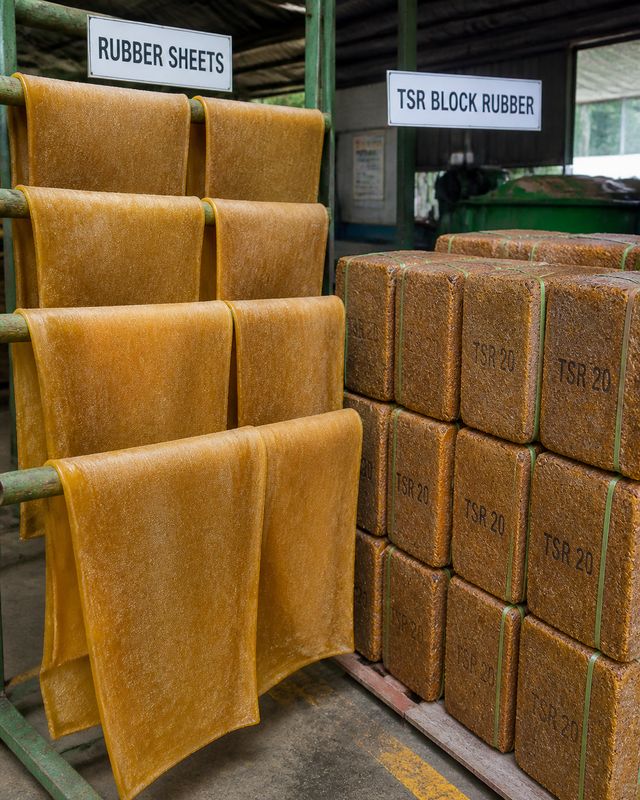
Rubber is mainly traded as latex, TSR or block rubber, and sheet rubber.
Latex, TSR or Block Rubber, Sheet Rubber – rubber is mainly traded in these 3 forms. Indian farmers mostly produce rubber sheets of various grades. That is, 60-65% of the total production.
However, in the international market, block rubber is in high demand. Our farmers are interested in sheets because they want to get the maximum M. Toast Price (98%). The Board’s recommendation is also the same.
But in the international market, the demand for sheet rubber is low. Even if sheet trade happens there on a moderate scale, the rate for block rubber is taken as the basis.
💡 This basic fact must be understood when discussing export possibilities.
In the last 10 years, the challenge we face is that rubber export has not been necessary. There are two reasons for this.
One, the international price was always low.
Two, domestic consumption was higher than production.
In this situation, the Rubber Board, companies, and export traders were forced to stop foreign trade.
If the long-stalled export is to be resumed, some hurdles need to be crossed – first, new traders must be found. Someone has to buy rubber sheets understanding the lower price in the Indian market.
⚠️ In this regard, neither the government nor the Rubber Board can do anything. However, procedures can be coordinated and simplified to make exports a reality quickly.
For this, the Board’s export cell has already been revived.
- ✅ New export traders must be found.
- ✅ Buyers must be willing to purchase rubber sheets from India.
- ✅ Procedures need coordination and simplification.
- ✅ The revived Rubber Board export cell can help make exports a reality quickly.
📌 The only reason for the delay in exports now is the inability to find an agency willing to buy rubber from India.
We must also consider the reality that the amount of rubber traded as sheet rubber in the international market is negligible.
Moreover, those who buy rubber sheets will make a decision only after studying the Vietnam and Cambodia markets as well. We do not have a clear picture of the rubber prices in these countries either.
However, there are indications that the trade is happening at a rate lower than the Indian price for rubber sheets too.
⚠️ Exporters are not people who jump in suddenly seeing the price difference. Long-term understandings with us also influence the rubber trade.
Since Indian exporters have been inactive in the international market for a long time, trade relations will also be few. Therefore, it may take more time for new trade agreements to form.
Nevertheless, efforts for rubber export need to be intensified. If the current price difference continues, and the international price remains higher than the Indian price for at least the next 6-7 months, exporters may get more opportunities.
Only if we are prepared in advance can we take advantage of the favorable situation. If exports become a reality, it will be a big boost for the domestic rubber market.
Traders and farmers will become more active.
The domestic rubber market can receive a big boost.
Why is rubber export being discussed again in India?
Rubber export is being discussed again because, after last January 15, the international price started rising above the Indian market price. Last month, the international price stood up to 45 rupees higher than the domestic price, creating a possible export window if buyer interest and trade procedures can align.
Why did India not need rubber exports for the last 10 years?
For most of the last 10 years, the domestic sheet rubber price was higher than the international price. At the same time, domestic consumption was higher than production. Because of this, the Rubber Board, companies, and export traders were forced to stop foreign trade.
Which type of rubber is most in demand internationally?
Rubber is mainly traded as latex, TSR or block rubber, and sheet rubber. Indian farmers mostly produce rubber sheets, which form 60-65% of total production. However, in the international market, block rubber is in higher demand, and even sheet trade is often priced using block rubber rates as the basis.
What is delaying Indian rubber exports now?
The main delay is the inability to find an agency willing to buy rubber from India. The government and Rubber Board cannot force buyers to purchase Indian sheet rubber, but export procedures can be coordinated and simplified. The Rubber Board’s export cell has already been revived for this purpose.
Why are Vietnam and Cambodia important for rubber buyers?
International buyers who purchase rubber sheets are likely to study Vietnam and Cambodia before deciding. India does not have a clear picture of rubber prices in those countries, but there are indications that rubber sheet trade may be happening there at rates lower than Indian prices.
How long should the price difference continue to create export opportunities?
If the current price difference continues, and the international price remains higher than the Indian price for at least the next 6-7 months, exporters may get more opportunities. Preparation in advance is essential so that India can act when the favorable situation remains steady.
How can rubber exports help farmers and traders?
If exports become a reality, it will be a big boost for the domestic rubber market. Traders and farmers may become more active because export demand can improve market movement, especially when international prices stay above Indian prices and new trade agreements begin forming.