Reference: Investigation
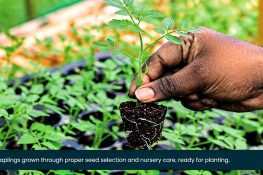
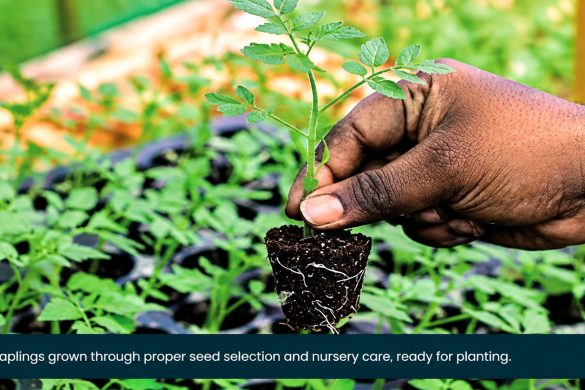
Even after decades, the benefits of tissue culture have not reached the farmers. Planting saplings are now easily available to us. So we can get a good yield. It has been a long time since the correct way of making them started in our state. But to date, we have not been able to make this available to the farmers in a useful way.
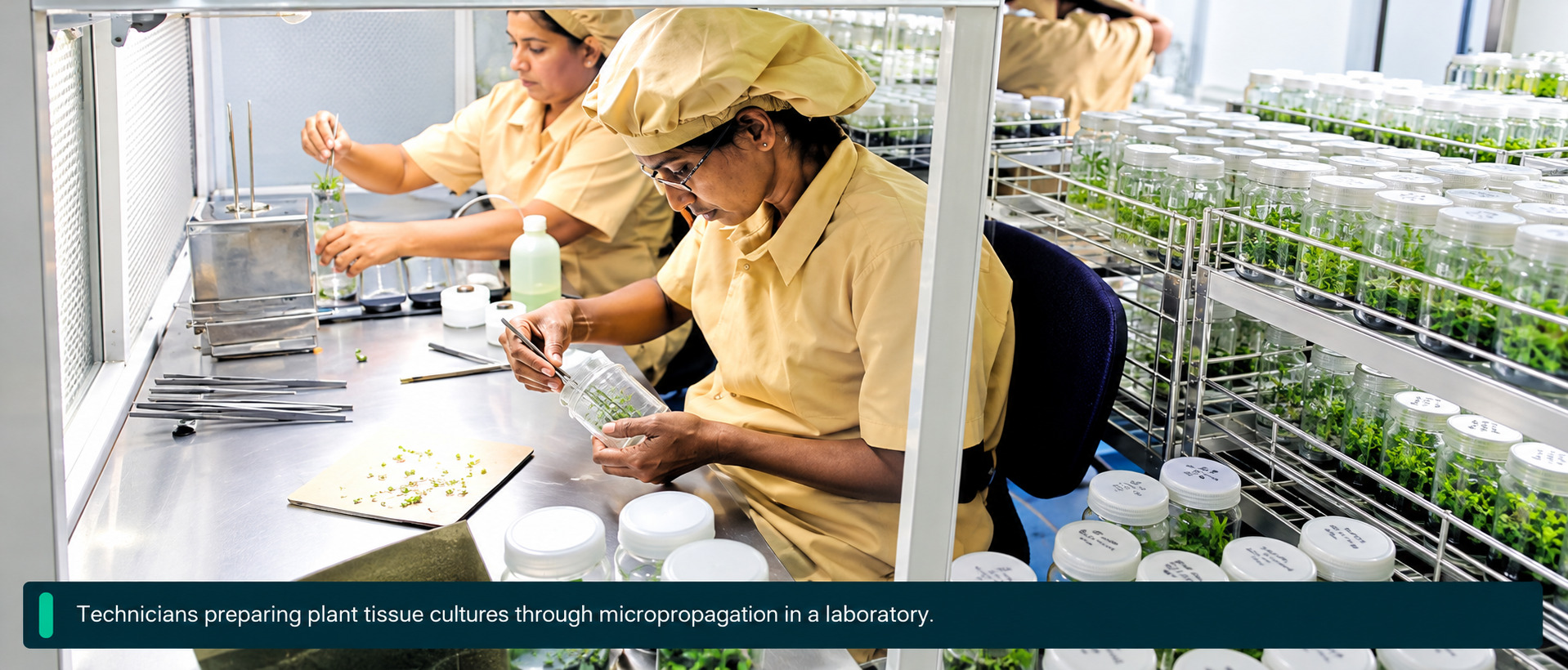
Let’s see how our tissue culture cultivation is done in various crops. Agriculture is our main source of income. Because of this, our farmers suffer a lot of losses.
It is beneficial to farmers for planting seasonal crops and other crops.
It is also a relief for the farmer to not have to deal with the roots and bulbs of plantains, yams, and gingers.
It is also beneficial for the seeds to be resistant to diseases.
Farmers do not have to roam around looking for seeds, and it saves a lot of time.
In Kerala, pineapples are the most sought-after crop for tissue culture. However, the production of tissue culture pineapple saplings at the Pineapple Research Station in Vazhakkulam is still limited. Currently, the Kerala Agricultural University produces tissue culture saplings only in the Kozhikode region. It has been complained that the production has come down from earlier levels. It is the farmers’ answer that they buy the saplings that are not genuine because they are interested in the crop.
A large proportion of the imported tissue culture saplings come from Maharashtra. The report of the Krishi Minister also said that there is a difficulty in buying tissue culture saplings from Maharashtra. It is also because of not knowing the right protocol.
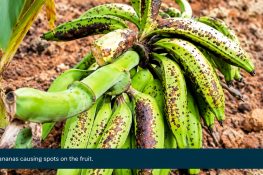
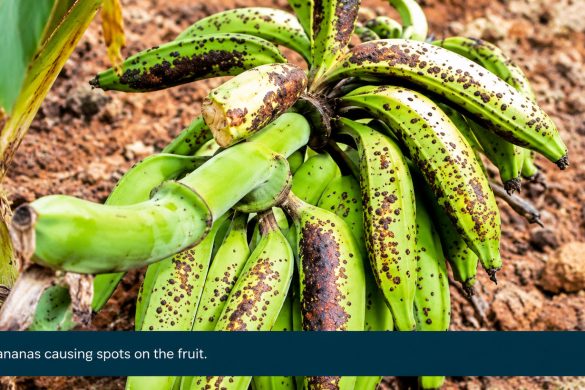
Not only do some saplings wither, but there is also a phenomenon called somaclonal variation, where the saplings that grow have different fruits. This makes the fruit unsaleable. Even the local labs in Kozhikode and Kannur were initially affected by this issue.
Tissue culture labs in the state, private or public, should ensure quality. It is possible to produce saplings for the G9 plantain by following the proper procedures.
Tissue culture teak is an idea that has been gaining popularity among farmers for some years. This is claimed to be due to the very fast growth of the tree. But farmers say that the faster-growing trees will have more pith. That is, the strength of the tissue culture teak is less.
However, the claim is baseless. Dr. Donald James, a scientist from the Biotechnology Department of the Kerala Forest Research Institute, Peechi, says that this is a misconception. Because the mother plant is also from the four-year-old tissue culture sapling. Therefore, similar things will happen to trees growing in places like Nilambur. The quality of the wood also remains the same.
According to Dr. V. A. Santhosh Kumar of the Forest College, Vellayani, the girth of the trees may be less. He has found a report that says that the dashboard of a Benz car is made of teak from Pothiyakalam. So, the girth of the wood is not a major issue for use, says Dr. Donald.
Tissue culture planting material is essential for ginger and turmeric cultivation, which are highly susceptible to seed-borne diseases. That is, the ginger and turmeric that are grown now have a lot of disease-causing fungi and other things. It is very difficult to find disease-free planting material. This is because the new generation is also infected from the soil and planting material.
However, tissue culture saplings guarantee disease-free cultivation. This is cultivated in two ways. One is the traditional method of taking plant cells and growing them. The roots of the produced saplings are not cut at the base. But in the micropropagation method, the rhizomes can also be cut into small pieces and planted. It is a method of making saplings without leaving any soil. This is possible for turmeric as well.
Separating the bulbs and growing them is easy as they need to be sterilized.
It is best to collect disease-free planting material for ginger and turmeric and plant it in sterilized soil for commercial purposes.
The production of tissue culture saplings is an enterprise that farmers can make an income from.
If they are not produced under disease-free conditions, the saplings will become carriers of diseases.
The quality of the tissue culture saplings sold here at low prices from Tamil Nadu and imported from Maharashtra is doubtful. So the growing saplings become carriers of diseases. Then these saplings are propagated through tissue culture planting materials.
Each batch must have its own batch number. The parent plant, that is, the characteristics of the parent plant, from which the sapling is produced, must be recorded in the quality control system.
Batch number for each batch
Characteristics of the parent plant
Age of the parent plant and its height
Number of bunches and fruits
These details will help the farmer in choosing the saplings. Production and marketing can be planned in advance. This is useful.
Not only in Vazhakkulam, but also in home gardens, plantains are cultivated well. Especially its varieties. Those who are interested can get saplings of different varieties at the same time.
The Kannur Agricultural Research Centre produces tissue culture saplings of 25 varieties. Kitlet, Grand Naine, Nendran, Chengalikodan, Palayankodan, Poojakela, Karpoora Kalli, Chambakadali, Kunnan, Chekkali, etc. are the main varieties available here.
What happened was that Dr. Jose, a scientist at CPCRI in Kasaragod, started working as an assistant professor at the College of Horticulture, Vellanikkara. Many of his students, especially Anish, went abroad and started tissue culture research organizations. Anish’s organization in Indonesia is now 100% genuine. But they are few in our country.
Farmers can plant them and get a good yield in just two months. The main reason for the failure of plantains in the field is that we cannot control the weather. High income. We have to select from the existing high-yielding varieties.
A variety called Grand Naine is popular among farmers who cultivate commercially. During the hot summers, tissue culture plantains are said to give us coolness. This is said to be a miracle and a truth. But there is no guarantee that it will happen. Even if it happens 100%, tissue culture saplings may not be able to be produced.
Even now, we can use the old varieties from the agricultural research station and get a good yield. The Centre for Sub-Tropical Horticulture in Lucknow says that the tissue culture saplings can be planted up to 45 days early. But we can plant them with a guarantee of only two months early. The fact that the farmers have to rely on tissue culture saplings from other states and outside the country is also a major problem.
“A 30% increase in yield can be expected from tissue culture saplings in plantains. Sometimes it can go up to 50%,” says Vasanthan, a farmer from Thrissur.
It is a limitation that it is not available. The available saplings are of poor quality. Production is also not scientific. The only place in Thiruvananthapuram is the Central Soil Research Institute and Bio-Science Technologies Lab, Vellayani, which has a seed complex. Agricultural research centers in other places also have labs. But it has not been possible to say that the production and distribution are done properly to the farmers. In all panchayats, when labs are set in the public sector, the production goes down.
It is said that tissue culture is common in pineapples in Kerala today, especially in Vazhakkulam. It has been possible to transfer the high yielding varieties of pineapple to our farmers through the Biotechnology Department of the Kerala Forest Research Institute (KFRI) in Peechi. Now their aim is to market it abroad.
It can be a big money earner if it can be sent to countries in the Middle East and Europe. If we can produce high yielding pineapples with good shelf life, it can be exported. It is not possible to export them to the Middle East as the shelf life of pineapples is low.
But, there are not enough planting materials to cultivate G9 variety on a large scale. Tissue culture saplings are the solution. But the Pineapple Research Station in Vazhakkulam produces it only on a limited scale.
The G9 variety has a good shelf life. So there is no problem in keeping it. It is an industry and it is profitable. But there are not enough planting materials to cultivate it on a large scale. Tissue culture saplings are the solution. However, we have not been able to produce enough saplings for the G9 variety.
What is tissue culture farming useful for?
Tissue culture farming is useful for producing planting material for seasonal crops and crops like plantain, yam, ginger, turmeric, pineapple and teak. It saves farmers time, reduces the need to search for roots, bulbs and seeds, and can help provide disease-resistant planting material when proper protocols are followed.
Why do some tissue culture saplings fail after planting?
Some saplings fail because quality production protocols are not followed, saplings may carry disease, or weather conditions cannot be controlled in the field. Somaclonal variation can also occur, where plants develop different fruits, making the crop difficult or impossible to sell.
How much yield increase can tissue culture plantains give?
According to Vasanthan, a farmer from Thrissur, a 30% increase in yield can be expected from tissue culture saplings in plantains, and sometimes it can go up to 50%. However, yield depends on sapling quality, variety selection, field conditions and proper cultivation practices.
Why is quality control important in tissue culture saplings?
Quality control is important because saplings produced under poor or non-disease-free conditions can become carriers of diseases. Farmers should look for batch numbers, parent plant details, age, height, bunch count and fruit details so they can choose planting material more confidently.
Is tissue culture suitable for ginger and turmeric?
Yes. Tissue culture planting material is essential for ginger and turmeric because these crops are highly susceptible to seed-borne diseases. Disease-free planting material grown in sterilized soil is best for commercial cultivation, and producing such saplings can also become an income-generating enterprise for farmers.
Is tissue culture teak weaker than normal teak?
Dr. Donald James of the Biotechnology Department of KFRI, Peechi, says the claim that tissue culture teak is weaker is a misconception. The mother plant is also from a four-year-old tissue culture sapling, and the quality of the wood remains the same, even if girth may be less.
Why is G9 pineapple tissue culture important in Kerala?
G9 pineapple has good shelf life and export potential, especially if high-yielding pineapples can be produced for markets in the Middle East and Europe. Tissue culture saplings are the solution for large-scale cultivation, but enough G9 planting material is still not being produced.