By M. J. George, Dr. S. Hariravi, Dr. K. S. Ajitha, Dr. Shali Tippu Maheenkhan
Brucellosis is a major zoonotic disease that is commonly seen in goats but is not given serious attention by many. This is a disease that spreads from infected goats to humans through milk, meat, and bodily secretions — making it a significant public health concern for every goat farmer.
Certain bacteria belonging to the Brucella genus are the pathogens responsible. In goats, the disease is mainly caused by the species Brucella melitensis. Understanding this disease — its symptoms, how it spreads, and how to prevent it — is essential for every goat farmer.
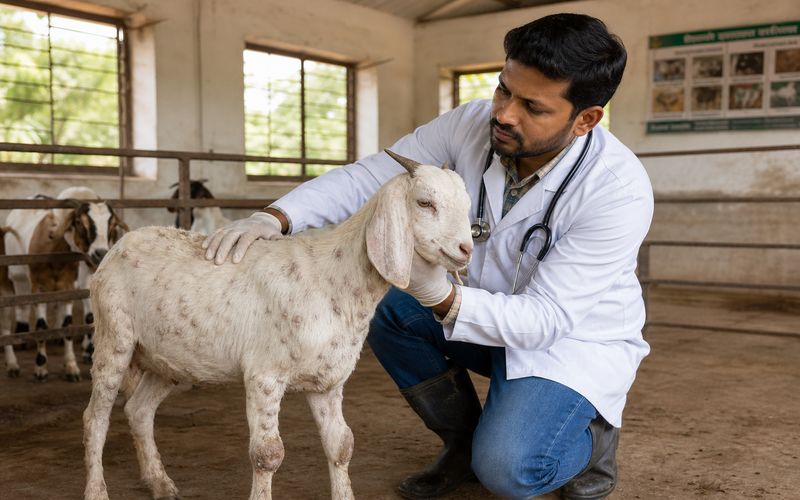
The main visible symptom is rough and lumpy skin. Beyond that, infected goats may show a range of physical signs that worsen over time:
- 🔹 Swelling and pus in the joints
- 🔹 Muscle pain and shivering
- 🔹 Loss of appetite and fatigue
- 🔹 Hair loss
- 🔹 Inflammation of the mucous membrane of the eye (Conjunctiva)
During pregnancy, the pathogens attack the uterus of females and the testicles of males. Infected females experience abortions in the final stages of pregnancy, severe pain during delivery, and bleeding from the uterus. After the abortion, the afterbirth (placenta) remains in the uterus without being expelled naturally, leading to pus formation inside the uterus.
⚠️ Don’t Be ‘Silent’: If a goat is infected with Brucellosis, it cannot be completely cured. Often, the symptoms — including abortion — disappear, but the pathogens remain in the body, silently continuing to spread the disease.
The following are the four most critical and recognizable signs of Brucellosis in an infected goat:
Abortion
In the final stages of pregnancy (3.5 – 4 months), goats suddenly abort. This is the most major symptom in infected goats.
Retained Placenta
After an abortion, the afterbirth remains in the uterus for hours, decays, and causes pus to form in the uterus.
Joint Swelling (Hygroma)
Significant fluid-filled swelling on the knees and joints affects the goat’s mobility severely.
Swelling in Testicles
Fluid-filled swelling and pus in the testicles of rams affects sperm quality and can cause infertility.
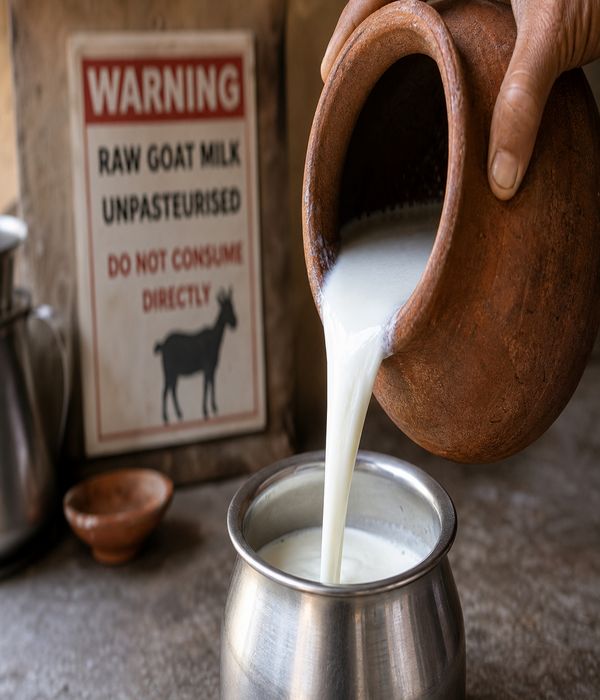
The disease can spread to humans through the milk, meat, and secretions of infected goats. The aborted fetus, afterbirth, and secretions contain a large number of pathogens and are particularly dangerous sources of transmission.
Once transmitted to humans, Brucellosis can affect multiple organ systems and lead to serious, long-term health complications if not identified and managed promptly.
The following are the key health conditions Brucellosis causes in infected humans:
Malta Fever
A progressively increasing fever in infected people.
Spondylitis
Backache, pain, and intermittent muscle pain.
Encephalitis
Severe fatigue, depression, and excessive sweating at night.
Endocarditis
Heart valves become inflamed and the nervous system can also be affected.
Organ & Reproductive Impact
Orchitis, reduced sexual potency in men, and damage to the spleen and liver.
🥛 “Inexpensive and good quality goat milk is very tasty. However, unpasteurized or unboiled milk and milk products can cause various diseases.”
There is no effective treatment if a goat gets Brucellosis. The necessary course of action is to remove the diseased animal from the farm. Therefore, prevention is the most critical step every goat farmer must take seriously.
Here are the key preventive measures every farmer should follow:
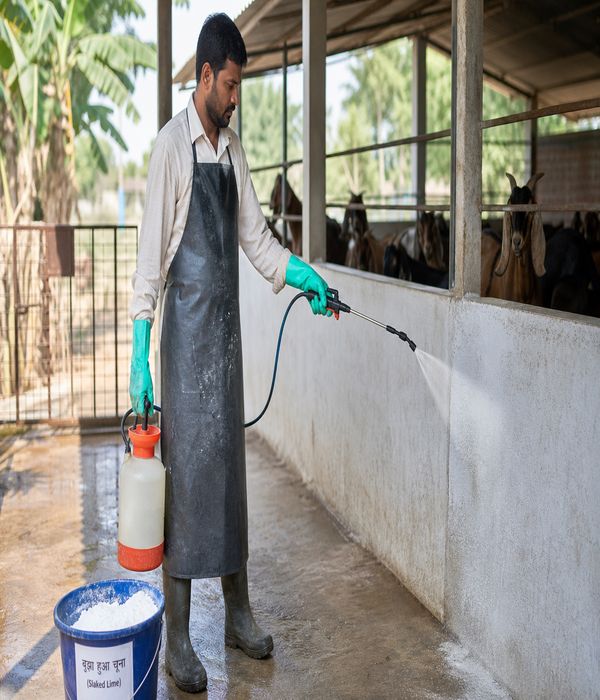
🧴 Disinfection
To destroy Brucella bacteria, use regular soap and water, soda, 2.5% bleaching solution, 70% isopropyl alcohol, or iodine-containing Povidone-iodine. Sprinkling slaked lime also helps destroy the bacteria effectively.
🥛 Boil Milk
Pasteurize goat’s milk by heating it continuously at 72°C for 15 seconds (Pasteurization). When using at home, always ensure the milk is boiled thoroughly before consumption.
🔬 Quarantine & Blood Testing
Quarantine new goats for 30 days. During this period, conduct a Rose Bengal Plate Test (blood test) and introduce them to the herd only after confirming they are disease-free.
📞 For more information: Head of Department, ‘SIMFA’, College of Veterinary and Animal Sciences, Pookode, Wayanad – 673576.