✍️ By Dr. Saksha Shahu, Cheruva
Deputy Director (Retd.), Department of Animal Husbandry | 📞 9447399303
Antibiotics are widely used in cattle to treat a range of diseases, from mastitis to post-surgical infections. But when antibiotics are administered without proper care, their residues end up in the milk — creating a serious risk for consumers and undermining public health.
Having served in posts such as Principal and Assistant Director, Dr. Saksha Shahu shares accurate, field-tested guidance on how antibiotic traces enter milk, the dangers they carry, and the responsible practices every dairy farmer must adopt.
💬 Reader Question from C.T. Sajan, Thrissur:
How do traces of antibiotics get into milk? Is it dangerous to drink milk containing antibiotics? What is the way to avoid this?
Antibiotics are usually administered for surgery, mastitis, and other diseases that affect milk production and milking. A major challenge in the field of treatment is antibiotics getting mixed into milk during the treatment period. The amount that enters the milk varies depending on the nature and quantity of the antibiotic used.
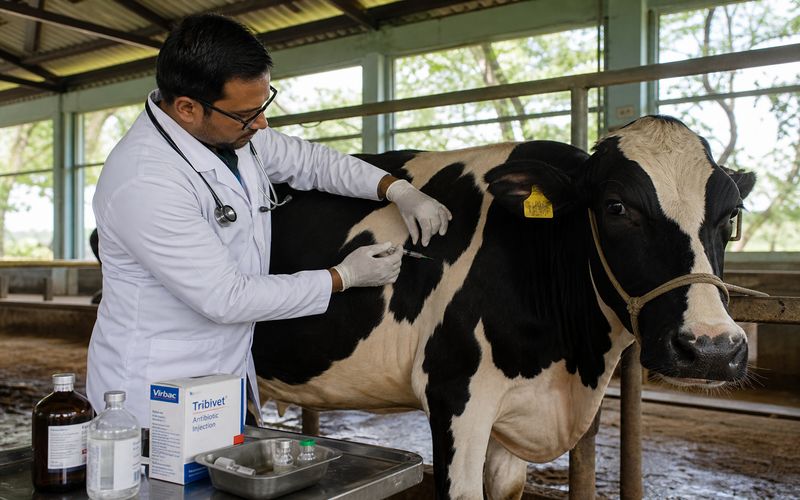
Often, farmers administer antibiotics on their own without a veterinarian’s prescription. This is wrong and dangerous. Giving antibiotics to cows without professional guidance can worsen the disease and make the milk unsafe for consumption.
Even in Western countries, when antibiotics were added to feed, it was detected — prompting scientists to investigate and establish strict residue controls. There are two important things milk-producing farmers should keep in mind when administering antibiotics — and both must be strictly avoided:
- ✅ Administering antibiotics without a licensed veterinarian’s prescription
- ✅ Using milk from treated animals before the withdrawal period is complete
The withdrawal period is the minimum time that must pass after administering an antibiotic before the cow’s milk can be safely used. This period is determined based on the amount of antibiotic excreted in the milk over time.
Depending on the type of antibiotic, the withdrawal period can range from 3 to 7 days. In the initial days, the quantity of medicine in the milk is higher. After 3 days, the quantity reduces by half. For some antibiotics, the full withdrawal period stretches to 7 days.
The withdrawal period time may vary depending on the type of antibiotic used. Milk should only be used after the withdrawal period is completely over.
⚠️ Withdrawal Period at a Glance
- 📅 Duration: 3 to 7 days (varies by antibiotic)
- 📉 After Day 3: residue level drops by 50%
- 🚫 Do NOT use milk during this window
- ✅ Use milk only after the full period ends
There is a legally defined limit to the amount of antibiotic residue that can be present in milk. This is called the Maximum Residue Level (MRL). This limit varies from country to country.
In India, the Food Safety Authority has issued clear guidelines in this regard. The following antibiotics are strictly prohibited in milk:
Chloramphenicol
Carbadox
Cloxacillin
Sulfamethazine
Sulfamethoxazole
Drinking milk containing traces of antibiotics poses serious health consequences for humans. These risks go beyond individual health and affect broader public health systems:
- ⚠️ Allergic reactions — antibiotic residues can trigger allergies in sensitive individuals
- 💊 Antibiotic Resistance (AMR) — antibiotics may fail to work in the body when needed
- 🦠 Pathogen dominance — harmful pathogens become stronger and overpower the body’s defences
- 🌿 Gut microbiome disruption — the balance of beneficial microbes in the human gut is upset
- 🧬 Vitamin inhibition — antibiotics inhibit the production of certain vitamins in the body
- 🔬 Destruction of beneficial gut bacteria — essential flora is wiped out along with harmful bacteria
- 🧀 Poor-quality dairy products — curd and butter made from such milk are of lower quality, as antibiotic residues destroy the beneficial bacteria needed for fermentation
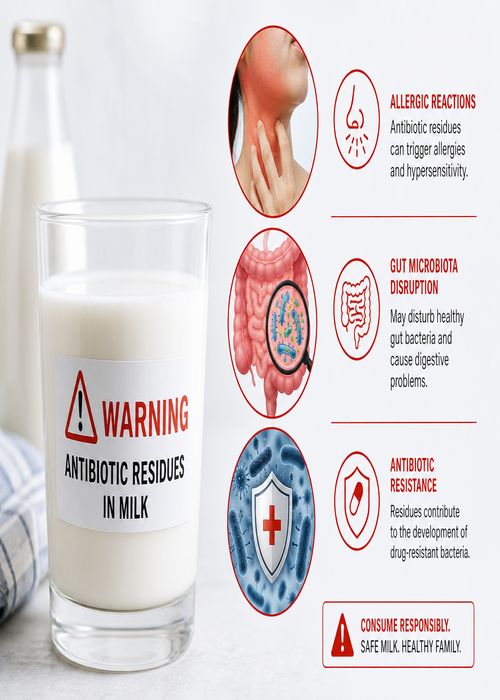
🔔 Important: Antibiotic Resistance (AMR) is a growing global health emergency. When antibiotic residues enter the food chain through milk, they contribute to resistance that makes life-saving medicines ineffective for everyone.
The most important step is to minimize the use of antibiotics in cowsheds in the first place. Good management practices can prevent many of the diseases that lead to antibiotic use. Here are the key hygiene and preventive measures every dairy farmer should follow:
Keep Cowsheds Clean
The cowshed and its surrounding area should be kept clean at all times to reduce pathogen load.
Disinfect Udders Before & After Milking
Wash udders with a disinfectant before and after every milking session to prevent mastitis and infections.
Adopt Preventive Measures
Put measures in place to stop the spread of pathogens within the herd and the farm environment.
Provide Nutritious Feed
Feed cattle a well-balanced and nutritious diet to boost their natural immunity and reduce disease susceptibility.
💡 Farmer’s Tip: Always consult a licensed veterinarian before administering any antibiotic to your cattle. Never self-prescribe or use leftover medicines from previous treatments. Record every antibiotic use along with the withdrawal period date to track when milk is safe to sell.
Always use antibiotics under a veterinarian’s prescription
Observe the full withdrawal period (3–7 days) before using milk
Know which antibiotics are banned in milk by India’s Food Safety Authority
Maintain farm hygiene to reduce the need for antibiotic treatment