By Dr. Suraj Joseph Bahavan & Dr. A. P. Meghala | Kerala Veterinary and Animal Sciences University
Healthy calves are the strong foundation of any dairy farm. The nutrition and care they receive during calfhood determine their future growth, health, and productivity. A carefully nurtured calf later turns into a high-yielding cow — increasing the farm’s productivity and the farmer’s income.
The traditional method is to give calves their mother’s milk or expressed milk available from the udder. However, today, giving large quantities of expressed milk to calves is not profitable for farmers. It is in this context that the relevance and importance of scientifically prepared calf milk replacer — which can be given instead of milk to calves — arises.
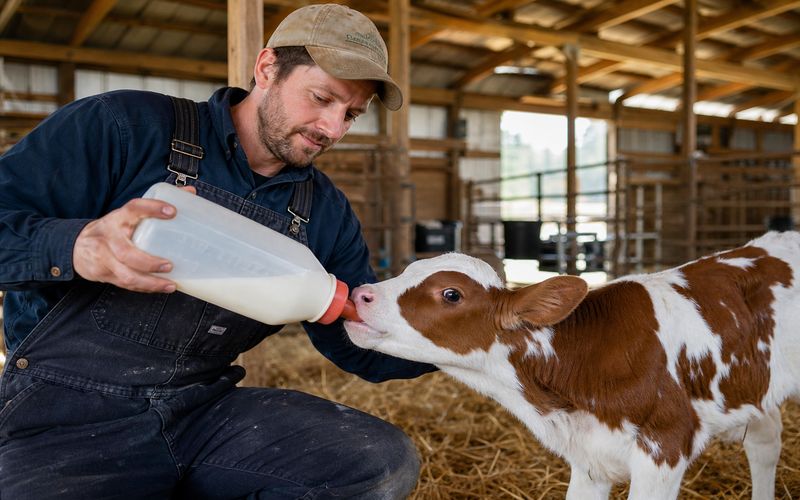
The early period after birth is crucial in a calf’s life. This is the period when body growth happens rapidly. However, at this time, their immunity is limited. Since their rumen (digestive chamber) has not fully developed, it is very important to provide the right feed.
If there is a nutritional deficiency at this stage, the calf’s growth will be stunted and productivity will later decline. Therefore, calf nutrition should be seen as a major investment in the future of the dairy farm.
✅ Benefits of Nutrition in Early Stages of Growth
- 🟢 Body growth progresses rapidly
- 🟢 Bones and muscles become strong
- 🟢 Immunity to fight diseases increases
- 🟢 The rumen develops well
- 🟢 Ensures good milk production capacity in the future

Calf milk replacer is a liquid feed scientifically designed to be given to calves instead of cow’s milk. It is usually available in powder form. It can be mixed in the required amount of warm water and given to calves.
A good quality milk replacer contains a balanced mix of various nutritional components necessary for the growth of calves — including high-quality protein, energy-providing carbohydrates, fat, vitamins, minerals, and feed additives to improve digestion.
Milk replacer is a scientifically formulated balanced mixture of various nutritional components. Here is a breakdown of each key ingredient category:
Protein Sources
Skimmed milk powder, whey powder, soy protein isolate, soy protein concentrate, and wheat gluten. Animal-based milk protein is most digestible for calves.
Energy Sources
Lactose sugar is the primary energy source. Processed grain products or glucose-containing components are sometimes added.
Fat Sources
Coconut oil, palm oil, soybean oil, various vegetable fat mixtures, and animal fats. Fat provides high energy and helps in increasing body weight.
Vitamins
A, D, E, and B-complex vitamins are commonly added to support metabolic activities and build immunity in calves.
Minerals
Calcium, phosphorus, magnesium, sodium, potassium, chlorine, sulfur, zinc, copper, iodine, and selenium.
Feed Additives
Probiotics, prebiotics, enzymes, amino acids, and emulsifiers. These improve digestibility and help reduce problems like diarrhea in calves.
Economic Benefit
Farmers can sell all milk in the market, increasing income.
Consistent Nutrition
Unlike cow’s milk, milk replacer has a consistent nutrient composition every day.
Reduces Disease Transmission
Hygienically prepared milk replacer reduces the possibility of germ transmission through milk.
Convenient Storage
Available in powder form, it can be stored for a long time.
Easy Maintenance
The amount of feed given to calves daily can be precisely controlled.
⚠️ Colostrum First: The first milk a calf receives is colostrum. It is rich in antibodies necessary for immunity. It is essential to give sufficient colostrum for the first 3 days after the calf is born.
Schedule for giving milk replacer: From the fourth day, give regular milk. From the fifth day, calf milk replacer can be given.
🧪 How to Prepare the Mixture: Mix 1 part milk replacer powder with 7 parts lukewarm water (40–45°C). Mix well before giving to calves.
📊 Model Feeding Schedule
| Age of Calf | Daily Quantity | Frequency |
|---|---|---|
| 1–2 weeks | 2–3 liters/day | Twice daily |
| 3–4 weeks | 3–4 liters/day | — |
| 5–6 weeks | 4–5 liters/day | — |
| 7–8 weeks | Gradually reduce | — |
| 9–10 weeks | Weaning begins | Stop liquid feed |
From about two weeks of age, calves should be fed calf starter feed. This helps in rumen development. Along with this, clean drinking water and good quality green fodder should be made available.
Usually, when the calf starts eating a sufficient amount of starter feed — at least about one kilogram — at 8 to 10 weeks of age, the process of stopping liquid feed (weaning) can begin.
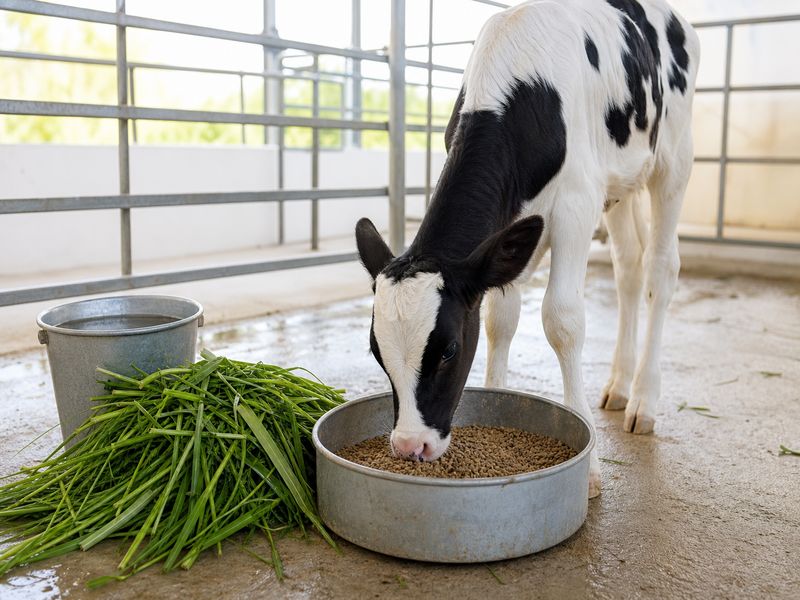
- ✅ Use clean water at all times
- ✅ Mix only in the correct proportion
- ✅ Give at the correct temperature (40–45°C)
- ✅ Keep feeding utensils clean
- ✅ Prepare a fresh mixture daily
- ✅ Constantly monitor the health status of the calves
👨🔬 Expert Contact: Dr. Suraj Joseph Bahavan | Kerala Veterinary and Animal Sciences University
📞 +91-9526862274 | ✉️ surej.joseph@kvasu.ac.in