Weeds in the nursery bed are one of the most persistent challenges paddy farmers face. If the right precautions are taken at the right time, the menace of weeds in the fields can be effectively eliminated. From seed preparation and seedling care to traditional practices and boron-based treatments, a systematic approach to weed control can protect your crop while reducing reliance on chemical pesticides.
This guide brings together field-tested knowledge on managing nursery bed weeds in paddy cultivation — with a focus on indigenous farming practices, collective field management, and affordable, environmentally responsible solutions.
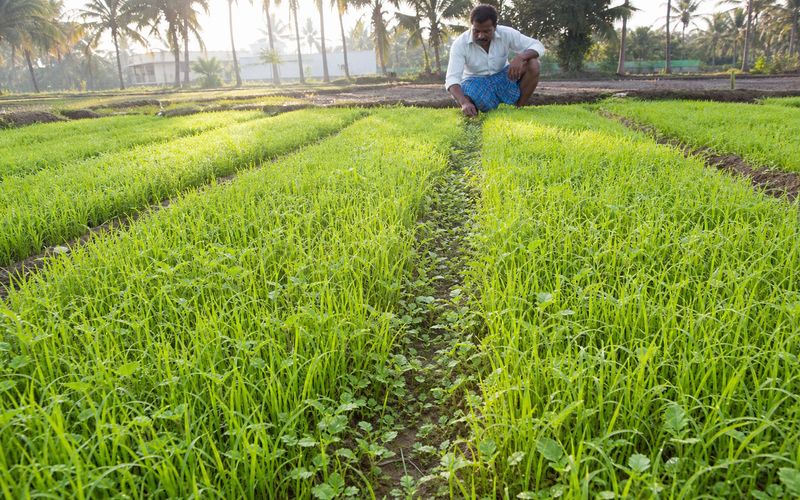
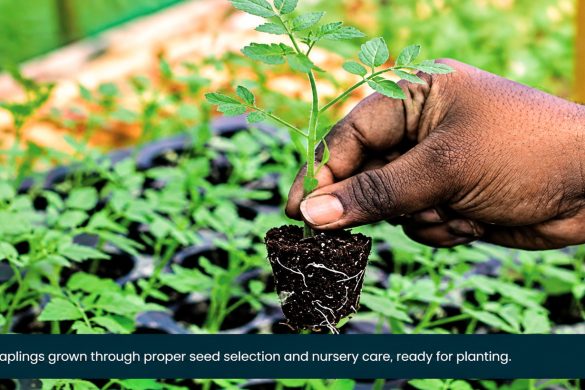
After draining the field, it is best to plant mature seeds, prepared either by parboiling or left untreated, and by agitating the sprouted kernels. This preparation helps the seedlings withstand both drought and water flow — two conditions that directly affect weed competition in the early growth stages.
When the immature seedlings are around 35 days old, a slight yellow color often appears in the nursery bed. This yellowing can also occur in transplanted seedlings when there is insufficient dryness. This is typically a sign of complex micronutrient deficiency.
Spraying for micronutrient deficiency at this stage will help the seedlings grow with good strength, enabling them to overcome weed pressure naturally. Addressing this early gives the crop a competitive advantage over emerging weeds.
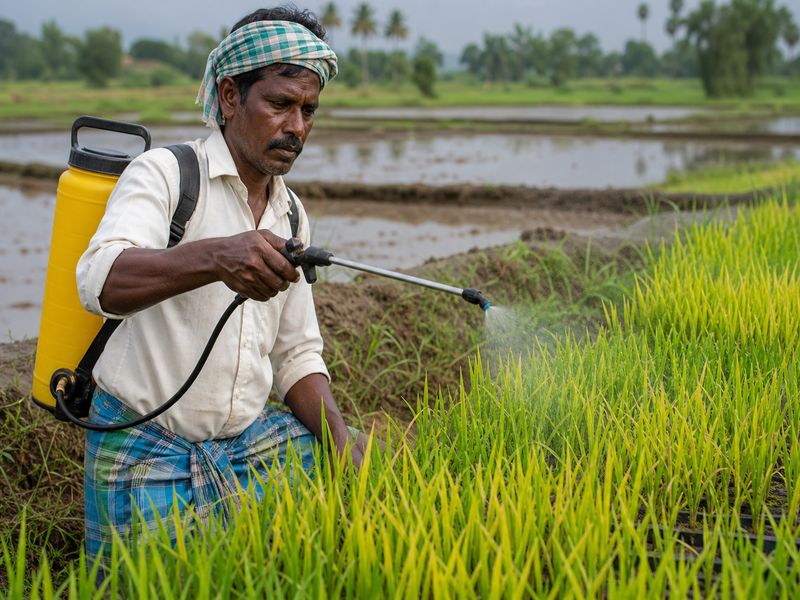
💡 Tip: When seedlings show yellowing at 35 days, do not ignore it. Timely micronutrient spraying can restore seedling vigor and naturally suppress weed growth by strengthening the crop canopy.
In the Kuttanad regions, the native variety of paddy seed commonly known as ‘Kuttanmundakan’ has been largely subdued over time. Traditionally, there was a practice of saving seeds after harvest for the next sowing season — a method that maintained genetic resilience and adaptation to local conditions, including natural weed suppression.
The most effective way to control weeds in this context would be through collective fields — where farmers coordinate and manage their plots together, allowing for unified weed control strategies rather than fragmented individual efforts.
⚠️ Note: The revival of native paddy varieties like Kuttanmundakan, combined with traditional seed-saving and collective farming, can play a significant role in natural weed management and long-term soil health.
Parasites from agriculture cause obstruction and absorb water that is meant for the paddy plant. However, protection from such attacks is possible. The roots of plants other than paddy — including weeds — obstruct the growth of the paddy sprout by competing for moisture and nutrients.
If indigenous farming is implemented systematically and firmly, the expense for pesticide application and the associated environmental damage can be avoided. This is not just about cost — it is about building a sustainable farming ecosystem that relies on knowledge and practice rather than chemical intervention.
Roots of other plants, except for the paddy’s roots, can obstruct the growth of the paddy sprout. A practical and accessible remedy is a diluted boric acid or boron solution, which is commonly available at medical shops.
📋 How to Prepare and Apply Boron Spray:
- Obtain boric acid or boron from a local medical shop.
- Dissolve it in water at a ratio of 1 gram per 1 liter of water.
- Spray the diluted solution carefully on the nursery bed or affected field area.
- Do not increase the dosage beyond the recommended ratio — excess boron will kill the plant.
🚨 Warning: Always maintain the recommended dosage of 1 gram per liter. If the amount of boron is increased beyond this, it will damage or kill the paddy plant. Handle with care and measure accurately before applying.
Plant mature seeds after draining the field to build seedling resilience against weeds.
Spray micronutrients when yellowing appears at 35 days to strengthen seedlings.
Collective field management is one of the most effective weed control strategies.
Use boron at 1g per 1L of water to control root competition — never exceed the dosage.