
By George K. Mathai
Deputy Director (Retd.), Department of Agriculture
E-mail: mathaigk@gmail.com
Micronutrients in Kerala soil should be provided with caution because the soil is generally acidic and has an excess amount of iron. According to George K. Mathai, 99 percent of the micronutrient mixtures popular in Kerala are not suitable for the state’s crops.
The best approach is simple: provide micronutrients only according to their deficiency and avoid fertilizer mixtures containing iron for better crop health.
99 percent of the micronutrient mixtures popular in Kerala are not suitable for the state’s crops.
The soil in Kerala is generally acidic, except for noted soil types in Chittur and the Travancore coast.
Kerala soil has an excess amount of iron, so fertilizers containing iron can cause adverse effects.
It is best to provide micronutrients only according to their deficiency.
Definition: Micronutrients are nutrients required by crops in small quantities, but in Kerala farming they must be supplied carefully because soil chemistry directly affects whether a fertilizer helps or harms the plant.
When providing micronutrients, the condition of the soil matters. Many micronutrient mixtures sold in Kerala are manufactured according to the chemical composition of the soil in other states like Tamil Nadu and Karnataka.
Many imported fertilizers, which are touted as being of superior quality, are based on the chemical composition of the soil in foreign countries.
Important quote: “99 percent of the micronutrient mixtures popular in Kerala are not suitable for the state’s crops.”
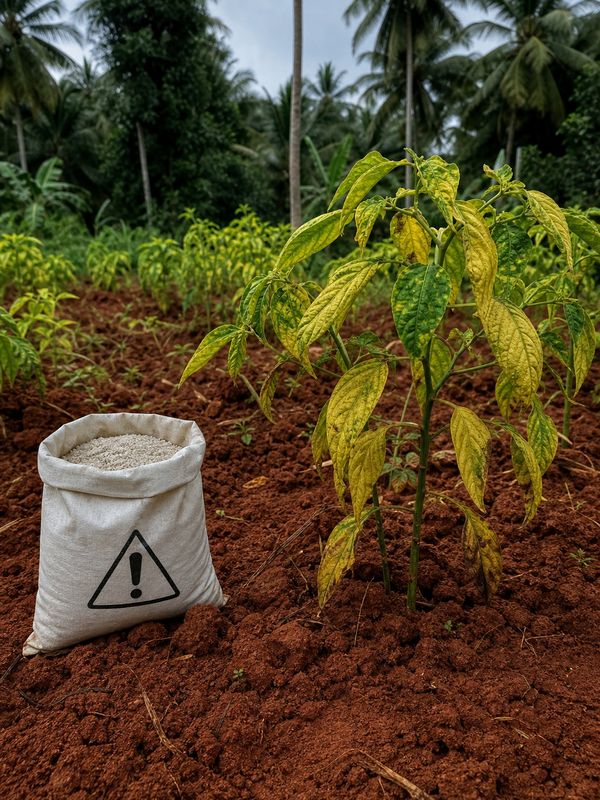
The soil in Kerala is generally acidic, except for the black soil in the Chittur taluk of Palakkad and the sandy soil on the Travancore coast.
Kerala soil also has an excess amount of iron. The application of fertilizers containing iron in such soil will only have adverse effects.
Warning: Often, this can even lead to the destruction of plants.
| Factor | Kerala Condition | Common Fertilizer Issue | Farmer-Friendly Action |
|---|---|---|---|
| Soil reaction | Generally acidic | Mixtures may be made for soils in other states or foreign countries | Use micronutrients only according to deficiency |
| Iron level | Excess amount of iron | Fertilizers containing iron can cause adverse effects | Completely avoid fertilizer mixtures containing iron |
| Regional exceptions | Black soil in Chittur taluk of Palakkad and sandy soil on the Travancore coast | General recommendations may not fit every field | Consider the soil condition before applying any mixture |
| Imported fertilizers | Kerala soil chemistry is different | Imported fertilizers may be based on foreign soil composition | Do not rely only on claims of superior quality |

- Start with the crop need: Provide micronutrients only according to their deficiency.
- Check the product source: Many mixtures are manufactured for soil chemistry in Tamil Nadu, Karnataka, or foreign countries.
- Watch for iron: Completely avoiding fertilizer mixtures containing iron is best for the health of the crops.
- Respect Kerala soil chemistry: The soil is generally acidic and already has excess iron.
- Avoid unnecessary application: Applying the wrong micronutrient mixture can cause adverse effects and may even destroy plants.
Expert Tip: Do not treat every micronutrient mixture as a universal crop booster. In Kerala, the safer rule is deficiency-based application, especially because of the excess iron already present in the soil.
Imported fertilizers, even when touted as being of superior quality, may be based on the chemical composition of soil in foreign countries.
The general acidic nature of Kerala soil has exceptions: black soil in Chittur taluk of Palakkad and sandy soil on the Travancore coast.
For Kerala farmers, micronutrients should not be applied just because a mixture is popular, imported, or marketed as high quality. The key point is that Kerala soil is generally acidic and has excess iron.
Therefore, it is best to provide micronutrients only according to their deficiency. Completely avoiding fertilizer mixtures containing iron is best for the health of the crops.
Are micronutrient mixtures suitable for Kerala crops?
According to George K. Mathai, 99 percent of the micronutrient mixtures popular in Kerala are not suitable for the state’s crops. Many are manufactured based on the chemical composition of soil in other states like Tamil Nadu and Karnataka, which differs from Kerala’s generally acidic and iron-rich soil.
Why should Kerala farmers avoid iron-containing fertilizers?
Kerala soil generally has an excess amount of iron. When fertilizers containing iron are applied in such soil, they can produce adverse effects instead of benefits. The article warns that this can often even lead to the destruction of plants, so avoiding iron-containing mixtures is best for crop health.
Is Kerala soil always acidic?
The soil in Kerala is generally acidic, but there are exceptions. The article specifically notes the black soil in the Chittur taluk of Palakkad and the sandy soil on the Travancore coast. Because soil conditions vary, farmers should avoid blanket fertilizer decisions and apply micronutrients only according to deficiency.
Are imported micronutrient fertilizers better for Kerala farming?
Imported fertilizers are often touted as being of superior quality, but the article cautions that many are based on the chemical composition of soil in foreign countries. Since Kerala soil chemistry is different, especially due to acidity and excess iron, imported products are not automatically suitable for Kerala crops.
What is the safest way to provide micronutrients in Kerala?
The safest way is to provide micronutrients only according to their deficiency. Farmers should be cautious with popular mixtures, check whether the product contains iron, and remember that many mixtures are made for soils outside Kerala. Avoiding fertilizer mixtures containing iron is best for crop health.
Can the wrong micronutrient mixture damage plants?
Yes. The article clearly states that applying fertilizers containing iron in Kerala’s iron-rich soil will only have adverse effects. Often, this can even lead to the destruction of plants. That is why micronutrients should not be applied casually or as a routine mixture without considering deficiency.