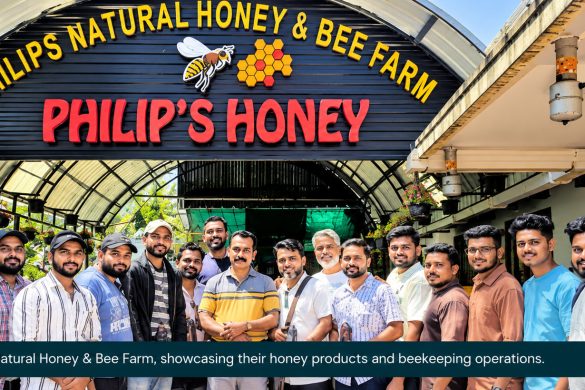
In the heart of Thrissur district, a small farm has grown into a living example of how innovation, sustainability, and passion can reshape modern agriculture. Managed by two brothers, Bosom Experimental Farm showcases the power of grow bag farming, organic cultivation and experiential learning-all within a limited area.
A Story of Learning by Doing and Knowledge Sharing by Two B.Com Brothers

What started as a simple farming experiment has now evolved into a diversified ecosystem that supports multiple families, welcomes visitors, and produces a wide range of vegetables, fruits, and specialty crops. This is a story of learning by doing, sharing knowledge, and proving that small-scale farming can be both meaningful and economically viable.
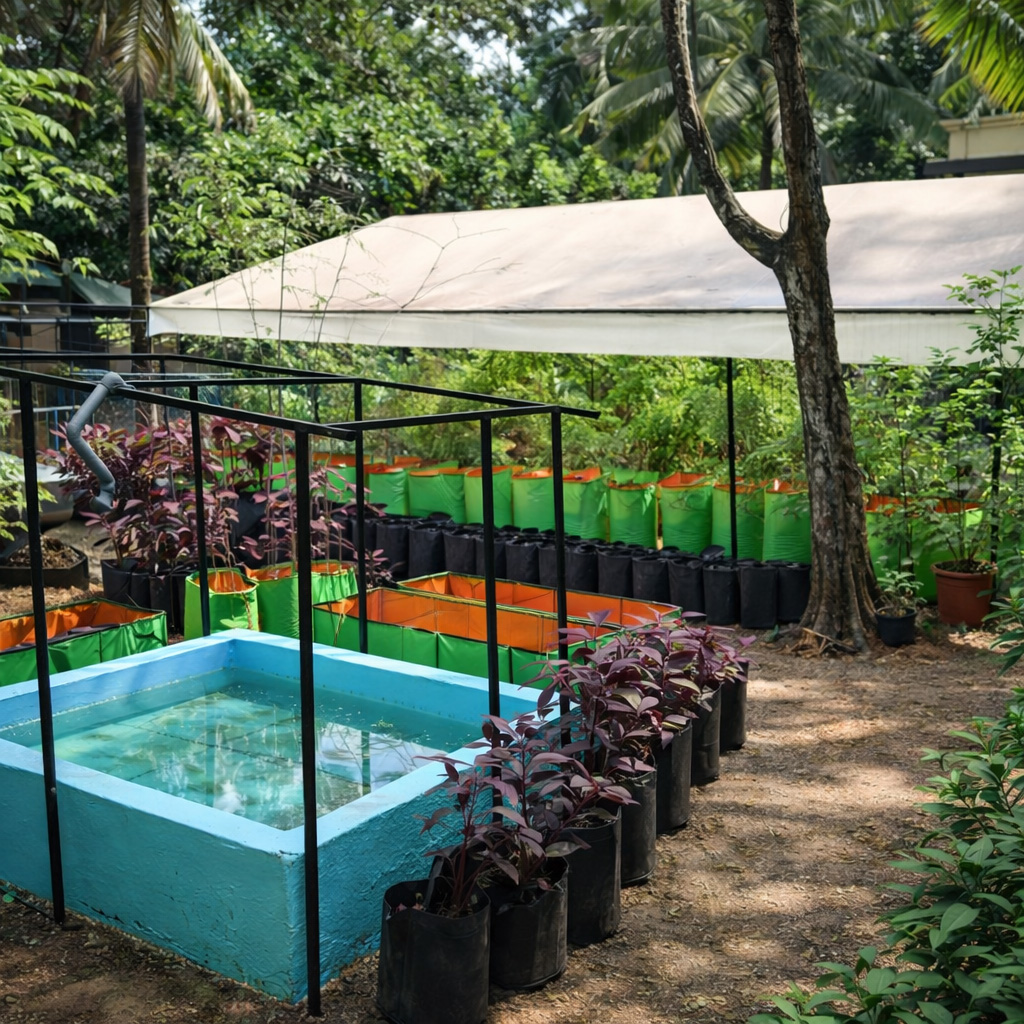

About Bosom Experimental Farm
Bosom Experimental Farm, earlier known as Bosom Farm, is run by two brothers with a clear vision to create a learning-oriented, sustainable and income-generating farm model.
Key highlights:
- Located in Thrissur district, Kerala
- Managed by two brothers
- Supported by five staff members
- Around 1.5 acres of diversified farming
- Nearly five families depend on the farm for livelihood
- Duck–Fish integrated farming, lobster farming, and vegetable grow bag farming.
A Farm Designed as a Learning & Experience Center
This farm is not just about production—it is designed like a study and experience center where visitors actively participate.
Visitors are encouraged to:
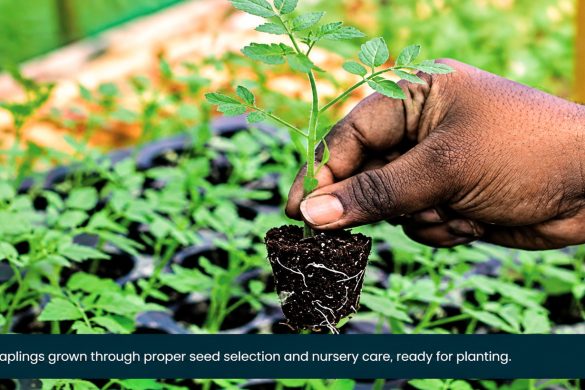
- Sow seeds
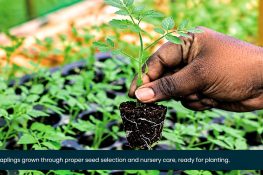
- Transplant seedlings
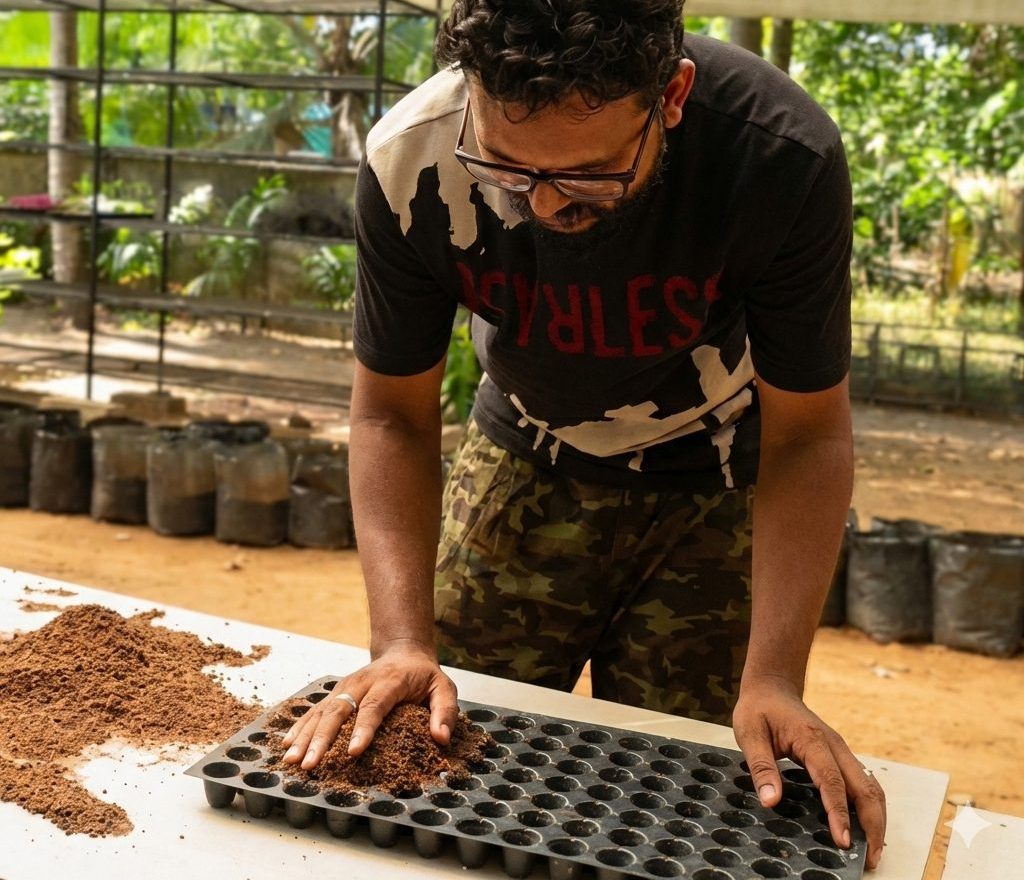
- Prepare potting mix
- Water plants
- Harvest vegetables directly
Families, especially those with children, frequently visit the farm to experience live harvesting—plucking vegetables and eating them fresh from the plant.
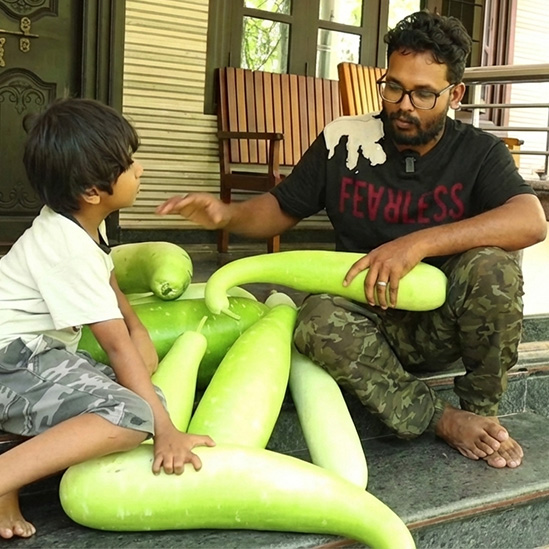

Grow Bag Farming
One of the defining features of Bosom Experimental Farm is its strong focus on grow bag cultivation.
Why grow bags?
- Prevent waterlogging during heavy rains
- Allow individual care for each plant
- Better control over soil quality
- Suitable for Kerala’s climate conditions
- Consistently better yield and plant health
Daily watering is required, but the results make it worthwhile.
Potting Mix Used in the Farm
All crops are grown using a custom organic potting mix, prepared in-house.
Potting mix components:
- Vermicompost
- Leaf compost
- Local garden soil
- Dried cow dung powder
All grow bags are custom-made in Coimbatore and supported using concrete frames for durability.
What's Grown in Farm?
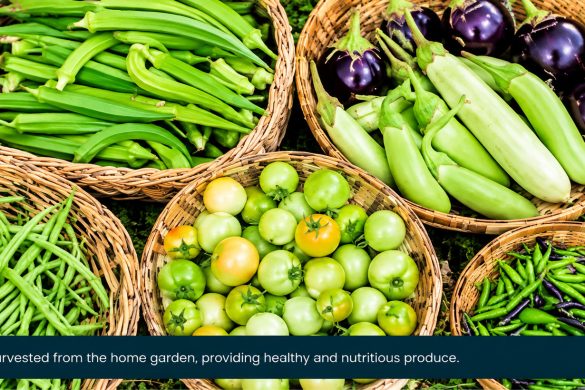
Tomato Cultivation – 7 Varieties in Grow Bags
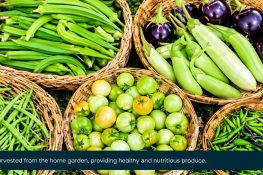
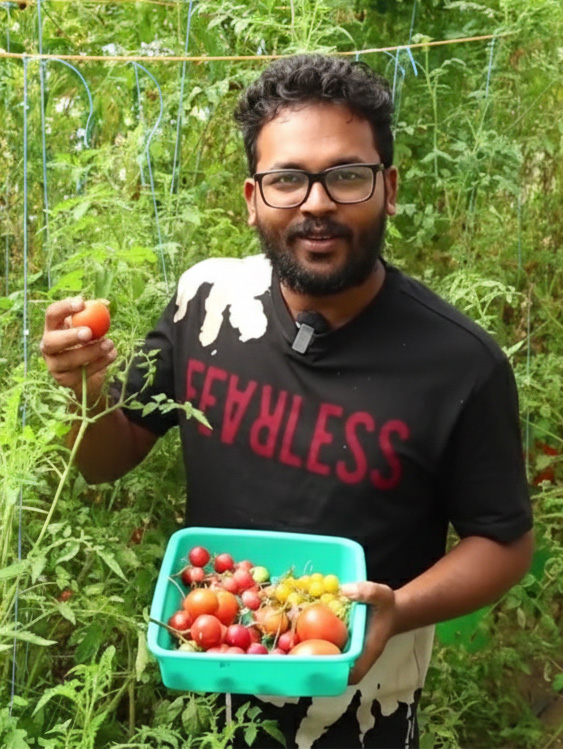
Tomatoes are one of the farm’s major attractions, with around seven different varieties cultivated.
Tomato varieties grown:
- Green Stripe – ideal for curry and salads, very meaty
- Beefsteak tomato
- Pink Cherry – personal favorite of the farmer
- Yellow Cherry – very sweet, loved by children
- Pink Berry tomato (locally called blue tomato) – slightly larger than regular cherry tomatoes, rich in flavor
Visitors often pluck and eat cherry tomatoes directly from the plant.
Snow White Cucumber
- Grown without chemicals or sprays
- Safe to eat directly from the plant
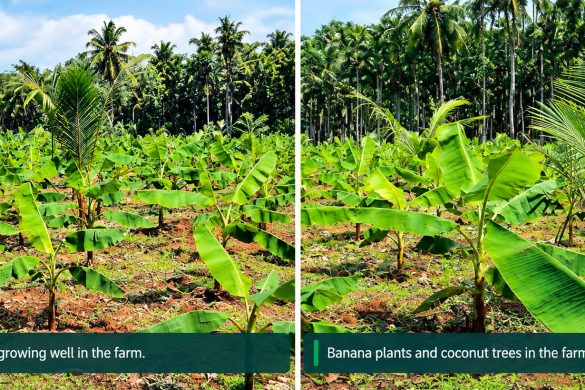
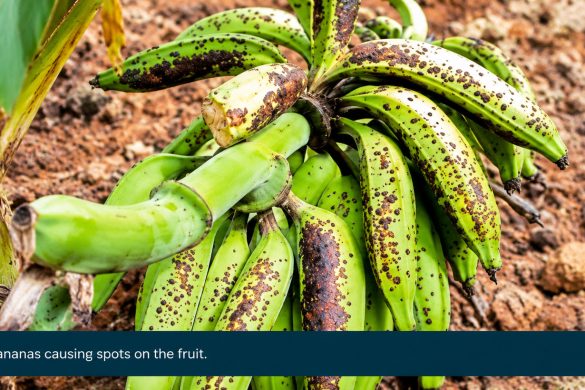
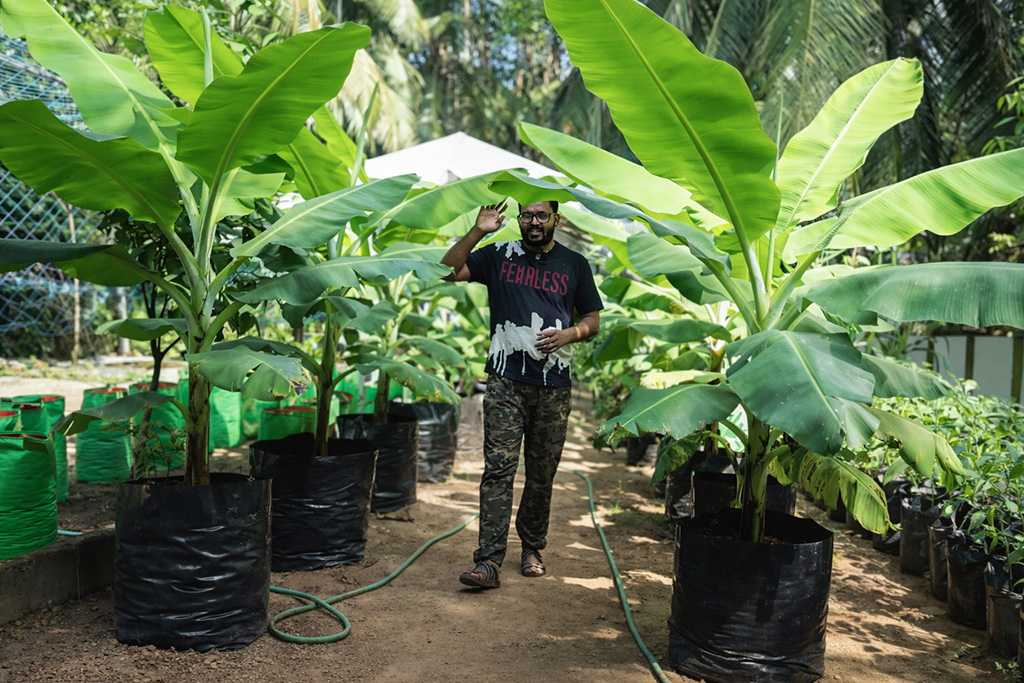
Banana Cultivation in Grow Bags
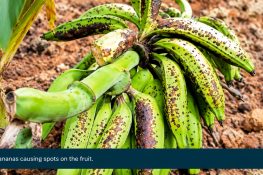
The farm has also started experimenting with banana cultivation in grow bags.
- Robusta banana (Grand Nain variety)
- Grown in 30–35 size grow bags
- Rich potting mix used
- First attempt, with promising results
- Turns yellow when ripe
Ginger
- Grown in reused grow bags (previously used for cucumber) to avoid waterlogging
- Seedlings sourced from Mannuthy Agricultural University
Spinach
- Grows well during summer
- Initially cultivated as duck feed
- Later became a profitable crop due to high demand
Kasturi Turmeric
- Requires less sunlight
- Visitors can harvest it themselves
- Less water required
Chilli Cultivation
Chilli is treated as both crop and ornamental at the farm.
- Bullet chilli – grown from hybrid seeds, reused successfully
- Yellow Mali chilli (red & yellow varieties)
- Fancy chillies with violet, red, and yellow stages
- Grape chilli – mainly for seed production
Chilli seeds, are freely shared with visitors.
Brinjal Cultivation: Breaking Organic Farming Myths
A common misconception is that organic farming does not produce good size or yield. Bosom Farm proves its wrong ✗
Highlights:
- They cultivate Giant Black brinjal variety along with seven other brinjal varieties
- Large fruits harvested from single plants
- One brinjal can be enough to prepare a full family meal
Rainbow Corn
- Grown in large tarpaulin grow bags
- Sourced from Coimbatore
- Chosen for better disease resistance
- Black and red single-color varieties also cultivated
Sweet corn was earlier removed due to pest issues.
Duck Farming & Aquatic Farming
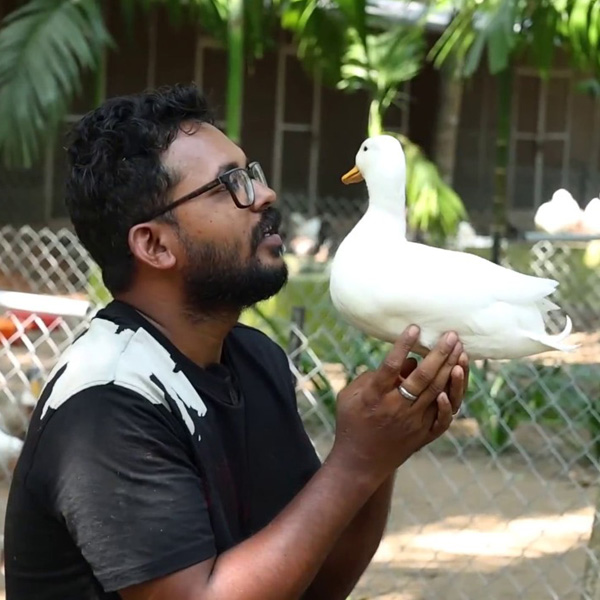
Another major income source is duck farming.
Highlights:
- Fancy duck varieties
- Spinach used as natural duck feed
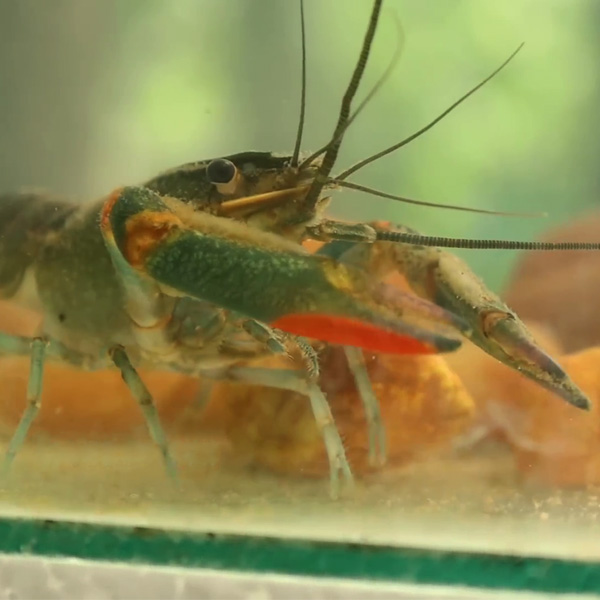
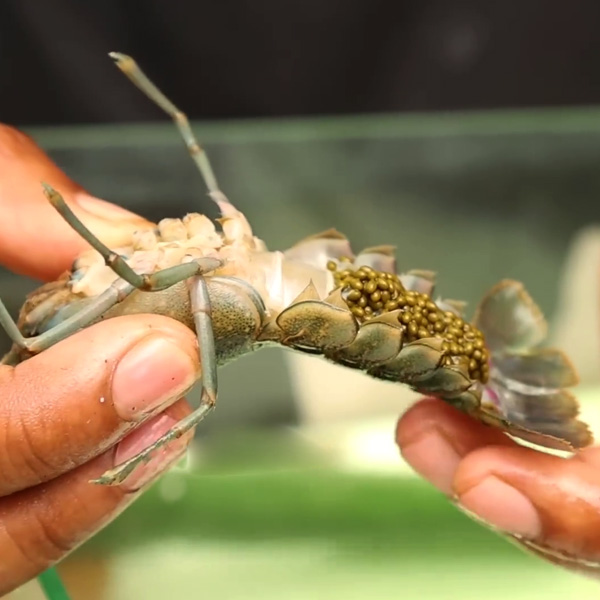
The farm also breeds:
- Australian Red Claw freshwater lobsters
- Ornamental locally, edible in countries like Vietnam and the Philippines
- Cement tanks constructed for breeding
- Long-term plan for edible production
Direct Harvest & Farm Income Model
Visitors are free to:
- Pluck vegetables directly from plants
- Consume produce on the spot
- Pay only for what they take
Excess produce is sold in local markets, creating an additional income stream.
Community Farming & Children’s Participation
Children play an active role in the farm.
Activities include:
- Planting red okra (around 300 grow bags)
- Watering plants
- Learning farming basics hands-on
This interaction helps build early awareness and respect for agriculture.
Journey So Far
- Started 6 years ago on a small plot
- Expanded to 1.5 acres
- Became a learning, sharing, and experience-driven farm
- Supports multiple families sustainably
Farm Location & Visit Details
📍 Location: Thrissur District, Kerala
Near Chavakkad (around 13 km)
On the Chavakkad–Ponnani Highway
📞 Mobile: 062385 61166
📧 Email: suroorbosom@gmail.com
📌 Google Maps: Search “Bosom Farm Thrissur” for the exact location