Reference: Kasaragod report on Dr. Jayaram, agricultural officer at Padannakkad Agricultural College. Photo credit mentioned in the source: Dinesh Perumbala.
Kasaragod > Dr. Jayaram is an agricultural officer at Padannakkad Agricultural College. He answers the phone when farmers call. Like agricultural officers usually do, he provides answers to their questions. However, Jayaram often fulfills the requests that come through the phone outside of his official hours at the college.
Sometimes, it might be a trip to a farmer’s field, and other times, it could be a journey to plant a foreign mango sapling sent by a farmer he met over the phone. Sometimes, it could also be a quest for a new variety of mango. Once he takes off the official attire of an agricultural officer, Jayaram the farmer becomes even more energetic.
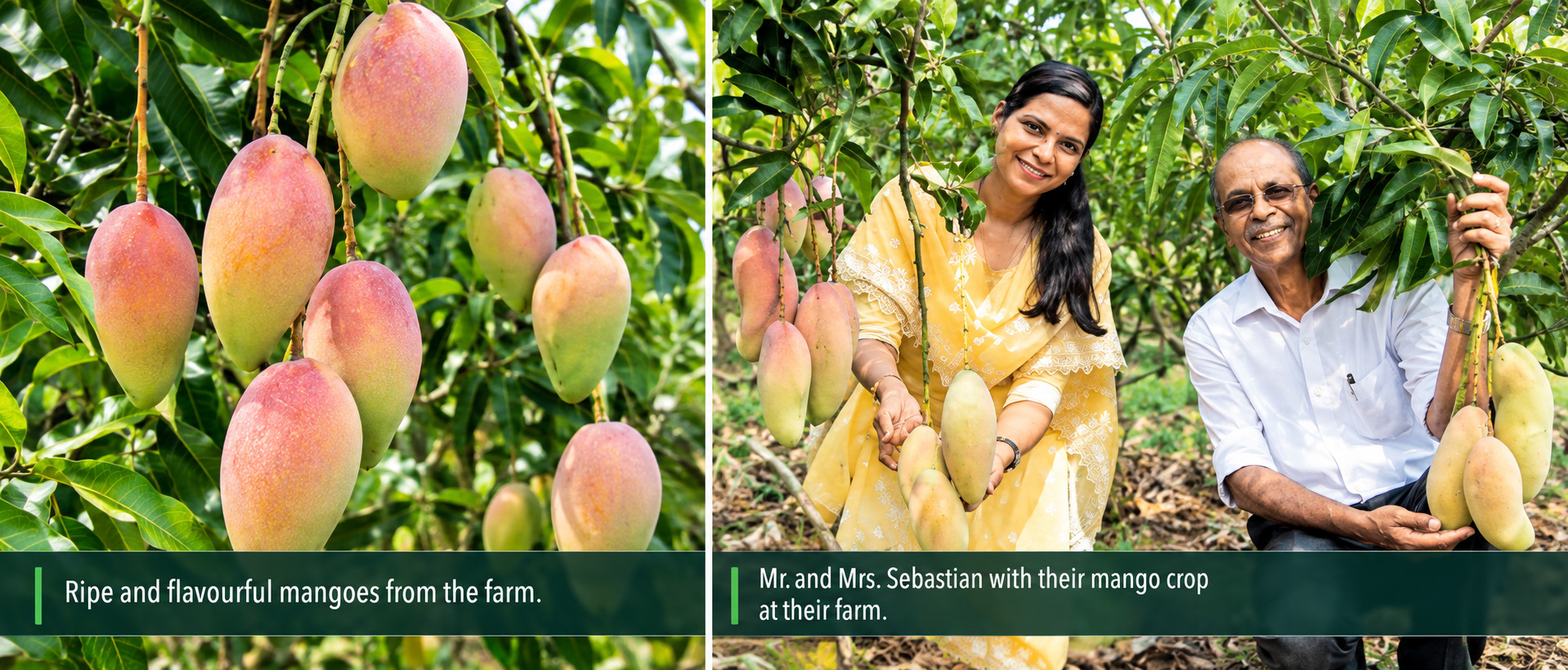
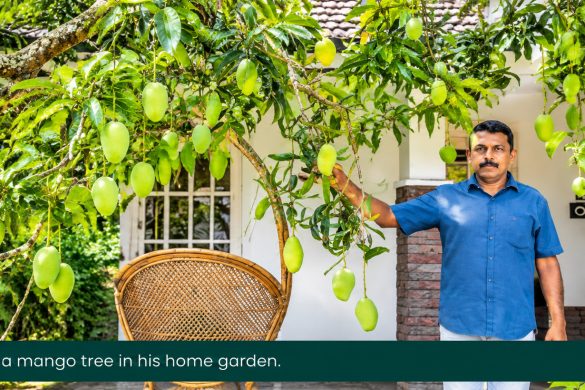
In the mango orchard in his house compound at Padannakkad, there are about three hundred varieties of mango trees. These trees are spread across one and a half acres. Jayaram is very familiar with each tree, like children who come running when their names are called.
There are local, out-of-state, and foreign varieties in this mango orchard. This grove can be called a DNA bank of mangoes. This is perhaps the private garden with the most mango varieties in Kerala.
This mango orchard is the result of 15 years of effort. Mangoes from different parts of the world are preserved here. Many of the mango varieties in Kerala are facing extinction. Jayaram is also undertaking the great mission of conserving native mango varieties. Many people call Jayaram every day to learn about mango varieties and for saplings.
📱 Video note: Scan the QR code to watch the video.
There is another person who greatly influenced him: Deepak Fernandez, known as the Mango Man of Karnataka. His love for mango trees grew after speaking with him.
Dr. Jayaram and his wife Shylaja in the mango orchard.
Photo: Dinesh Perumbala.
Different types of fertilization are required for mango trees depending on the variety. Fertilization should be done at least twice a year, before and after the rainy season. After the mangoes are picked, the tree’s branches should be pruned. He gives advice on matters related to protecting mango trees. His wife Shylaja, a homemaker, is his helper in farming.
Kitt Mango and Tommy Atkins from Florida, Chakkapat and Maha Chanok and Nam Dok Mai from Thailand, and R2E2 and Calypso from Australia are all in the house compound.
Florida
Kitt Mango and Tommy Atkins.
Thailand
Chakkapat, Maha Chanok and Nam Dok Mai.
Australia
R2E2 and Calypso.
Native varieties
Sindooram, Kalappadi, Ratnagiri Alphonso, Kottoorkonam, Priyor, Salem, Guddadath, Suvarnarekha, Olour, Malgova, and Banganapalli.
Jayaram says that many native mango varieties that existed 50-60 years ago are no longer seen. If he finds them anywhere, he brings back their scions and grafts them. He also experiments with newly developed hybrid mango varieties here. A single fruit from the H 151 variety will weigh more than one kilogram.
Grafted mango saplings bear fruit quickly. Special attention should be paid during planting and fertilization. The reason for having many types of mangoes on a single tree is grafting. Branches of different types of mango trees are grafted onto one tree.
A special method of grafting is used for this. Other scions are grafted onto a native mango tree. When one scion becomes three months old, the next one can be grafted.
🌳 Each tree has more than ten varieties of mangoes. Up to 25 varieties of mangoes have been grafted onto a single tree.
Jayaram’s farming method is different from the usual way. The mango orchard is on one acre of land adjacent to the house. The mango trees are planted with less spacing between them.
The trees, planted 10 feet apart, are not allowed to grow more than four meters tall. The height is controlled by pruning the branches. If this method is adopted, more mango trees can be planted in a small area.
Spacing
The trees are planted 10 feet apart.
Height
They are not allowed to grow more than four meters tall.
Control
The height is controlled by pruning the branches.
Small area
More mango trees can be planted in a small area.
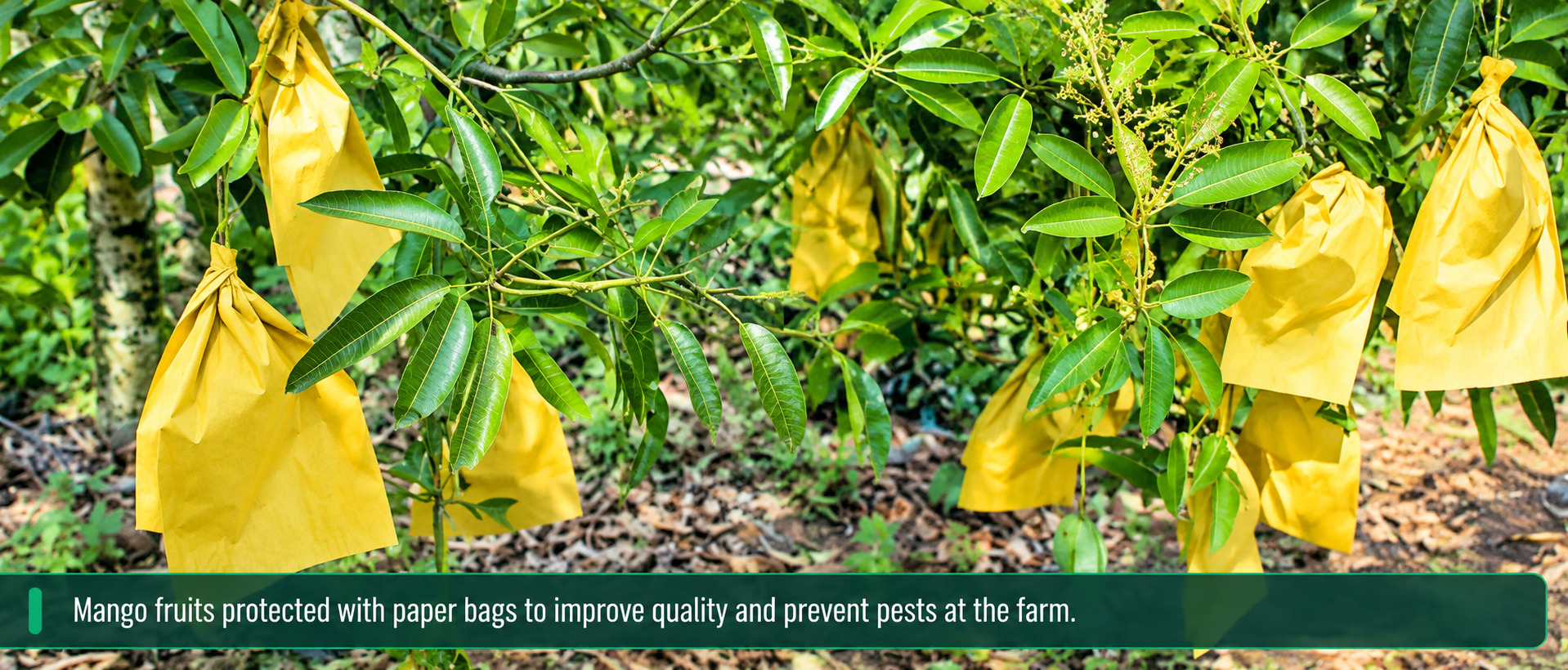
🛡️ Using a protection bag helps prevent fungal infections, avoid pest attacks, and get good color. It will also help in getting good sweetness.
Protection bags for the protection of mangoes.
If all types of mangoes are grown with the same fertilizer, it will take 5 years for them to bear fruit. However, if attention is paid to their specific fertilization methods, mangoes will start to be available in 3 years itself.
Acidic soil is most suitable for mango cultivation. Clayey soil is also good. There should be soil up to a depth of five meters. Water should not stagnate. A soil test should be done and the required amount of lime should be added. A place that receives good sunlight should be selected.
If there is no rain, they should be watered. Watering during the flowering season will cause the flowers to fall. Similarly, do not water when the plants are sprouting new leaves. It is enough to stop watering when you see new leaves. Watering on alternate days is sufficient. It is best to stop watering one and a half months before.
It is very good to use a protection bag before the mangoes ripen. This will provide protection from pests and fungal infections.
Jayaram’s love for mango trees increased after the 2018 flood. When the mango trees failed to bear fruit en masse, he began studying about them. That is how he entered the world of mangoes. He took grafting more seriously 4 years ago.
The way Dr. Jayaram, the farmer, creates a mango orchard through grafting would amaze anyone. For many, this will be new knowledge. He is ready to graft more if he gets scions of varieties not present in his orchard.
He does not see agriculture as a source of income. He does it as a hobby. His wish is for the diversity of mangoes to be conserved. He can be called anytime for doubts about mangoes. The aim is to create a museum of mangoes.
It is a special beauty to see different types of mangoes fruiting on a single plant. He provides information to those who approach him for studies on mangoes. He is not interested in coming out of the world of sweet mangoes now. He wants to travel more in search of new mango varieties. There is a big world of mangoes still to be known. This agricultural scientist is continuing his journey for that.
While setting up the mango orchard, he also seriously studied the possibilities of native varieties. He went to the Tamil Nadu village of Muthumalai to understand the native varieties there. He also realized the possibilities of budding and grafting.
If mango trees are planted together, pollination can occur and new seeds may be formed. If that is germinated, a new variety of mango tree may emerge. However, it will take years for it to bear fruit. Grafting is easier than that. But grafting has some limitations. There will also be a difference in the size of the mangoes.
🥭 Mangoes that fruited on a grafted tree in the house compound of Adv. Rajesh Kumar Krishnan: Priyor, Sindooram, Kalappadi, Ratnagiri Alphonso, Neelam, and Olour are all on a single tree.
Contact number mentioned in the source: 8075300796
How many mango varieties are in Dr. Jayaram’s orchard?
Dr. Jayaram’s mango orchard at Padannakkad has about three hundred varieties of mango trees spread across one and a half acres. The collection includes local, out-of-state, and foreign mango varieties, making the grove comparable to a DNA bank of mangoes.
Why is grafting important in mango cultivation?
Grafting helps mango saplings bear fruit quickly and also makes it possible to grow many types of mangoes on a single tree. In Dr. Jayaram’s orchard, branches of different mango trees are grafted onto native mango trees, and some trees carry more than ten varieties.
Can multiple mango varieties grow on one tree?
Yes. The article explains that branches of different mango varieties can be grafted onto one tree using a special grafting method. Each tree in Dr. Jayaram’s orchard has more than ten varieties, and up to 25 varieties have been grafted onto a single tree.
What soil is best for mango cultivation?
Acidic soil is described as most suitable for mango cultivation, while clayey soil is also good. The soil should be deep, water should not stagnate, and a soil test should be done so the required amount of lime can be added before cultivation.
When should mango trees be fertilized?
Different mango varieties need different fertilization methods. Fertilization should be done at least twice a year, before and after the rainy season. The article also says that variety-specific fertilization can help mangoes start becoming available in 3 years instead of 5 years.
How do protection bags help mango fruits?
Protection bags help prevent fungal infections, avoid pest attacks, and improve fruit color. The article also notes that they help in getting good sweetness. Dr. Jayaram recommends using a protection bag before the mangoes ripen for better protection.
What are some foreign mango varieties in the orchard?
The orchard includes Kitt Mango and Tommy Atkins from Florida, Chakkapat, Maha Chanok, and Nam Dok Mai from Thailand, and R2E2 and Calypso from Australia. These are grown along with many native Indian varieties in the house compound.