Reference: Roy, a native of Koyilandy in Kozhikode district, is gaining attention for cultivating mangoes through multi-grafting. Contact: 9495604585.
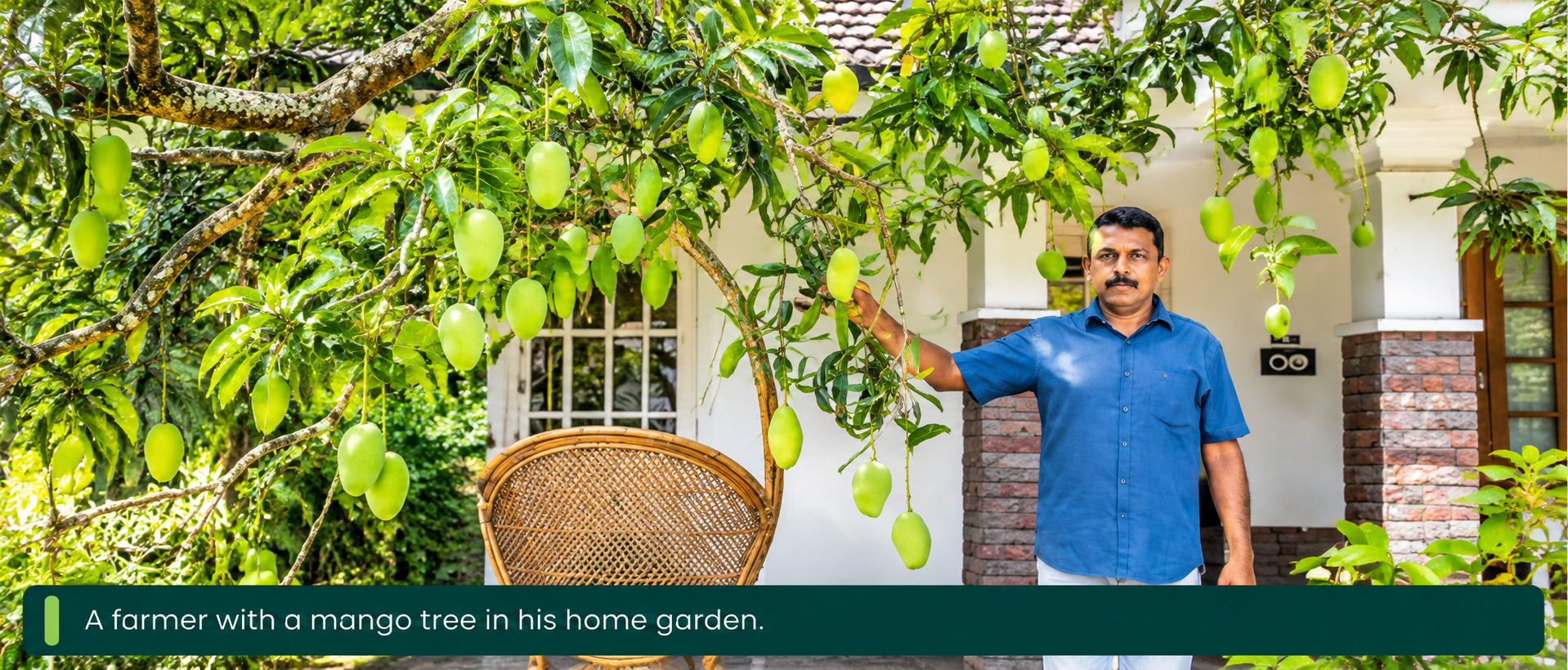
Photo note from the source article: Roy near the mango tree in front of his house.
The mango season brings back many memories for Malayalis. Climbing mango trees during childhood, plucking mangoes… When the mango season arrives, sweet memories come flooding back. But how many people can preserve these memories for the next generation?
The common sight everywhere is of people, even those not involved in agriculture, cutting down mango saplings. However, even those without a single cent of land can grow mangoes on their terrace and cultivate sweetness.
It is primarily the lack of space that discourages most people from planting mango trees. If you have one or two mango trees, they will spread across the house’s terrace and the neighbor’s property within two to three years. It takes 10-15 years to get a good yield from a mango tree. By then, it becomes difficult to cut it down.
All these factors create a dislike for mango trees among many. However, by trying modern farming methods, all these problems can be avoided.
Main concern: mango trees need space and can quickly spread around the house and nearby property.
Yield delay: a mango tree may take 10-15 years to give a good yield.
Modern option: smart farming methods can reduce space problems.
Terrace possibility: even those without land can grow mangoes on a terrace.
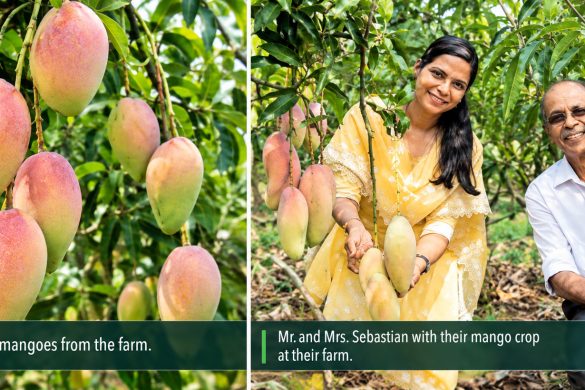
There are many methods today to get a large income from mango trees even from a young age. However, a method that surpasses all these is multi-grafting. It is a method of growing up to 10-15 varieties of mangoes on a single tree.
Since multiple types of mangoes can be obtained from the same tree at the same time, many have already turned to this. The method of having two or three types of mangoes fruiting on a single branch is also active today.
Mango varieties that fruit at the same time and those that fruit at different times can be grafted onto the same tree for harvest.
💡 Key idea: Multi-grafting helps one mango tree carry several selected varieties, making it useful for small gardens, front yards, and even limited-space growers who want more sweetness from fewer trees.
Roy, a native of Koyilandy in Kozhikode district, is gaining attention for cultivating mangoes in this manner.
The mango tree in Roy’s front yard has 35 varieties of mangoes. Another one has 45 varieties. He cultivates the best varieties on his trees through grafting. Although a part of the first branch he grafted dried up, the rest survived. Years later, new branches sprouted from this branch.
However, Roy says that the branches of the 35 varieties on the second mango tree have also grown beautifully.
35 varieties are growing on one mango tree in Roy’s front yard.
45 varieties are growing on another mango tree.
A part of the first grafted branch dried up, but the rest survived.
Years later, new branches sprouted from the surviving grafted branch.
It took nine years to graft so many varieties onto one mango tree. The first step was to find other mango trees with similar characteristics. The next step was to approach friends for help. Friends brought the required varieties from various places.
Roy also had the full support of his family. His father Scaria, mother Elikutty, and wife Sheeba all help with the farming. His brother Joy, who works in Sharjah, also joins Roy when he is in town. Roy’s son Bibin and daughter Angel are also there to support their father’s farming methods.
Different varieties were grafted onto a native mango tree grown in the front yard to sprout new ones. As this method became successful, the same method was tried on more mango trees.
He expects to be able to harvest all varieties by 2024. Roy also has a dream of using these mangoes for his children’s weddings. Roy provides grafting services for free in neighboring houses. Roy is also ready to provide saplings to those who need them.
You can choose saplings of native mangoes that you are interested in. Choose branches of the same thickness. Instead of grafting its scions, it should be grafted onto a small branch of an existing mango tree.
For this, scions with the thickness of a pencil should be selected for grafting. Scions of the new variety with equal thickness should be cut and sliced to the same thickness.
- After 15 days, you will see new buds starting to appear at the tip of this branch. Along with this, the wilting leaves should also be noted.
- Cut this scion to an average length of one foot (12-15 cm) and shape its base into a wedge.
- After cutting off the selected portion of the rootstock branch, make a deep cut in the remaining part so that it splits in two.
- Insert the cut part of the new variety’s scion into this. At least one side of the new scion should be in contact with the rootstock.
- After joining them completely, the two sides of the new scion should be buried under the soil so they are not visible.
- Then, to keep the scions together, wrap them with grafting tape. Special tapes for this are available for purchase.
- When wrapped like this, the new scion and the rootstock will join well.
- To prevent rainwater from entering the grafted scion, cover its top well with a thin polythene cover and tie it. The bottom of this cover should be tied with a rubber band or thread.
⚠️ Important protection: rainwater should not enter the grafted scion. Cover the top properly with thin polythene and tie the bottom with a rubber band or thread.
Within the next 15-20 days, a bud will emerge from the grafted scion. Since it is a transparent plastic bag, the growth of the bud can be seen from the inside. Once the bud emerges, the cover can be removed.
Over time, this will grow and become a branch of the grafted variety. This method of grafting, also known as stone grafting, can be easily done by those who know how. In one or two years, this branch will bear the new variety.
After 15 days, new buds start to appear at the tip of the branch.
Within 15-20 days, a bud emerges from the grafted scion.
In one or two years, the grafted branch will bear the new variety.
Multi-grafting can grow up to 10-15 mango varieties on a single tree.