339
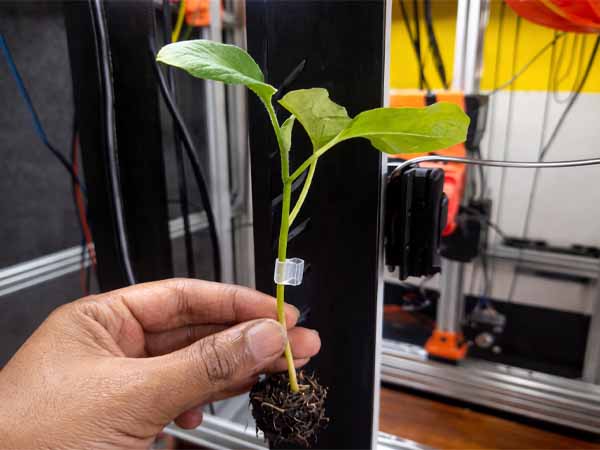
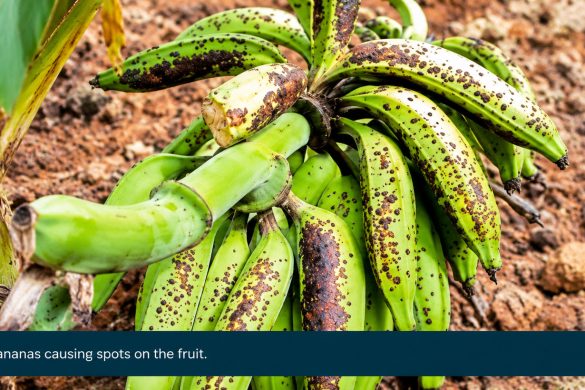
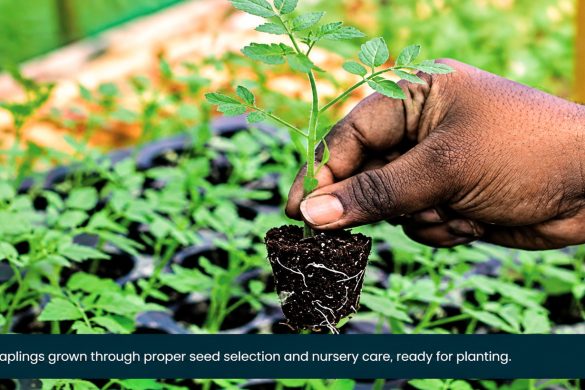
Commercial vegetable crops such as tomatoes, eggplants, and peppers face severe threats from soil-borne diseases like wilt, which can destroy entire fields within days. One effective strategy to reduce crop losses is grafting disease-resistant rootstock with high-yielding vegetable varieties. Traditionally, grafting is labor-intensive and requires skilled hands, making it costly and hard to scale. An automated vegetable grafting robot developed by a team of innovators in India addresses this challenge by dramatically increasing grafting capacity, precision, and profitability.
What Is the Automated Vegetable Grafting Robot?
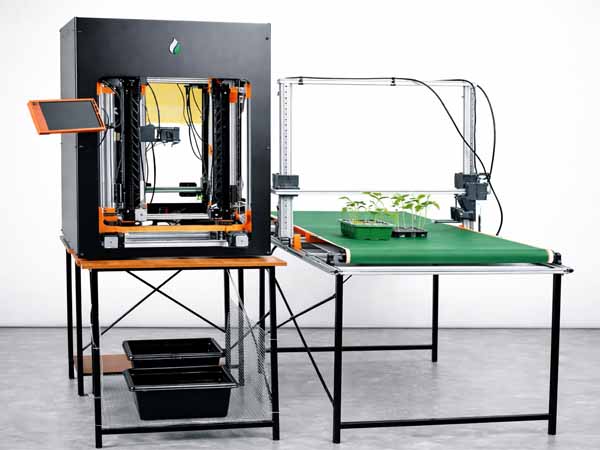
The automated vegetable grafting robot is a compact robotic system designed to handle micro grafting operations for vegetable seedlings. It automates the most critical steps of the grafting process including:
- Identifying and picking scion and rootstock seedlings
- Precise angled cutting (commonly 30°–45° splice cuts)
- Aligning and joining grafts
- Attaching graft clips automatically
- Placing grafted seedlings back in trays
The robot integrates machine vision technology to ensure cut and join precision while maintaining consistent throughput.
Why Automation Matters in Vegetable Grafting
 Traditional Challenges
Manual vegetable grafting has limitations:
- High labor costs and skilled worker dependency
- Low throughput (typically under 500 seedlings per day for workers)
- Inconsistent cuts and graft accuracy
- Difficulty scaling for commercial production
✅ Benefits of Robotic Grafting
The automated system delivers:
- High Productivity: Around 500 grafts per hour (~4,000+ per day), several times more than manual rates.
- Precision Cutting: Machine vision ensures cuts at ideal angles for vascular alignment.
- Consistency: Improved uniformity in graft quality reduces plant losses.
- Lower Operating Cost: Under ₹10 per day electricity cost and 1 operator suffices.
- Modular and Compact: Tabletop form factor suitable for nurseries and small farms.
Core Features of the Grafting Robot
✅Automation Levels
The robot comes in two configurations:
Semi-Automatic Mode
- Human feeds seedlings and clips
- Machine performs cutting and joining
Fully Automatic Mode
- Robot picks seedlings from trays
- Executes complete grafting cycle without human input
✅ Technical Highlights
- Machine Vision Guidance: Ensures accurate alignment.
- Adjustable Cut Angles & Heights: Supports multiple vegetable types.
- Modular Tabletop Design: Easy to install and operate in nursery environments.
- Low Power Consumption: Minimizes running costs.
Commercial and Practical Outcomes
The automated grafting robot enables:
- Mass Production: Commercial nurseries can produce disease-resistant seedlings at scale.
- New Revenue Streams: Businesses can offer grafting services or rent out machines.
- Accessibility: Farmers with seasonal vegetable production can hire robots rather than purchase.
- Broader Crop Support: Beyond tomatoes, grafting is possible for eggplant, chillies, and cucurbits with automation.
Additional Tools and Innovations
Alongside the robot, a hand grafting tool was developed to assist small nurseries and growers performing manual micro-grafting with higher precision than traditional knife methods.
Future Opportunities
The robotics team plans to:
- Expand automation to semi-hardwood seedlings
- Broaden grafting support to ornamentals and fruit crops
- Integrate advanced AI for adaptive grafting operations
Automated vegetable grafting robots represent a transformative advancement for commercial vegetable production. By replacing slow, manual grafting with rapid, precise robotic systems, growers can dramatically boost seedling throughput and consistency while reducing labor costs. The technology supports disease-resistant crop propagation, expands nursery capabilities, and opens new business and revenue opportunities in horticulture automation.
FAQ – Automated Vegetable Grafting Robot
What is an automated vegetable grafting robot?
A robotic system that automates cutting, aligning, and joining vegetable seedling grafts with high speed and precision.
How many seedlings can the robot graft per hour?
The system can perform around 500 grafts per hour, significantly higher than human rates.
Does the robot require skilled operators?
No. With pre-programmed graft parameters and machine vision, a single operator can manage operations.
What crops are supported by vegetable grafting robots?
Commonly supported crops include tomatoes, eggplants, peppers, and other solanaceous or cucurbit vegetables.
How does automation reduce costs compared to manual grafting?
Automation increases throughput, reduces labor dependency, and lowers daily operating costs due to energy efficiency.
What are semi-automatic vs fully automatic modes?
Semi-automatic mode requires human seedling feed; fully automatic mode handles the entire grafting process without human input.
Can nurseries rent an automated grafting robot?
Yes. Some providers offer rental options for seasonal growers.
Is the grafting success rate higher than manual grafting?
Yes, robotic precision typically yields a higher success and uniformity rate than manual grafting.
Does the robot support different graft techniques?
Yes. Adjustable cutting angles and machine vision allow support for multiple graft methods.
Is the technology suitable for commercial scaling?
Absolutely – the high throughput and consistent quality make it ideal for large-scale seedling production.