By J. Jacob
New discoveries and experiments are leading agriculture forward in tune with the times. Let us get to know about some new findings in the agricultural sector and their uses in farming.
What is the color of a sweet potato? In the beginning, it was white or cream. That was one generation. Then came the era of change for sweet potatoes. Now, orange and purple sweet potatoes have started appearing in the market.
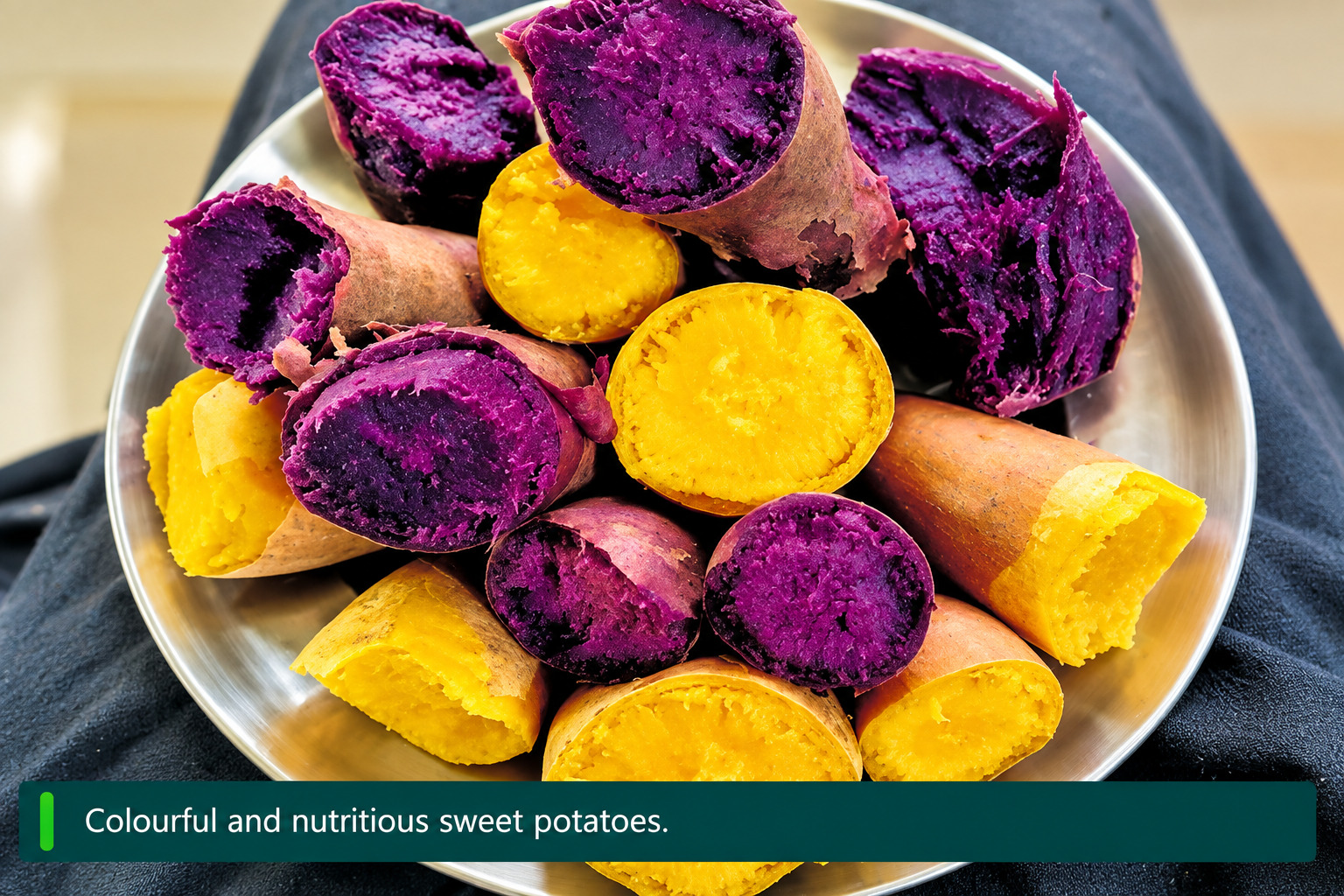
Colorful and Nutritious Sweet Potatoes
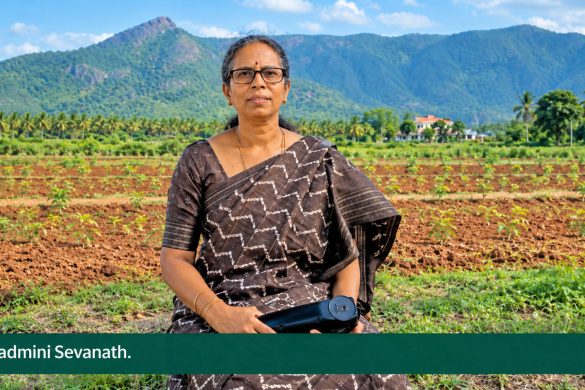
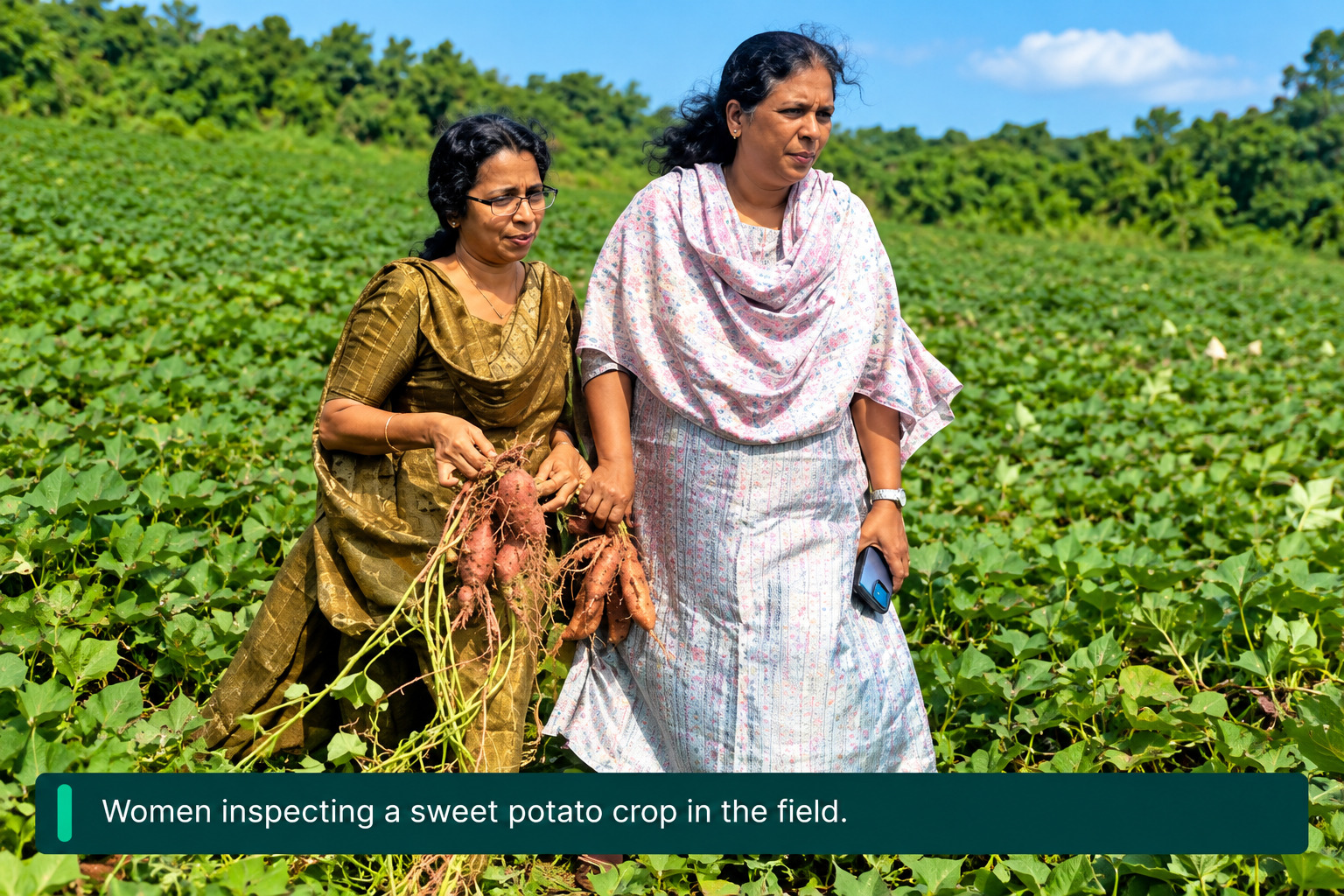
CTCRI researchers Sherly Reichel and Susan George in a sweet potato field.
Biofortification. The availability of vitamins, minerals, and other nutrients in sweet potatoes cultivated through this method is the reason for this color change.
Scientists at CTCRI have succeeded in creating new sweet potato varieties that are rich in color and nutrition. They have developed varieties that are a combination of these two colors and are rich in nutrients. These are now being evaluated in agricultural trials.
Dr. Sherly says that in the districts of Palakkad, Kasaragod, Kannur, Thiruvananthapuram, Kollam, and Alappuzha, biofortified sweet potatoes can be cultivated on a large scale.
By creating many value-added products from them without significant loss of nutrients and color, farmers can increase their income. CTCRI also has a techno-incubation center to provide training in value addition of tuber crops.
Below is the list of biofortified sweet potato varieties released by the Central Tuber Crops Research Institute, Thiruvananthapuram:
We all agree that food is medicine. But it is also a recurring complaint that the rice, tuber crops, and vegetables we eat are lacking in minerals. We know that the amount of minerals in them is very low. Starch is their main component.
We even throw away nutrient-rich parts like husks and peels. We eat the remaining parts. The amount of minerals is low in small tubers but even lower in larger ones. So, what if the minerals and vitamins needed by the body are available in the sweet potatoes themselves? Would not things be easier?
 This is the physical manifestation of the thinking of the researchers at CTCRI. As part of this, orange-colored sweet potato varieties that are a storehouse of beta-carotene, the precursor to Vitamin A, and purple-colored varieties rich in anthocyanins have been developed.
A healthy diet means consuming a diverse range of foods. This way, the body gets all the essential vitamins, minerals, fiber, protein, etc. Beta-carotene, iron, zinc, etc., are essential nutrients.
Biofortification is the process of increasing the amount of vitamins and minerals in crops that are widely cultivated and consumed, through plant breeding, genetics, or metabolism. This allows for the sustained use of these crops to increase the levels of vitamins, minerals, and nutrients in the body.
It also helps in identifying those with a different color and more nutrients. Orange-colored sweet potato varieties are a storehouse of beta-carotene and Vitamin C.
Orange sweet potatoes
Orange-colored sweet potato varieties are a storehouse of beta-carotene and Vitamin C.
Purple sweet potatoes
Purple-colored varieties are rich in anthocyanins.
To improve the diversity of sweet potatoes and to reduce abiotic stress, a project to develop biofortified beta-carotene/anthocyanin enriched varieties has been started at Thiruvananthapuram-CTCRI in collaboration with the International Potato Center CIP in Peru, with the support of the Indian Council of Agricultural Research.
As a result of this collaboration, orange and purple colored sweet potato varieties have been developed.
They are a great source of fiber, iron, potassium, and protein. Purple sweet potatoes are rich in anthocyanins. Anthocyanin is a complex of biochemically active compounds.
They help in increasing memory power and preventing heart diseases.
They also help in preventing cancer, anti-angiogenic.
They can increase iron.
They can prevent or repair age-related nerve damage.
Anthocyanins can also help as an anti-obesity, anti-fattening, agent.
They are helpful in removing excess water from the body.
Research is underway at CTCRI to release delicious biofortified sweet potatoes. Dr. Sherly said that many new varieties will be made available to farmers without delay.
The newest biofortified variety released by CTCRI is Bhu Arunamaya. It has a purple skin and an orange flesh. A yield of 26 tonnes is expected. 100 grams of Bhu Arunamaya contains 133-157 milligrams of anthocyanin.
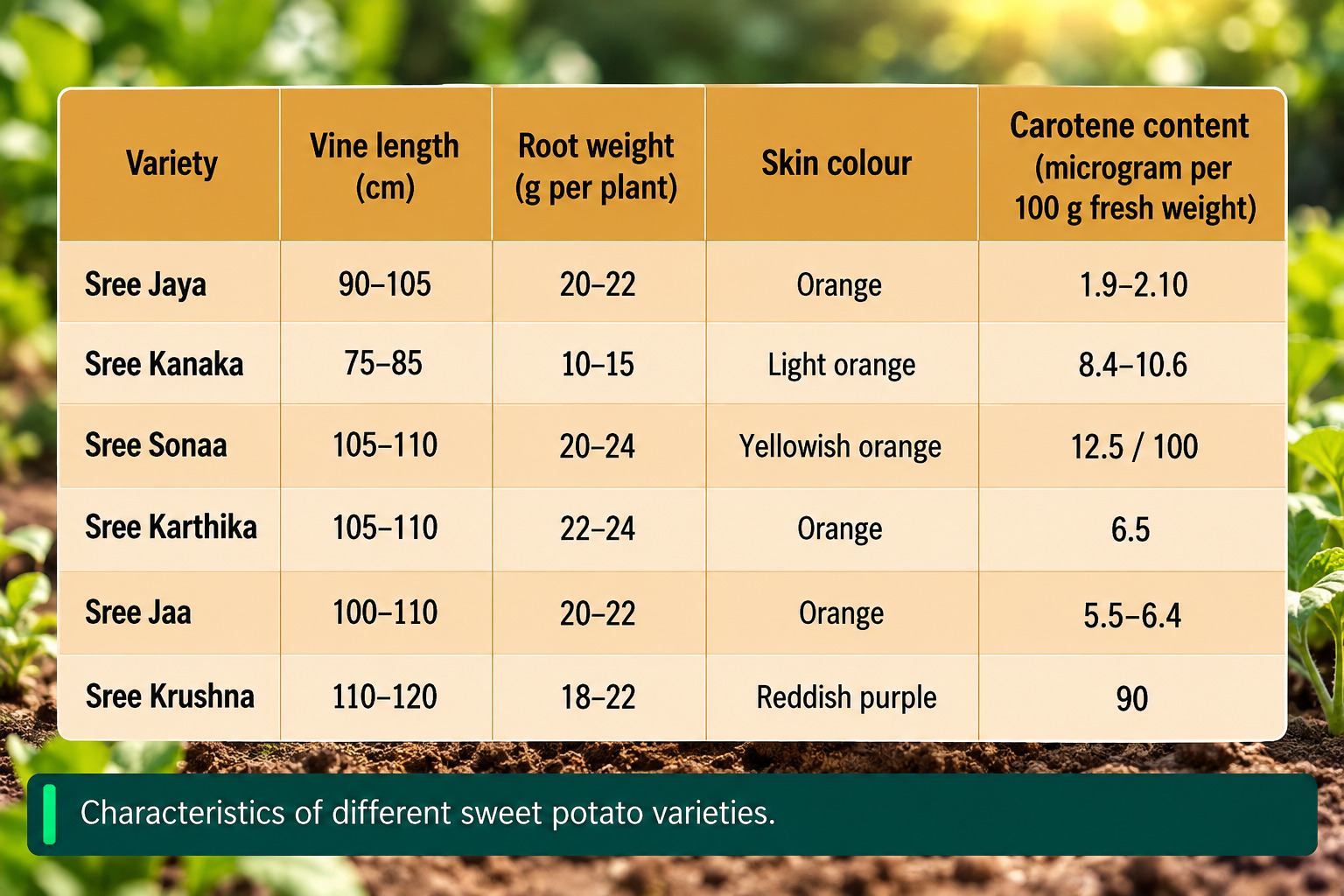
| Variety | Crop Duration days | Average Yield Ton/Hectare | Color | Carotene/Anthocyanin milligram/100 gm. FW |
|---|---|---|---|---|
| Sree Rathna | 90-105 | 20-22 | Orange | Carotene 1.9-2.10 |
| Sree Kanaka | 75-85 | 10-15 | Dark Orange | Carotene 8.4-10.6 |
| Bhu Sona | 105-110 | 20-24 | Dark Orange | Carotene 12.5 |
| Bhu Kanthi | 105-110 | 22-24 | Orange | Carotene 6.5 |
| Bhu Ja | 100-110 | 20-22 | Orange | Carotene 5.5-6.4 |
| Bhu Krishna | 110-120 | 18-22 | Dark Purple | Anthocyanin 90 |
What are biofortified sweet potatoes?
Biofortified sweet potatoes are varieties developed to contain higher levels of vitamins, minerals, and nutrients through plant breeding, genetics, or metabolism. CTCRI has developed orange varieties rich in beta-carotene and purple varieties rich in anthocyanins.
Why are orange sweet potatoes considered nutritious?
Orange-colored sweet potato varieties are a storehouse of beta-carotene, the precursor to Vitamin A, and Vitamin C. They support a more diverse diet and help increase the availability of essential nutrients through a crop that is widely cultivated and consumed.
What are the benefits of purple sweet potatoes?
Purple sweet potatoes are rich in anthocyanins, which are biochemically active compounds. They help in increasing memory power, preventing heart diseases, preventing cancer, increasing iron, repairing age-related nerve damage, supporting anti-obesity action, and removing excess water from the body.
Which CTCRI biofortified sweet potato variety has the highest anthocyanin content mentioned?
The newest biofortified variety mentioned is Bhu Arunamaya. It has a purple skin and orange flesh, with an expected yield of 26 tonnes. Every 100 grams of Bhu Arunamaya contains 133-157 milligrams of anthocyanin.
Where can biofortified sweet potatoes be cultivated on a large scale?
According to Dr. Sherly, biofortified sweet potatoes can be cultivated on a large scale in Palakkad, Kasaragod, Kannur, Thiruvananthapuram, Kollam, and Alappuzha districts. These areas are specifically mentioned for scaling cultivation.
How can farmers earn more from colorful sweet potatoes?
Farmers can increase income by creating value-added products from biofortified sweet potatoes without significant loss of nutrients and color. CTCRI also has a techno-incubation center that provides training in value addition of tuber crops.
Which institutions collaborated to develop these sweet potato varieties?
The project was started at Thiruvananthapuram-CTCRI in collaboration with the International Potato Center CIP in Peru, with support from the Indian Council of Agricultural Research. The work focuses on biofortified beta-carotene and anthocyanin enriched varieties.