✍️ George K. Mathai, Deputy Director (Rtd.), Department of Agriculture | mathaigk@gmail.com
January is an active month for pepper farmers. Pepper harvesting continues, and alongside it, protecting young saplings from the harsh summer and fungal threats becomes a critical priority. Saplings less than 2 years old are especially vulnerable and need proper mulching using areca nut fronds or coconut fronds. Combined with a targeted microbial spray, this traditional yet scientifically supported approach can significantly reduce fungal infection and improve overall plant health through the dry season.
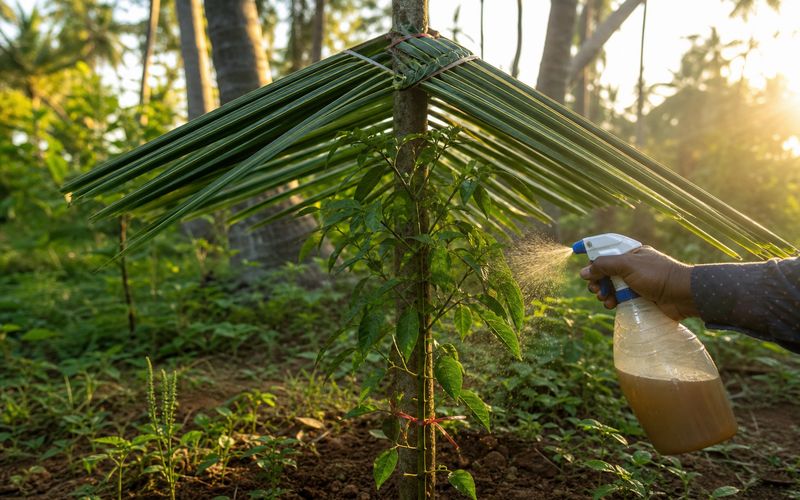
Saplings less than 2 years old should be mulched using either areca nut fronds or coconut fronds. The correct method is to tie the base of the frond to the supporting tree in such a way that it sits above the crown of the sapling. This positioning provides shade and reduces heat stress on the young plant during summer.
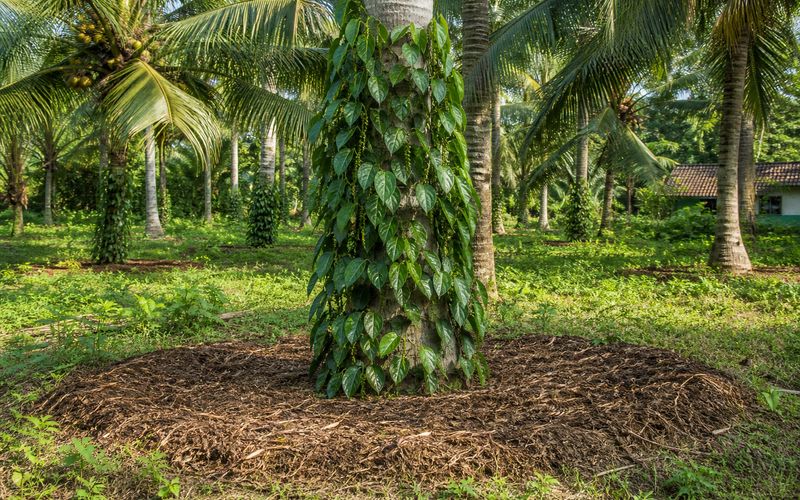
To reduce the severity of summer further, apply mulch in a circle one span away from the base of the plants. This helps retain soil moisture and keeps root-zone temperatures manageable through the hot months.
After tying the fronds in place, spraying a microbial mix in the evening is highly effective in preventing fungal spread. Prepare the spray by mixing:
🌱 Microbial Spray Formula
- ✅ 30g of Bacillus subtilis or Pseudomonas
- ✅ Mixed in 1 liter of water
- ✅ Apply in the evening for best results
Spray this mix on the fronds, the coconut trees, and on the pathinjakkavarivum. Evening application allows the beneficial microbes to establish before the heat of the day, maximizing their protective effect against fungal infection.
After the harvest is complete, sweeping the ground and burning the debris is a traditional agricultural practice. This step effectively destroys fungal spores present in the soil, reducing the risk of infection in the next growing cycle. It is a simple but important part of maintaining a healthy pepper garden.
💡 Tip: It is said to improve spiking and the setting of the spikes when the pepper plant receives rain after wilting in the summer. On close inspection, this can be seen to be true.
January is also a good time to continue planting pepper on other trees, including coconut trees. Using coconut and other support trees as hosts helps expand cultivation efficiently without requiring additional land or infrastructure investment.