Tapioca and tapioca-based products should only be eaten after being fully cooked. The main villain in this tuber, which contains up to 75% starch and is an energy provider, is the cyanogenic glycoside.
A kilogram contains only 90 milligrams of protein, so proper preparation and smart food pairing are important. The use of tapioca cannot be completely avoided because it is the staple food of millions of people, but it must be prepared in safe quantities.
The bitter native varieties have a higher concentration of this toxin than the non-bitter ones. Bitter varieties can contain up to 245 milligrams of this toxin per kilogram, while non-bitter varieties can have up to 50 milligrams.
Deaths have even occurred in young children after consuming the bitter variety. Therefore, proper preparation is necessary to consume it in safe quantities.
The amount of toxin in tapioca varies depending on the variety. Not all varieties will have the same amount of toxin.
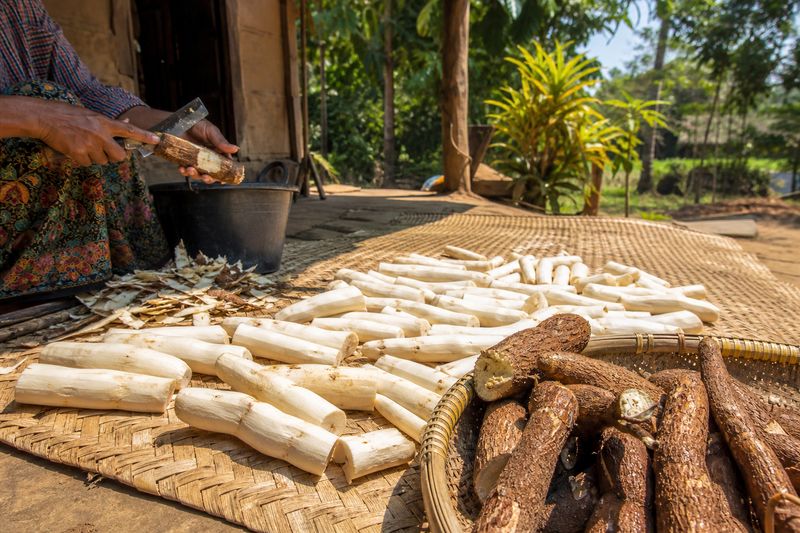
After peeling the tapioca, drying it in good sunlight for 12 hours before cooking can eliminate the toxin to some extent. After drying it in good sunlight for 12 hours, the toxin can be reduced by up to 90%.
- 1. Peel and dry: Dry peeled tapioca in good sunlight for 12 hours before cooking.
- 2. Boil well: When boiled in water, the toxin dissolves in the water and is removed.
- 3. Continue boiling: If boiled continuously for 30 minutes, the toxin can be removed at a temperature of 72 degrees Celsius.
- 4. Drain the water: Draining the water from boiled tapioca can reduce the toxin to a certain extent.
Dried tapioca, tapioca flour, and tapioca powder prepared this way can be used by kneading in boiling water and steaming.
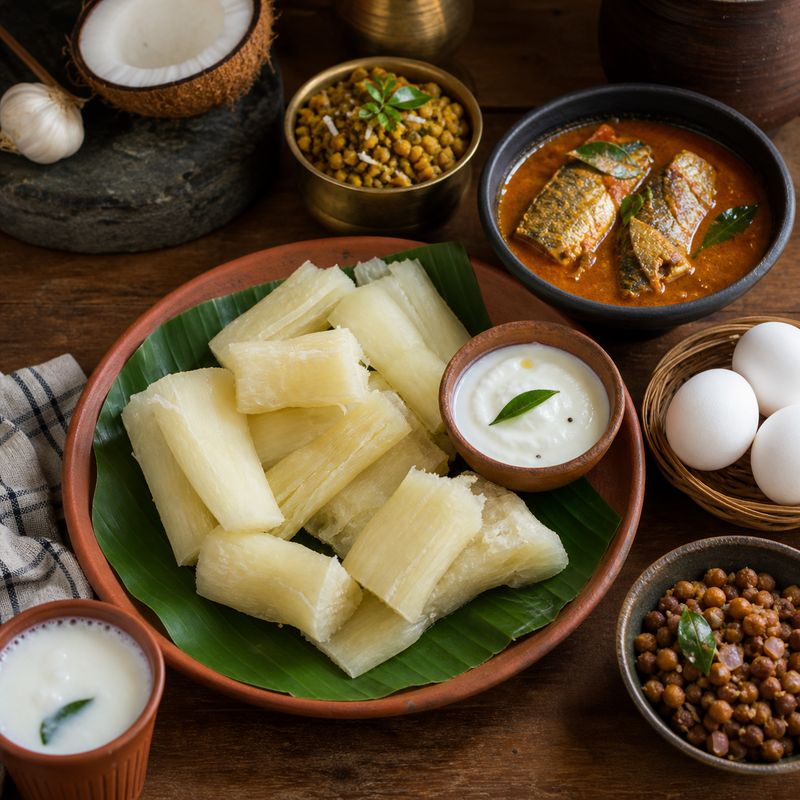
It is also good to eat cooked tapioca with curd or buttermilk. The sulfur amino acids in sour foods help neutralize the toxin.
It is good to eat protein-rich foods like fish, meat, eggs, and legumes with tapioca. The amino acids in protein help neutralize the toxin.
On days you eat tapioca, you can avoid dishes made with wheat or maida.
Better pairings: curd, buttermilk, fish, meat, eggs, and legumes.
Do not eat other starchy foods along with boiled tapioca.
It is not good to eat sweet potatoes, elephant foot yam, taro, greater yam, and rice-based food with tapioca. This is because the starch in these foods can combine with the toxin in tapioca and cause health problems.
Avoid eating boiled tapioca with lunch. It can make digestion difficult, and the body will require more energy.
People with thyroid problems should use tapioca in moderation.
Pregnant women should use tapioca in moderation.
Breastfeeding mothers should use tapioca in moderation.
Diabetics should use tapioca in moderation.
Since it is low in protein, it should not be given to children in large quantities.
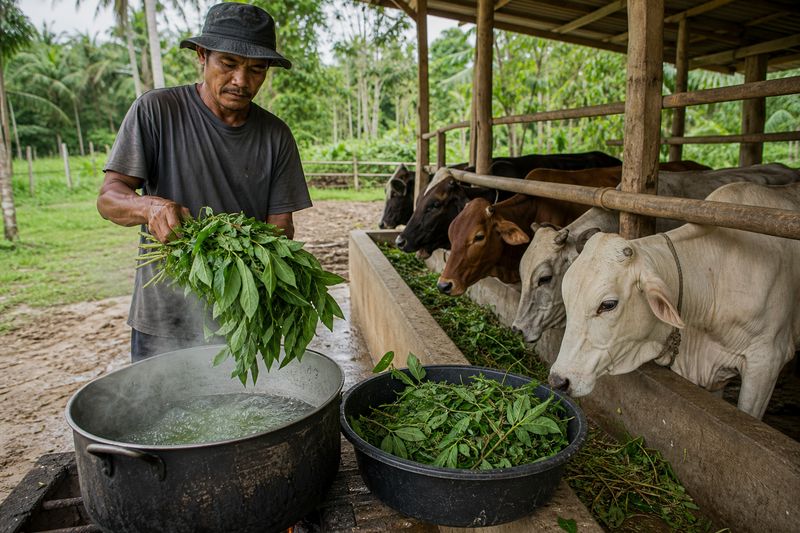
Fresh tapioca leaves also contain the toxin. Therefore, it should be given to cattle only after dipping it in boiling water, squeezing it, and draining its juice.
Dried tapioca can be ground with copra and given to livestock. Poisoning can also occur in cattle. If cattle are poisoned, they can die within 7 days. There is no treatment for poisoning.
When making chips, avoid bitter varieties of tapioca. If chips are made from bitter varieties, the bitterness will not be reduced.
Those who eat tapioca daily should limit their intake to 300-350 grams, or 30-35% of total food, per day.
If eaten as a snack, the portion can be up to 100-150 grams.
It is best to dry and store a maximum of 2-3 kg of tapioca.
Our body has the ability to neutralize the small amounts of toxin that are released. However, eating tapioca continuously for days is harmful to the body to some extent.