✍️ Reference : R. Veenarani
Assistant Director of Agriculture (Retd.), Kozhikode | karsha@mm.co.in | veena4raghavan@gmail.com
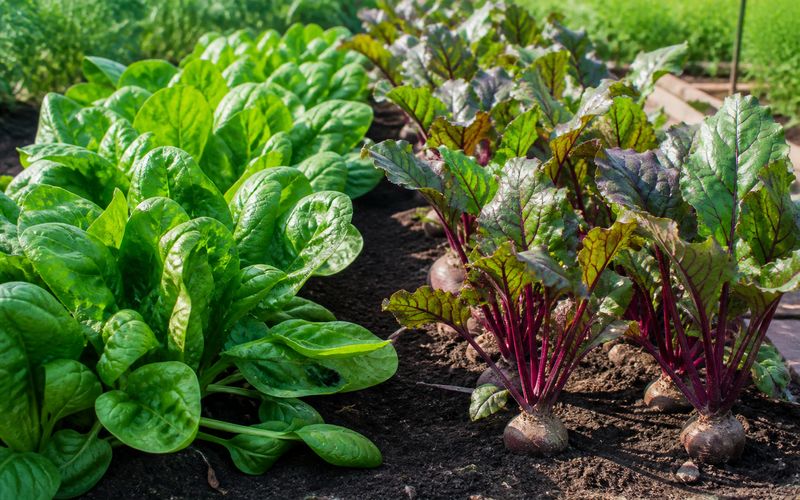
Palak, a winter vegetable, is at the forefront of nutrient-rich leafy greens. It can be cultivated well in our climate. The time from December to March is suitable for its cultivation. It is rich in nutrients — besides protein, palak is also a good source of fiber.
It grows well in any type of soil. However, soil with good drainage, fertility, and organic matter is the best. Lightly acidic soil is also suitable. The soil should be plowed well before planting. Dried cow dung powder, neem cake, and bone meal can be added as base fertilizer to promote good growth.
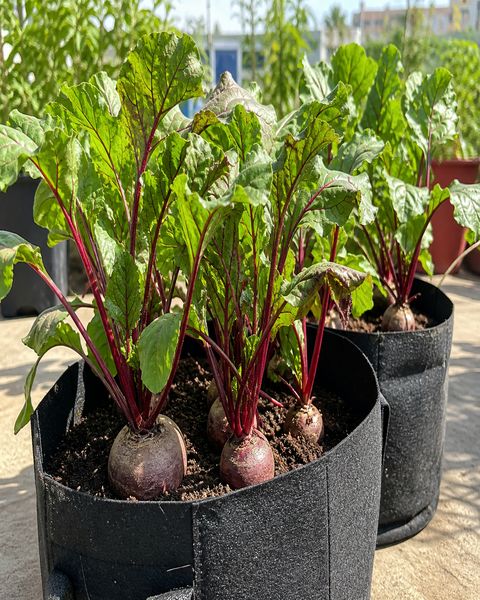
The beetroot available in the market is smaller in size than what we can grow in our own garden. Not only the tuber of the beetroot but its leaves are also edible. It requires good sunlight. Seeds can be sown in well-lit areas. For those with limited space, it can also be cultivated in grow bags.
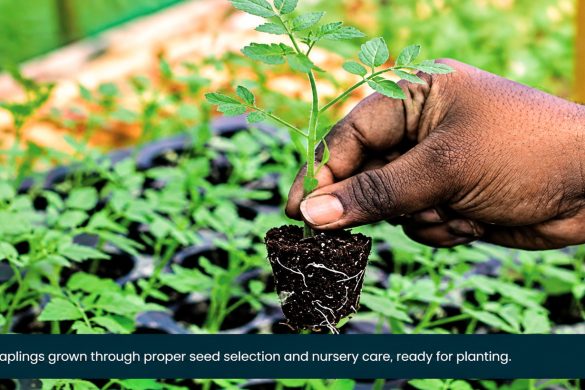
December to March is the ideal time. After sowing the seeds, water lightly. The sprouts will appear in 3–4 days. From these, select the healthy seedlings and transplant them to the field or grow bags. The seed should be planted at a depth of 2 cm.
For the base fertilizer, mix 100 grams of neem cake and 50 grams of bone meal into the soil. After 23–30 days, top dressing should be done — apply 10 grams of factamfos and 5 grams of potash at the base of the plant.
🌱 Sowing Depth: 2 cm deep for best germination results
🌿 Sprouting Time: Sprouts appear within 3–4 days of sowing
🪴 Base Fertilizer: 100g neem cake + 50g bone meal per plant
💊 Top Dressing: 10g factamfos + 5g potash after 23–30 days
It is primarily a cool-season crop. Palak can be planted on beds or in grow bags. The distance between the plants should be 8–10 cm. The beds should be prepared by adding organic fertilizers like cow dung powder, bone meal, etc. After that, the seeds can be sown. Apply liquid fertilizer every 10 days.
💧 Liquid Fertilizer Recipes (Apply Every 10 Days)
- ✅ Mix Jeevamrutham / cow dung slurry (200 grams) with 4 liters of water.
- ✅ Mix fish amino acid (200 grams) with 4 liters of water.
- ✅ To control pests, mix 4 ml of neem oil / Ecoshop, Asaditam in one liter of water and spray.
🕐 Harvest Time: The leaves can be harvested in just 20–30 days after sowing.
Chayera requires good sunlight. The land should be plowed well. Seeds can be sown in beds 30 cm wide or in rows 15 cm apart. The seedlings should be thinned to a spacing of 25×15 cm. Weeds should be removed from the beds. Prepare the soil by adding neem cake and ash — this helps in disease control.
⚠️ Prevent Damping-Off Disease
To prevent damping-off disease in seedlings, the seeds should be treated. Tie the seeds in a cloth, dip them in a Pseudomonas solution for 2–3 hours, dry them in the shade, and then sow. Otherwise, there is a risk of the seedlings rotting at the base.
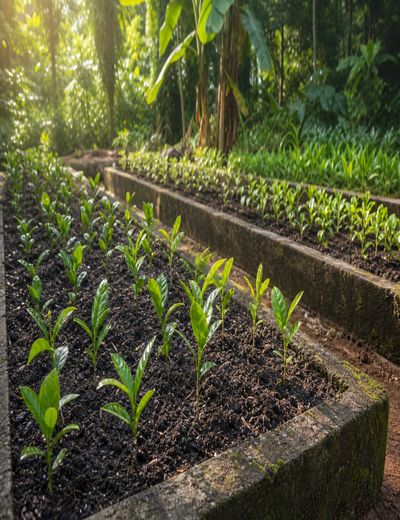
Seeds of Palak, Mint, Leaf Chayera, Stem Chayera, and other leafy greens are available in agricultural nurseries. The outlets of Veggie (a government initiative for vegetable cultivation) are also good. These can be cultivated organically. Seeds can be collected from matured plants for the next season — simply dry and store them.
Leaf Harvest
50–60 days after sowing
Seed Collection
100 days from sowing
Important Note
All parts are edible — handle and harvest with care
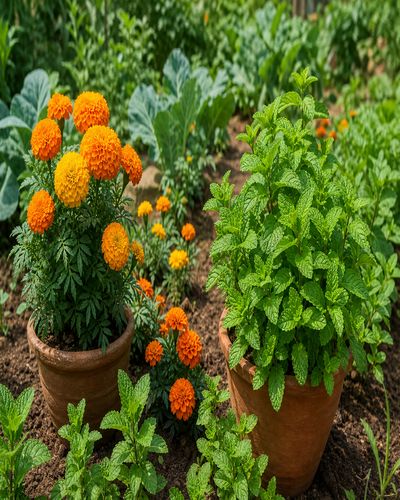
Marigold is a flower that repels mosquitoes. Its smell repels mosquitoes well. Besides marigold, mint is also a good mosquito repellent — the smell of mint is disliked by mosquitoes. It is good to plant these in the spaces between vegetable patches, or in pots.
🧪 DIY Organic Pesticide Recipe
- 1️⃣ Grind 150 grams of marigold leaves with 150 grams of water.
- 2️⃣ Mix this with 300 grams of soap solution.
- 3️⃣ After 24 hours, strain the mixture and spray on plants.