Fish
Dr. B. Pradeep
Subject Matter Specialist (Fisheries),
Krishi Vigyan Kendra, Kozhikode.
9496134220 | e-mail: nairpradeep2@gmail.com
❓ Reader question
I am farming fish in my 2-cent pond which is lined with a plastic sheet. The water in this tank is a dark greenish-black color. This makes the water non-transparent. The fish fry are also dying. What is the reason for this? Please suggest solutions.
– A.J. Jose, Chipsy, Thrissur
The color of water is often determined by the microorganisms and the organic and inorganic substances present in it. For example, green-colored seawater will have a lot of phytoplankton, and brownish-green water will have a lot of zooplankton.
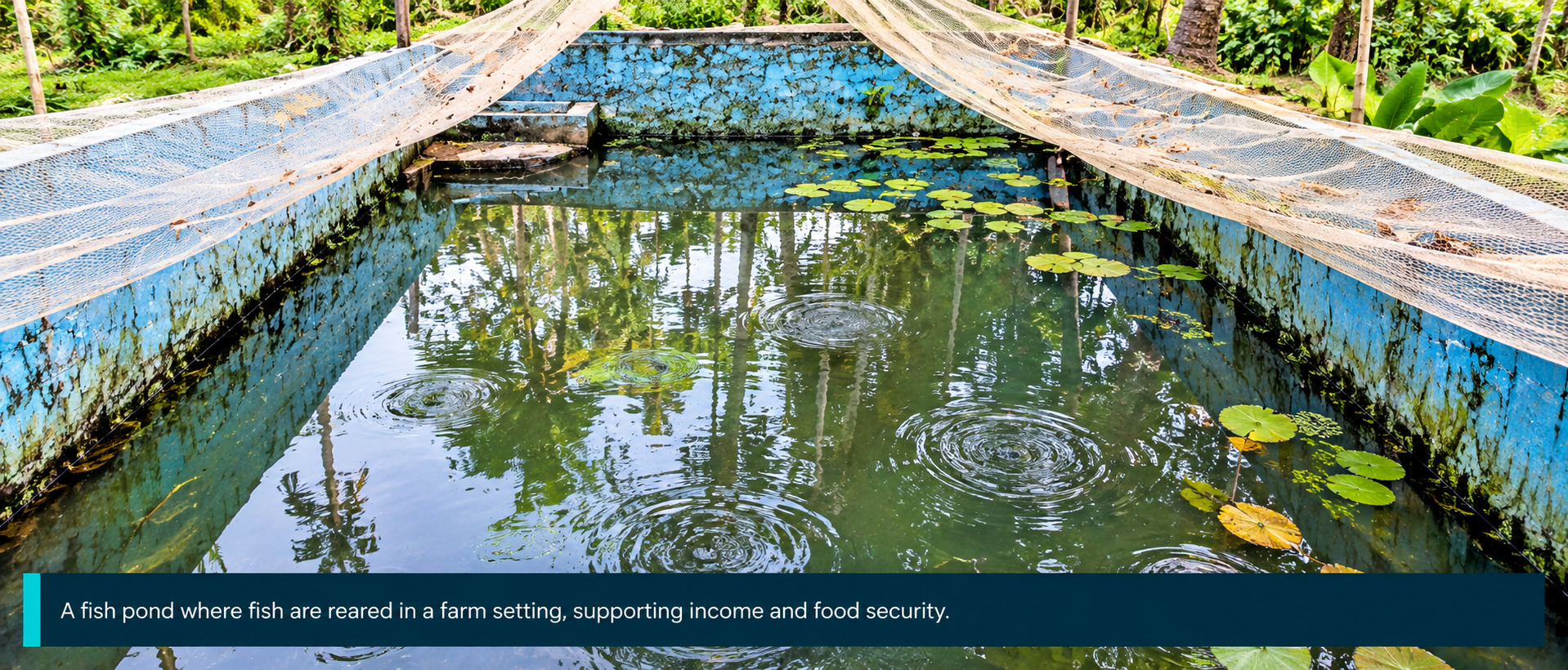
Often, a sudden change in water color is due to the proliferation of microorganisms. This is caused by phytoplankton in the water. The color of water can change with the phenomenon of algal bloom, which appears as a thick, green-colored layer. There can be clusters of algae that are green, red, brown, bluish-green, and brown. The oxygen level in this water can increase and decrease.
The color of the water in the pond due to algae is often not uniform. It can be greenish, reddish, or brownish-green. But an excess of algae is dangerous. This can cause the oxygen level in the water to decrease at night.
One of the main reasons for the excessive proliferation of phytoplankton in dark-green colored water is the amount of nutrients it contains. When the amount of phosphorus and nitrogen in low-quality water increases, it can cause algae to multiply.
The water in your pond turning greenish-black could be due to decaying plants and debris in it. Because sunlight cannot penetrate the water, the oxygen produced by plankton will also decrease. The fish may experience breathing difficulty in the afternoon. When the plants that produce oxygen in the water do not get the required sunlight to grow, they too can perish. Trees growing over the pond in a way that blocks sunlight should be avoided. In such situations, fish are likely to die in large numbers. To change the black color, the mud accumulated at the bottom of the pond should be removed.
In some ponds, fish fry get sick overnight and die in large numbers. The fish will be found floating in the morning. The main reason is the complete depletion of oxygen at night.
In the absence of sunlight, plants use oxygen for respiration at night. When the dissolved oxygen in the water becomes very low, the fish die.
The color of water in tanks can be black, red, or brownish-green. If the amount of dissolved solids in the water is high, the color of the water will change. Sometimes, the color also changes due to the presence of chemicals.
Use filters
There are many ways to control the color of water in tanks. One way is to purify the water using filters. When using filters, the accumulation of organic matter can be avoided.
Reduce nutrients
This will also help reduce the nutrient level in the water. Such filters are available in the market. Otherwise, they can be made with the help of experts.
Partial water change
This way, the color of the water can be controlled to some extent. Changing the water is another method.
Avoid full replacement
However, instead of changing the water completely, it is better to change it partially.
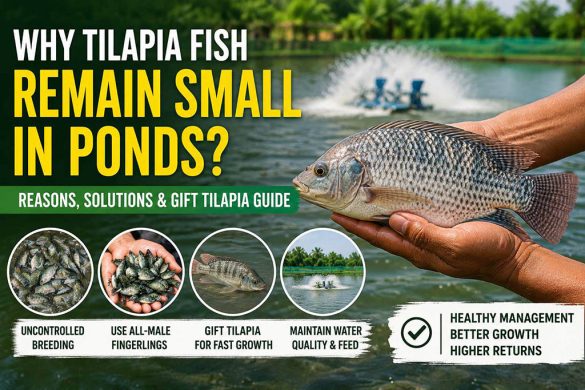
Excessive plankton in the tank can be controlled using fish. Fish like Silver Carp, Tilapia, and Pearl Spot (Karimeen) eat plankton.
Silver Carp
However, a cold climate is more suitable for Silver Carp.
Pearl Spot and Tilapia
Pearl Spot and Tilapia can be farmed in our climate. Both these fish have a good market price.
Grass Carp
Grass Carp can also be farmed to control plankton in the water.
Feeding needed
But they need to be fed. Therefore, introducing them into new ponds is not very beneficial.
Chemicals can be used to control the nutrients dissolved in the water. But this is not very desirable.
Chemicals like aluminum sulfate, ferric chloride, and polyaluminum chloride are commonly used. These reduce the amount of phosphorus in the water.
But chemicals are harmful to aquatic life. Therefore, chemicals should be used only after seeking the advice of experts.
Changing the water is a good method. However, when adding new water to the pond, care should be taken to select water that is compatible with the old water.
This method is impractical for large ponds. If changing the water, it is very good to filter it first. This helps to avoid unwanted fish species.
If the aquaponics farmer sends more details about the pond, more suggestions can be given.
Why is my fish pond water dark greenish-black?
Dark greenish-black pond water can be due to decaying plants and debris, excess phytoplankton, high nutrient levels, and poor light penetration. When phosphorus and nitrogen increase in low-quality water, algae can multiply quickly. The bottom mud and organic waste may also darken the water and reduce oxygen production.
Can algae bloom kill fish fry in a tank?
Yes. Excess algae is dangerous because oxygen can fall sharply at night. In the absence of sunlight, plants use oxygen for respiration. When dissolved oxygen becomes very low, fish fry may get sick overnight and be found floating in the morning due to oxygen depletion.
Should I change all the pond water at once?
It is better to change pond water partially instead of replacing it completely. New water should be compatible with the old water, and filtering it first is very good. Filtration helps avoid unwanted fish species and reduces organic matter and nutrient levels that encourage algae growth.
Which fish eat plankton in farm ponds?
Silver Carp, Tilapia, and Pearl Spot (Karimeen) eat plankton and can help control excessive plankton. Silver Carp is more suitable for cold climates. Pearl Spot and Tilapia can be farmed in our climate and both have good market price. Grass Carp can also help, but they need feeding.
Are chemicals safe for controlling pond water color?
Chemicals such as aluminum sulfate, ferric chloride, and polyaluminum chloride are used to reduce phosphorus in water, but this is not very desirable. Chemicals can be harmful to aquatic life, so they should be used only after seeking the advice of experts.
How can I reduce greenness in a plastic-lined fish pond?
You can partially cover the pond surface with a plastic sheet, clean algae from the walls using a brush or weed mat, avoid rotten vegetables and food waste, and avoid applying fertilizer directly. Dolomite, slaked lime, calcium carbonate, and filtered partial water changes may also help.